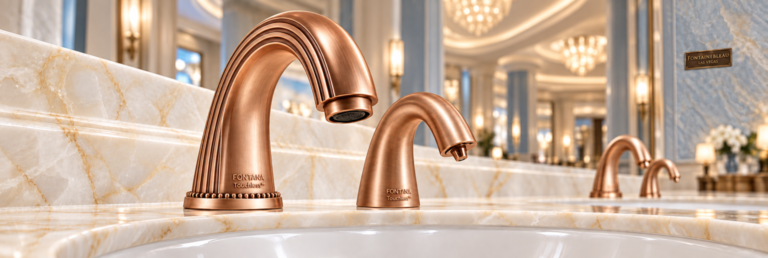
Why Touchless Soap Dispensers Are Now Standard in Commercial Restrooms
Commercial buildings today are designed with stronger emphasis on hygiene, user experience, and operational efficiency. Automatic soap dispensers have become a standard component of modern restroom architecture because they help reduce contact with shared surfaces while improving sanitation in high-traffic facilities.
Architects and facility managers increasingly integrate touchless technology across restroom fixtures, including faucets, flush valves, and soap dispensers. These systems work together to create a fully automated handwashing environment that aligns with modern building standards and public health recommendations.
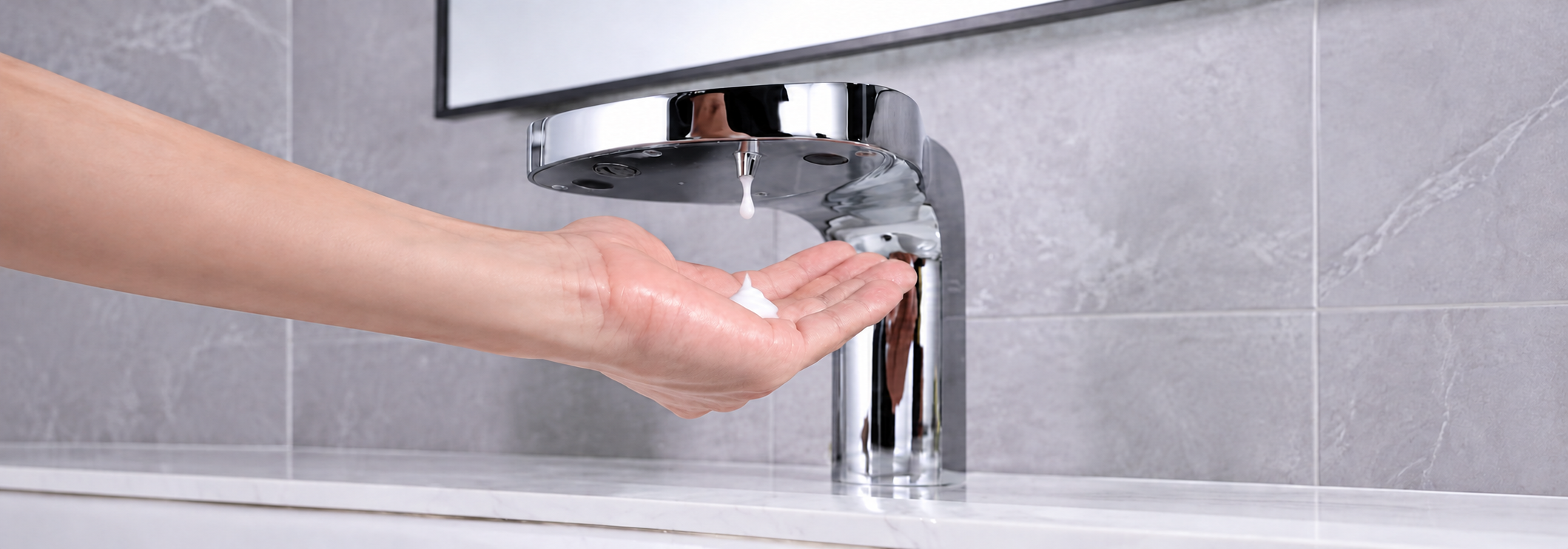
From airports and hospitals to corporate offices and universities, the shift toward sensor-activated restroom fixtures reflects a broader architectural trend focused on improving hygiene infrastructure while reducing maintenance requirements.
Improved Hygiene Standards
Touchless dispensers reduce physical contact with restroom surfaces, helping limit the spread of bacteria in busy commercial environments where hundreds or thousands of users may access facilities daily.
Lower Maintenance and Refill Frequency
Automatic dispensers release controlled amounts of soap, which helps minimize waste and reduces how often maintenance staff must refill or service restroom fixtures.
Better User Experience
Modern restroom users expect fast, hygienic handwashing solutions. Sensor-based dispensers improve convenience and accessibility compared with traditional push dispensers.
Modern Architectural Integration
Contemporary restroom designs often integrate soap dispensers directly into sink counters or wall panels, creating a cleaner visual layout while supporting efficient facility operation.
Planning Restroom Fixtures for High-Traffic Facilities
When selecting restroom equipment for commercial buildings, architects and facility planners typically prioritize durability, hygiene performance, and long-term operational efficiency. Automatic soap dispensers meet these requirements while supporting modern design standards used in airports, healthcare facilities, hotels, schools, and office complexes.
Failure to account for pump dosing accuracy, sensor activation consistency, and fluid viscosity compatibility can undermine the effectiveness of commercial automatic soap dispensers. Beyond basic functionality, high-performance systems require calibrated dispensing volumes, refill system optimization (including MultiFeed configurations), and robust actuator durability to maintain hygiene compliance, reduce waste, and ensure reliable operation across high-frequency commercial environments.
(Content technically updated multiple times in 2026 to reflect dispensing system engineering, fluid control dynamics, and high-cycle commercial performance validation standards.)