
Fontana Premium Touchless Restroom Fixtures
Explore Fontana touchless faucet designs built for commercial restrooms, hospitality facilities, office buildings, airports, healthcare environments, and high-traffic public spaces where hands-free hygiene, durable finishes, and reliable sensor activation matter.
Specification and System Coordination
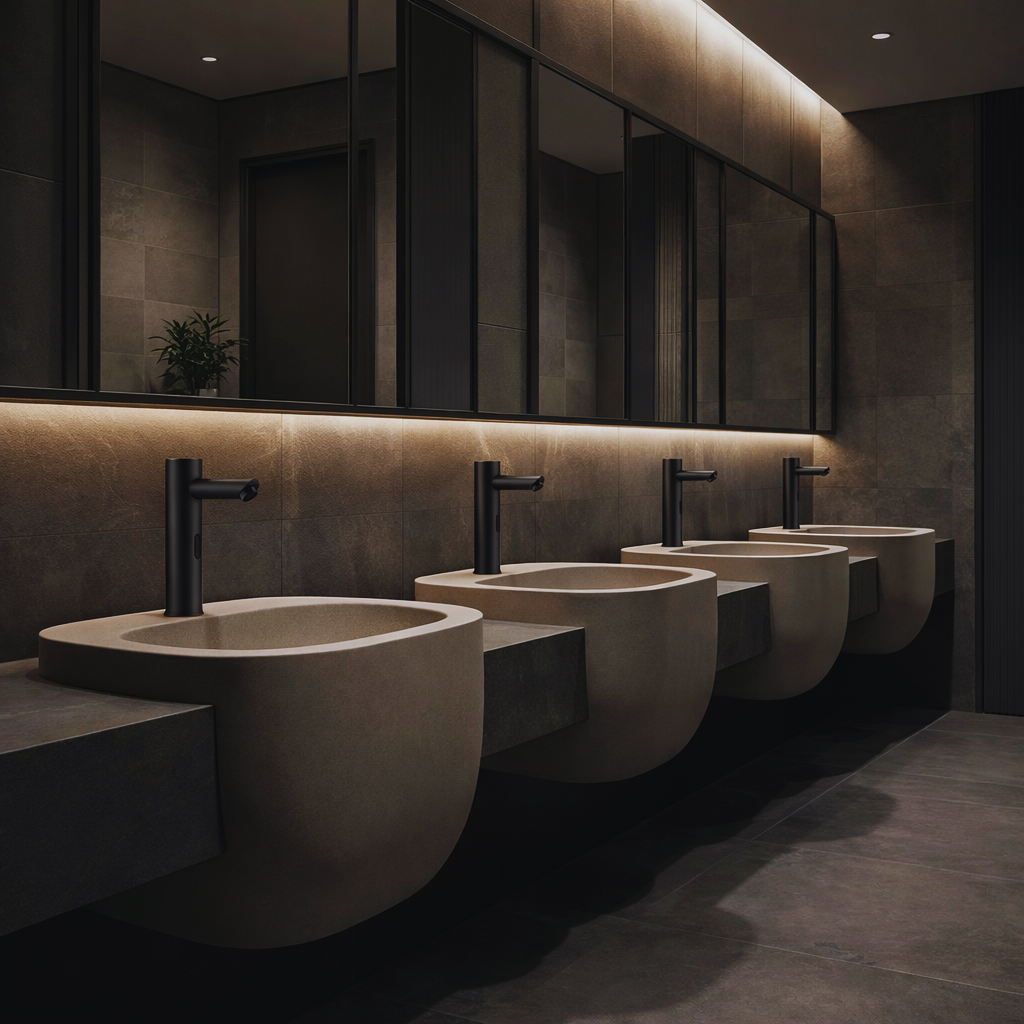
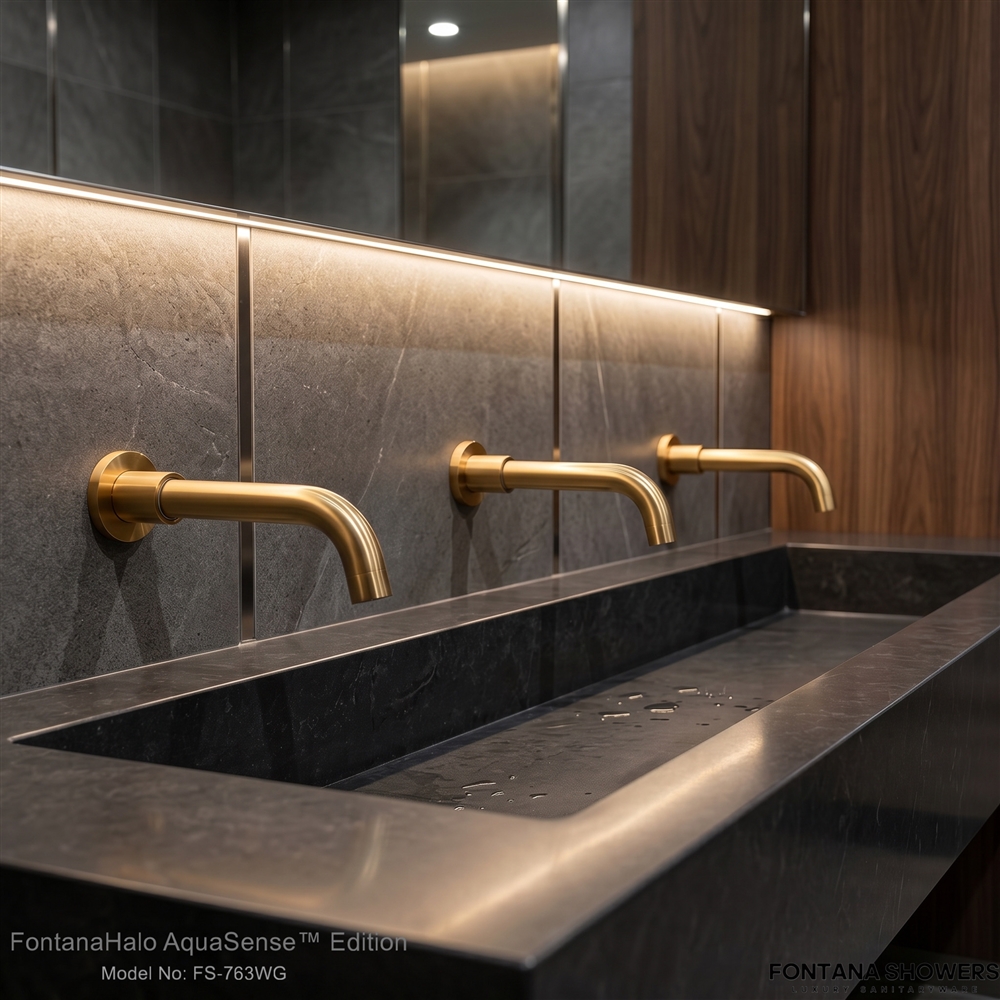
The two Fontana touchless faucet configurations shown above should be evaluated as coordinated plumbing-electronic assemblies rather than decorative fixture selections. Architects, contractors, builders, plumbing engineers, airport authorities, and facility managers should review the faucet body, sensing module, solenoid valve, inlet strainer, aerator, power supply, control enclosure, mounting condition, basin geometry, and service-access requirements as one integrated restroom system.
Early coordination helps prevent basin overshoot, excessive splash, inaccessible electronics, nuisance activation, finish damage, and field modifications after countertops, wall finishes, mirrors, or millwork have been completed.
Sensor Geometry
Detection distance should be coordinated with spout projection, basin depth, backsplash reflectance, mirror location, ambient lighting, and adjacent fixture spacing.
Hydraulic Control
Operating pressure, inlet filtration, aerator flow, stream pattern, automatic shutoff, and supply stability should be reviewed before final fixture approval.
Power Strategy
AC, battery, or hybrid power should be selected according to restroom traffic, electrical rough-in, maintenance staffing, and access to control components.
Service Access
Solenoids, filters, batteries, adapters, aerators, isolation valves, and control boxes should remain accessible without removing permanent finishes.
Basin and Faucet Coordination
Faucet selection should be coordinated with the final lavatory model rather than checked only against a generic counter detail. Spout reach, outlet height, drain position, basin slope, rim profile, and expected hand position determine whether the water stream remains centered and controlled.
A representative mockup should be tested under final lighting and finish conditions. This is especially important for polished, dark, white, or highly reflective surfaces that can alter infrared sensing behavior.
Commercial Specification Matrix
| Specification Item | Architect / Engineer Review | Contractor Verification |
|---|---|---|
| Sensor range | Coordinate detection field with basin, counter, mirror, backsplash, and accessible approach. | Calibrate after final finishes, lighting, and accessories are installed. |
| Spout projection | Align outlet with basin centerline, drain, rim profile, and handwashing zone. | Verify final mounting position and splash performance during mockup. |
| Flow control | Select flow rate and stream pattern according to conservation goals and basin geometry. | Flush supply lines and verify filters, aerators, pressure, and shutoff timing. |
| Power source | Define AC, DC, battery, or hybrid configuration and electrical responsibilities. | Provide accessible transformers, battery boxes, wiring, and control enclosures. |
| Finish durability | Coordinate finish with accessories, sanitaryware, partitions, and project cleaning standards. | Protect fixtures during construction and provide approved cleaning instructions. |
| Service access | Show service clearances, removable panels, and isolation-valve locations. | Confirm components can be replaced without demolition or counter removal. |
Airport Restroom Delivery Sequence
For aviation restroom projects, the recommended delivery sequence is existing-condition audit, representative mockup, coordinated submittal review, installation, functional commissioning, and digital turnover. This sequence allows the design and construction team to validate geometry and performance before full deployment.
Technical FAQs
How should the sensor field be tested after installation?
Test intentional hand entry, pass-by movement, adjacent-station use, reflective objects, empty-basin conditions, lighting changes, cleaning activity, and automatic shutoff after final finishes are installed.
What should be included in the faucet submittal?
Include dimensions, rough-in requirements, operating pressure, flow rate, power data, sensor adjustment method, control-box details, solenoid information, replacement parts, finish data, warranty, and cleaning guidance.
Why must basin geometry be reviewed with the faucet?
Basin depth, rim profile, drain position, and surface reflectance influence stream placement, splash, sensing stability, and user comfort.
When is hardwired power preferable?
Hardwired power is generally preferable in high-volume airport and public restrooms where continuous operation and reduced battery-replacement labor are priorities.
How should maintenance access be documented?
Drawings and closeout records should identify control boxes, transformers, battery compartments, solenoids, filters, isolation valves, aerators, and removable access panels.
How does water quality affect long-term performance?
Sediment, scale, hardness, and construction debris can obstruct aerators, strainers, and solenoid passages. Supply flushing and accessible filtration should be included in the specification.
Professional Reference Links
These resources support professional practice, accessibility, sustainable water management, BIM documentation, and commercial restroom specification.