
Low-Lead Materials and Touchless Fixtures in Modern Buildings
At the bathroom sink, material selection, water quality, sensor controls, accessibility, and maintenance all converge. A sound specification addresses each of them rather than relying on a single product claim.
Why the fixture matters to the building
A faucet is the last visible point in a much larger water system. By the time water reaches the outlet, its quality and temperature can be affected by pipework, storage, use patterns, and the fixture’s own components. In a busy airport restroom or a lightly occupied building wing, those conditions may differ substantially. Architects, plumbing engineers, and facility operators therefore need a shared understanding of what the fixture can do and what the wider system must manage.
Touchless operation adds another design layer. Removing the need to turn a handle can reduce contact with that surface, but handwashing still depends on soap, clean running water, and a usable sink. The CDC’s handwashing guidance keeps the emphasis on the complete handwashing practice. For building teams, the question becomes how the faucet, soap dispenser, basin, drying method, and cleaning routine work together.
Materials
Check which components contact drinking water and whether the submitted model has the required documentation.
Controls
Coordinate sensor position, detection behavior, shutoff, power, and access for adjustment.
Operations
Plan cleaning, periodic inspection, spare parts, and responses to areas with irregular use.
Understand what “lead-free” means in a submittal
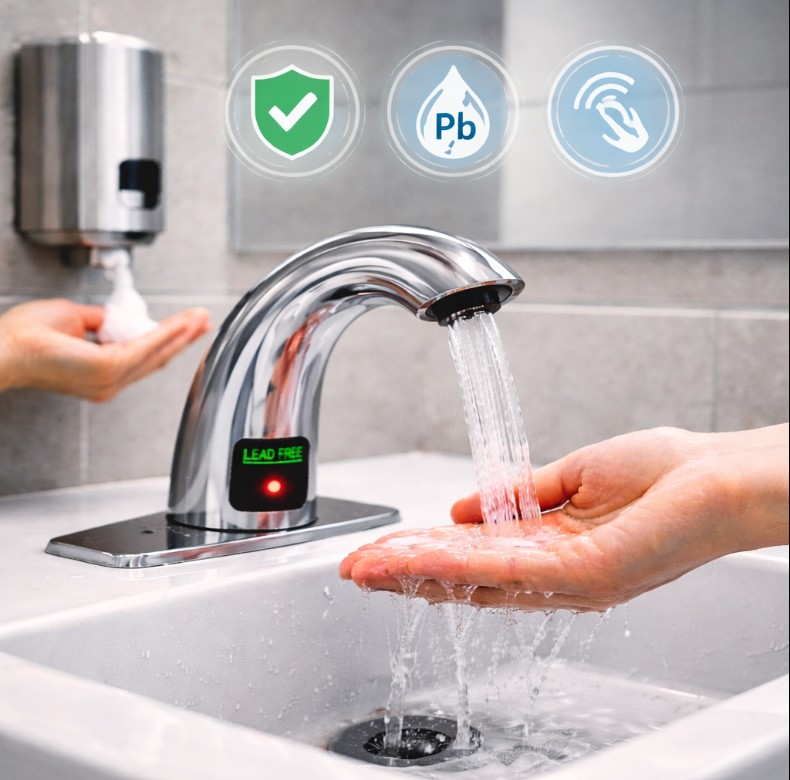
The U.S. Environmental Protection Agency explains that the federal “lead-free” definition for applicable plumbing products limits lead to a weighted average of 0.25% across wetted surfaces. This is a material-content calculation; it does not mean that every individual component contains exactly 0.25% lead or that a building’s water has been tested.
Two standards answer different questions. NSF/ANSI/CAN 61 addresses health effects from substances a product may impart to drinking water. NSF/ANSI/CAN 372 concerns lead content. When reviewing a faucet, confirm that the listing applies to the exact model and configuration proposed, including its drinking-water contact components.
Submittal question
Does the current third-party listing cover this exact faucet, valve assembly, and selected configuration? Request the certificate or searchable listing rather than assuming that every model in a product family has the same scope.
Design the entire touchless handwashing sequence
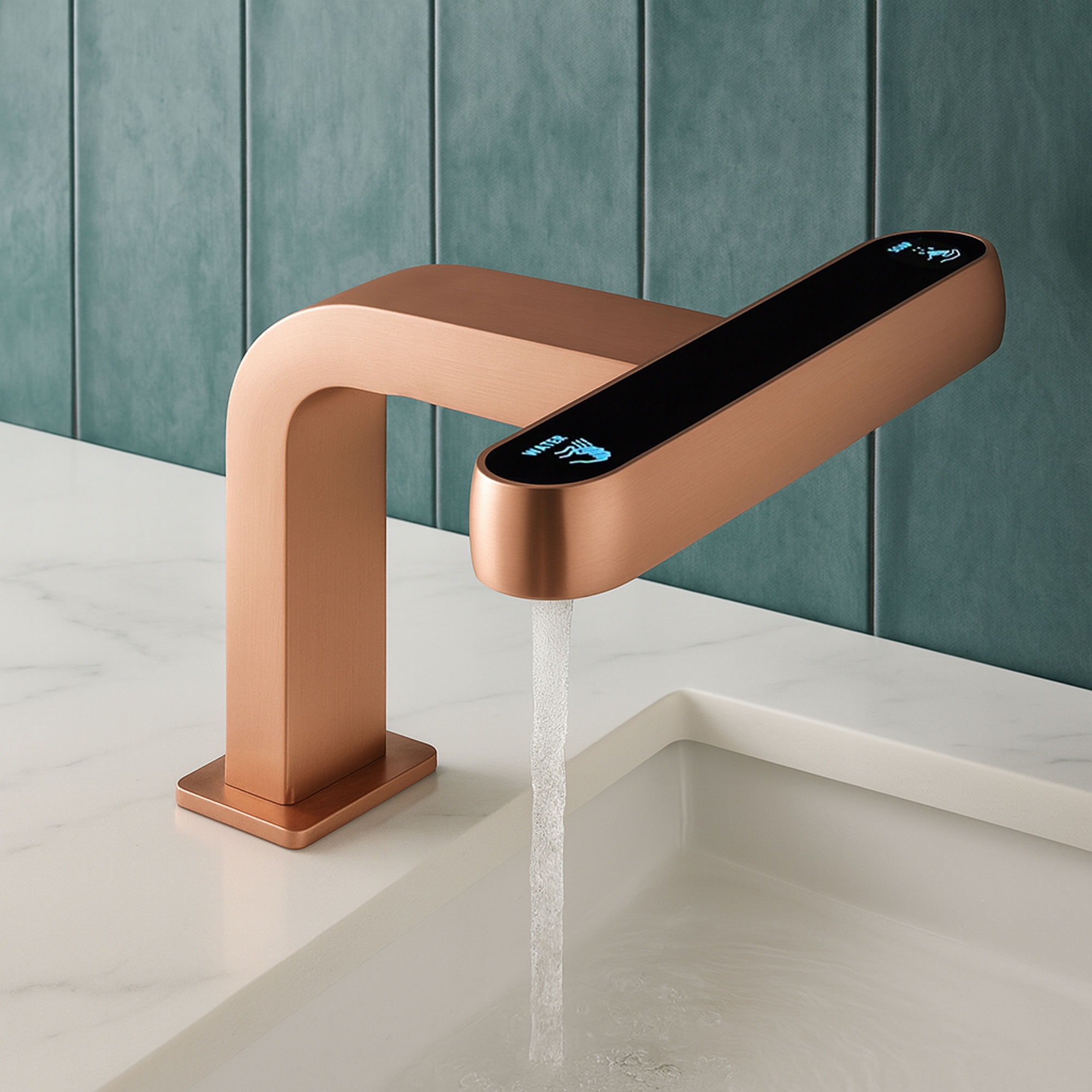
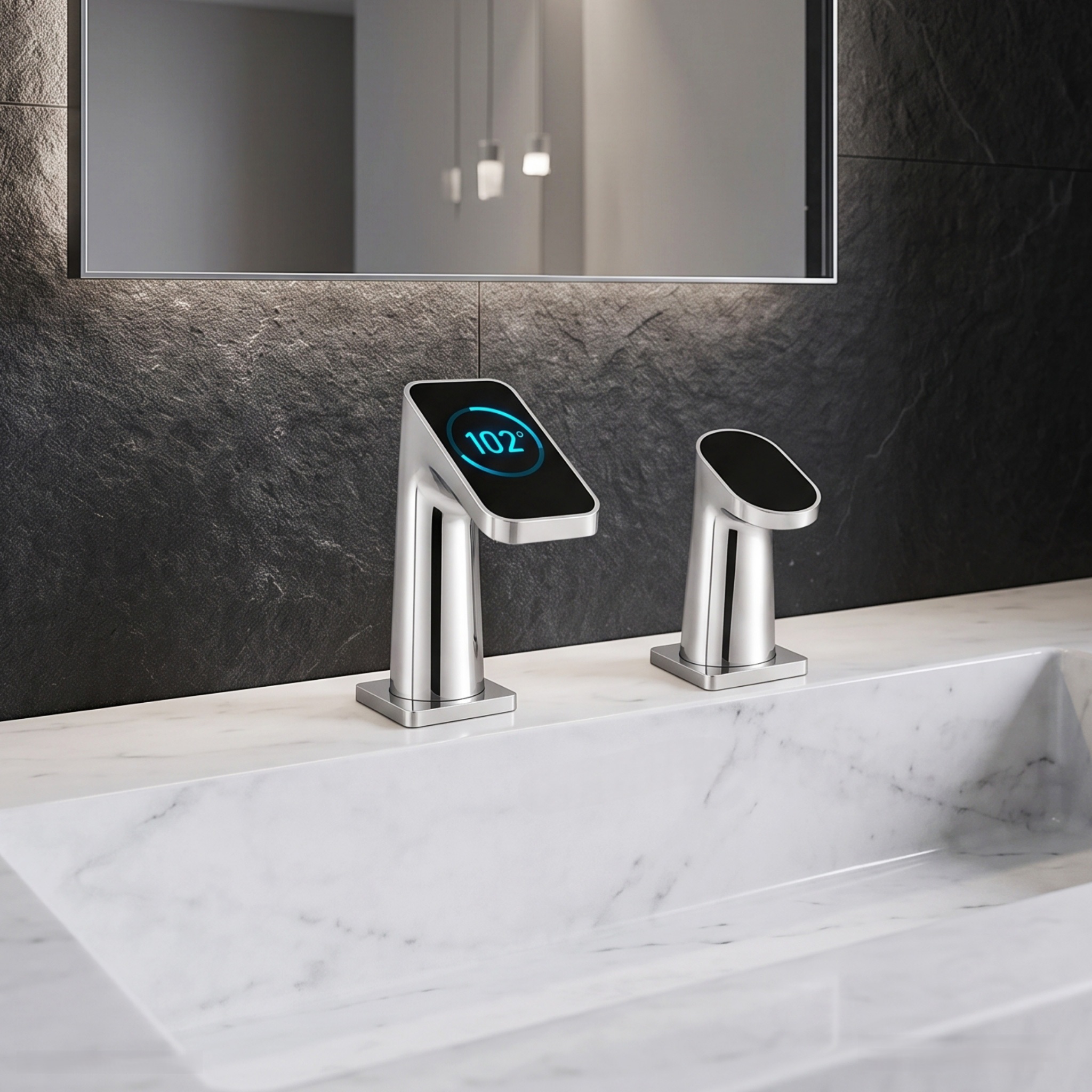
A sensor faucet is most useful when it behaves predictably at the installed basin. The detection zone should activate when hands enter the intended washing area, stop after withdrawal, and avoid responding to a reflective sink surface or movement outside the bowl. Water should land where the basin can capture it without excessive splash. Power and service access must be resolved before the wall, counter, or casework is closed.
Those details matter in high-use restrooms, where inconsistent activation can slow users and increase maintenance calls. Architectural Daily’s touchless faucet and soap-system specification guide considers sensing, power, installation, and coordinated handwashing fixtures. Product choice should follow the project’s requirements and the manufacturer’s current model documentation.
At the basin
Check outlet position, water impact, hand clearance, drainage, and the effect of reflective surfaces on sensing.
Behind the finish
Show valve location, cable route, power source, shutoff valves, and a practical way to reach serviceable parts.
At handover
Record sensor settings, shutoff behavior, maintenance instructions, and the person responsible for future adjustment.
Water quality cannot be solved at the outlet alone
A compliant faucet does not eliminate risks caused by the rest of a building’s plumbing. Low use, water age, temperature conditions, and maintenance practices can affect a distribution system. The CDC’s building water-management guidance describes a continuing process for identifying hazardous conditions and managing waterborne pathogen risks. A fixture’s optional flushing feature, where available, should be coordinated with that program; it is not a substitute for one.
This distinction is particularly useful in hotels, schools, healthcare environments, and buildings with rooms or wings that alternate between heavy use and long periods of inactivity. The plumbing engineer and facility team should determine the appropriate operating and monitoring plan for the actual system. Architectural Daily’s hospitality bathroom fixture case study offers a related view of how guest-space specifications meet ongoing operations.
Operations question
Who will inspect and maintain the fixture after handover, and how will irregularly used outlets be included in the building’s water-management procedures?
Make accessibility part of the fixture layout
Touchless activation does not automatically make a lavatory accessible. Clear floor space, approach, knee and toe clearance, operable parts, mirror position, and the surrounding route must be considered together. The U.S. Access Board’s lavatories and sinks guide explains the applicable accessibility provisions, while its toilet-room guide places the fixture within the room as a whole.
The drawings should show the selected basin and faucet together. A spout that looks appropriately sized in a product image may deliver water too close to the rear of a deep basin or too near the front edge of a shallow one. The same coordination is needed for soap, drying, and any under-counter components that affect available clearance.
Water efficiency needs product-specific evidence
The EPA’s WaterSense bathroom-faucet guidance compares a standard 2.2-gallon-per-minute flow with the 1.5-gallon-per-minute maximum for WaterSense labeled bathroom sink faucets and accessories. These are category reference values. Do not assume that a particular touchless faucet carries the WaterSense label; check the exact product and applicable certification.
Published bathroom faucet flow values
Gallons per minute. Both bars use the same zero-to-2.2-gpm scale.
Source: U.S. EPA, Bathroom Faucets. The graphic compares published category values, not tested performance of a product pictured in this article.
For commercial buildings, the EPA’s WaterSense resources for facilities connect efficient equipment with a broader water-management program. That approach is more useful than selecting a flow rate without checking basin function, user needs, supply conditions, and maintenance requirements.
Turn the specification into an operating plan
The most useful closeout package allows a facility team to identify exactly what was installed and how it should behave. An architect’s finish schedule, a plumbing engineer’s water and valve details, and an electrician’s power route should describe one coordinated installation. On site, commissioning confirms that the assembled system performs as intended.
For a deeper product evaluation, pair this workflow with Architectural Daily’s commercial touchless faucet technology guide. The final specification should always be checked against the current manufacturer submittal and requirements applicable to the project location.
Commercial Sensor Faucet Review Evidence for Low-Lead, Touchless & Public-Health Design
The review evidence focus on touchless hygiene, healthcare and institutional commissioning, sensor reliability, power integration, diagnostics, preventive maintenance and long-term facility operation. Low-lead and potable-water compliance remain documentation questions to verify at submittal; review evidence should not be used as a substitute for NSF/ANSI 372, NSF/ANSI 61 or current model-specific listings.
Public-Health Specification Lens
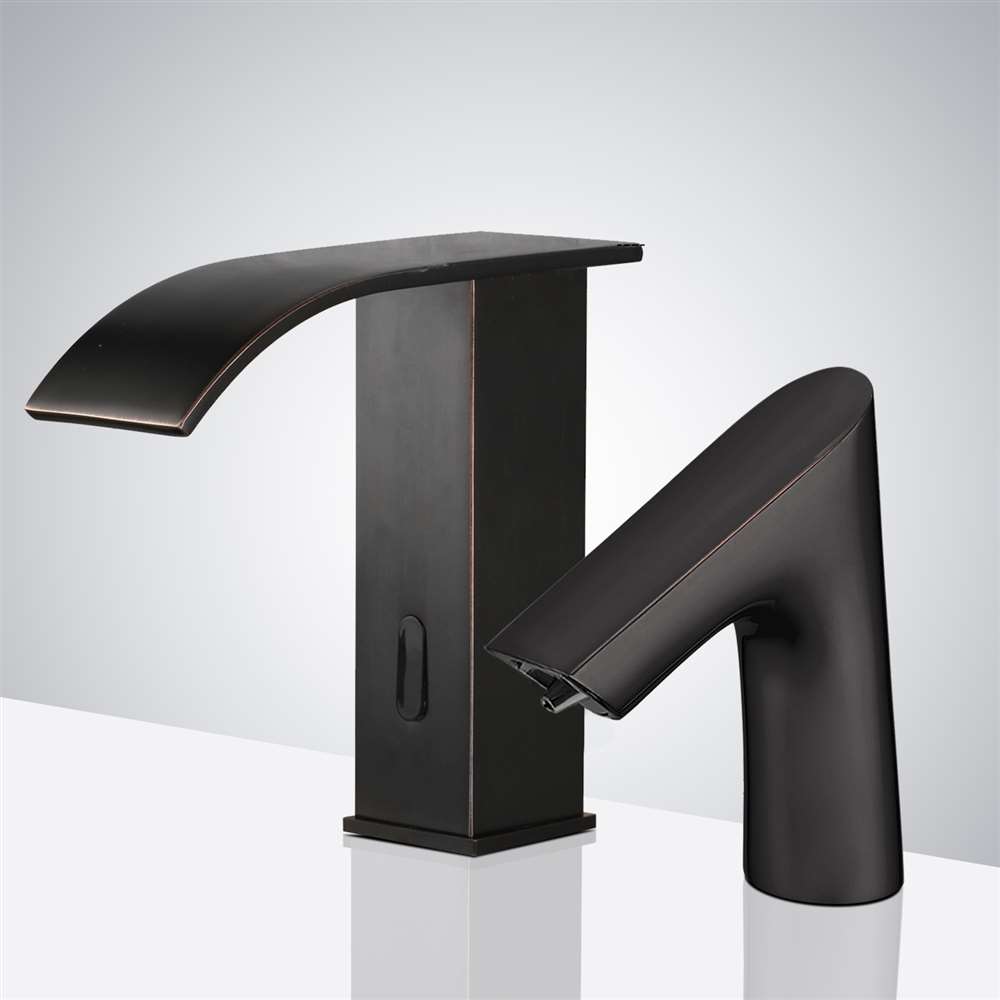
Fontana Oil Rubbed Bronze Waterfall Commercial Sensor Faucet + Automatic Soap Dispenser
Several months after commissioning, our maintenance team requested additional assistance regarding preventive servicing and replacement planning. Fontana’s engineers responded with updated maintenance recommendations, confirmed continued availability of electronic components, and reviewed controller diagnostics without hesitation. Their ongoing technical support demonstrates a genuine commitment to long-term commercial customer success rather than simply completing the initial sale.
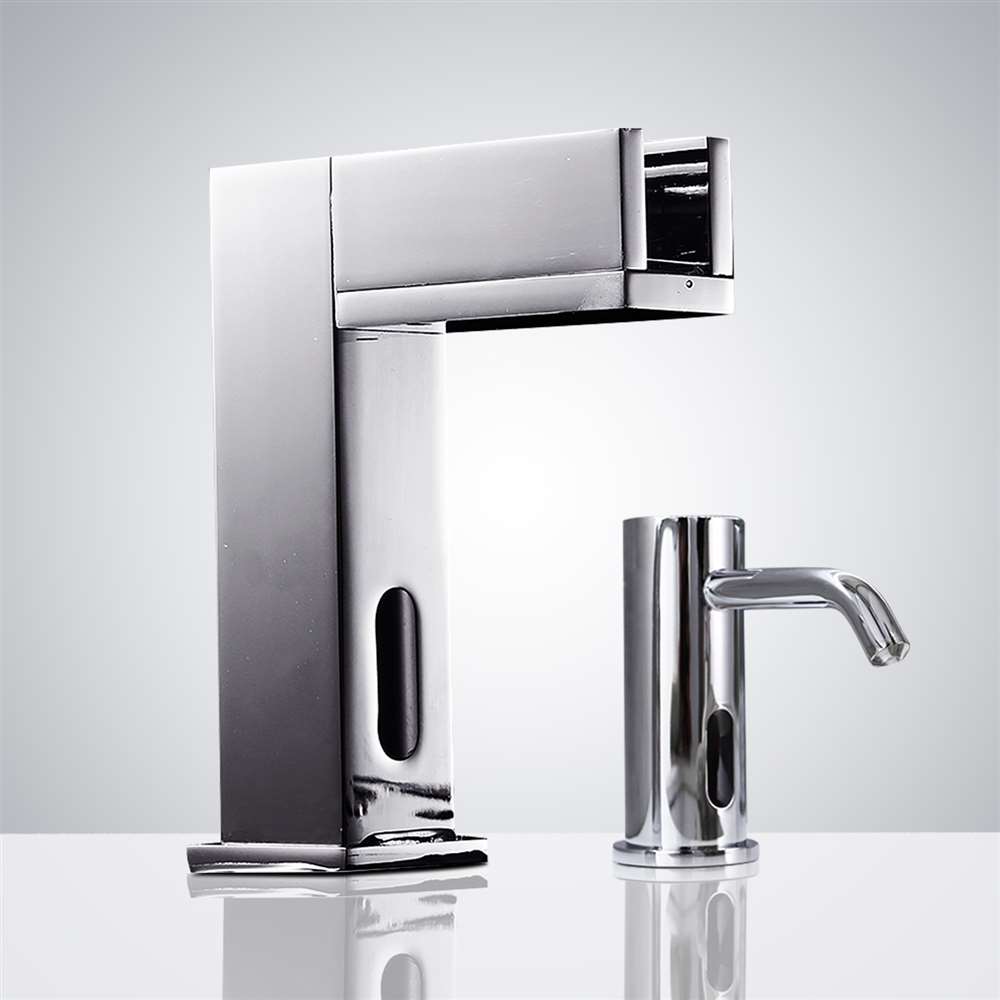
Fontana Chrome Contemporary Commercial Automatic Waterfall Sensor Faucet + Soap Dispenser
Over the course of multiple institutional projects, Fontana’s technical support organization has consistently delivered engineering-level assistance well beyond typical manufacturer expectations. From electrical integration, sensor optimization, compatibility analysis, commissioning oversight, and replacement component planning to rapid troubleshooting and detailed follow-up, every interaction reflects deep commercial plumbing expertise. Their technical service organization has become one of the strongest reasons our firm continues specifying Fontana products for complex public and healthcare facilities.
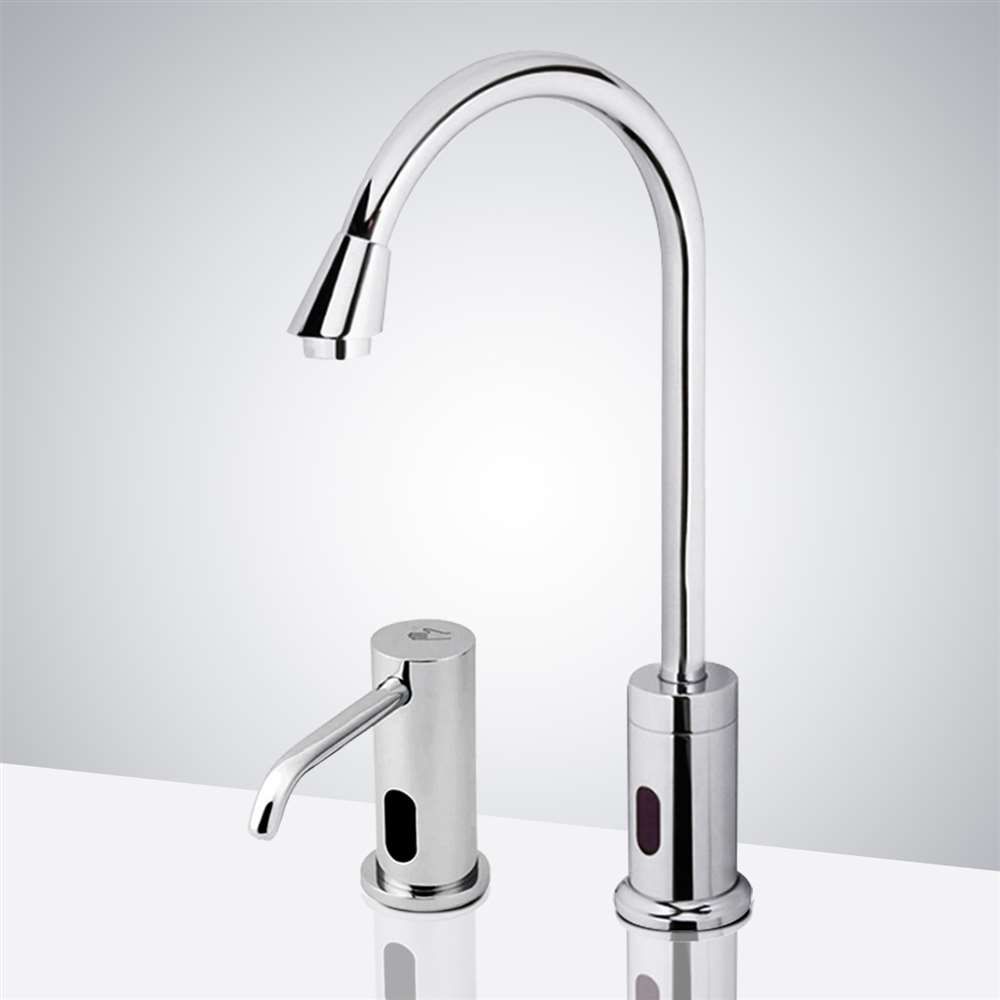
Fontana Hospital Style Adjustable Commercial Automatic Touchless Sensor Faucet + Soap Dispenser
This hospital-style sensor faucet required careful commissioning because of strict infection-control standards and continuous operation. Fontana’s engineering team reviewed installation details, sensor response characteristics, power supply stability, and adjustment procedures while providing detailed technical documentation tailored to healthcare environments. Their specialized commercial support reduced commissioning time and ensured dependable operation before the facility became operational.
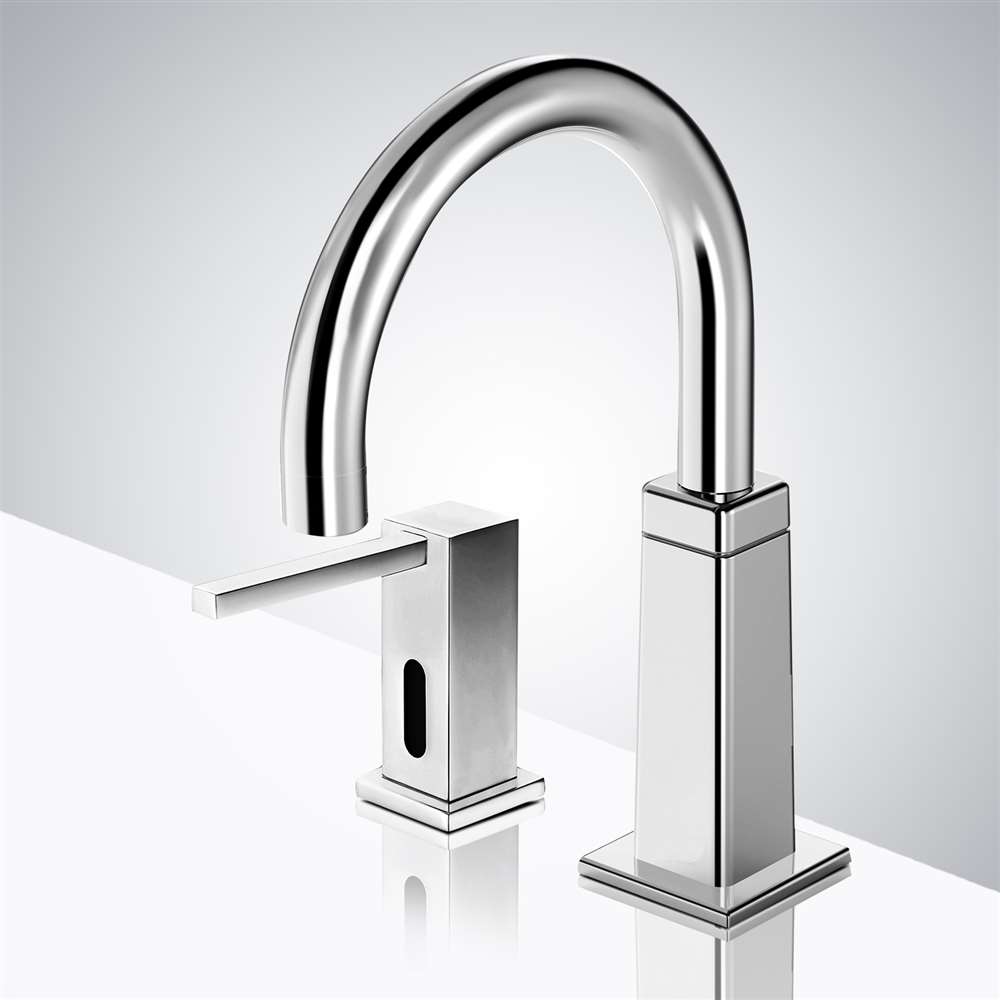
Fontana Reno Electronic Commercial Automatic Sensor Faucet + Sensor Soap Dispenser
The Reno electronic faucet was installed as part of a multi-building commercial renovation where dozens of touchless fixtures were commissioned simultaneously. Fontana coordinated directly with our plumbing contractor and commissioning consultants by supplying wiring verification procedures, controller diagnostics, calibration guidance, and detailed startup documentation. Their organized technical support prevented delays during final project turnover.
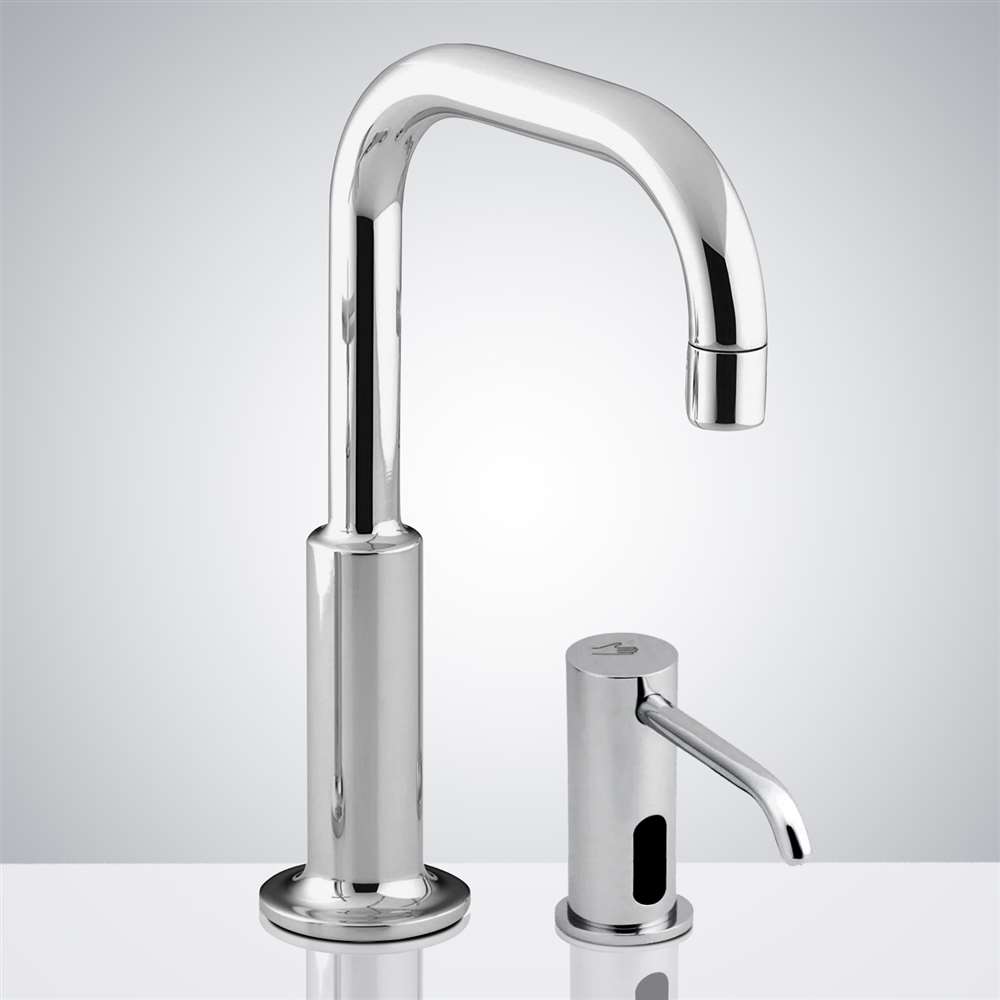
Fontana Vienna Electronic Commercial Automatic Sensor Faucet + Sensor Soap Dispenser
We encountered an intermittent controller communication issue during startup and contacted Fontana’s engineering department immediately. Their specialists analyzed sensor feedback, electrical measurements, controller status indicators, and installation photographs before accurately identifying the source of the problem. The diagnostic process was extremely thorough and avoided unnecessary replacement of perfectly functional electronic components.
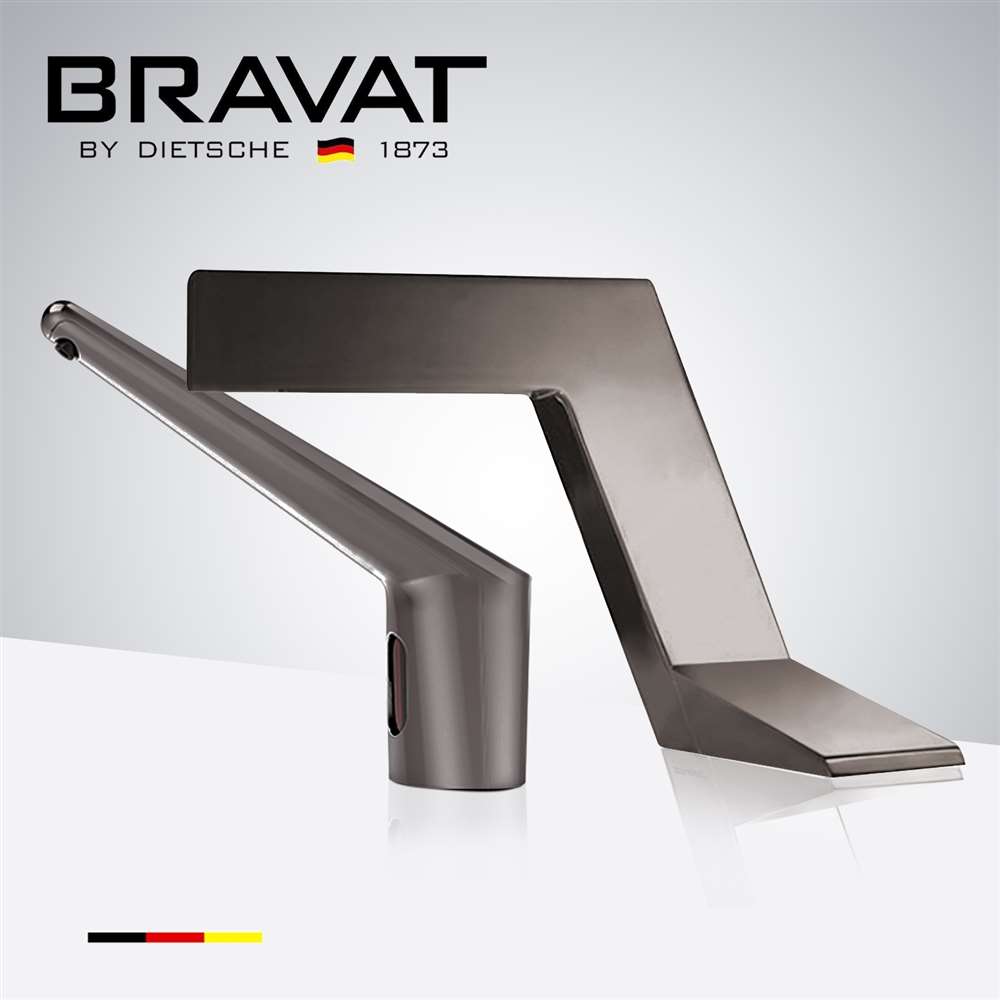
Fontana Brushed Nickel Commercial Automatic Sensor Faucet + Automatic Soap Dispenser
Instead of only addressing installation questions, Fontana provided our maintenance department with an extensive preventive service program. Their engineers explained inspection intervals, sensor cleaning procedures, solenoid diagnostics, controller verification, and recommended spare component inventories. The additional maintenance guidance has improved the long-term reliability strategy for every restroom within our commercial campus.
Review-to-Submittal Verification Matrix
| Product | Public-Health Context | Review Evidence | What the Design Team Should Verify |
|---|---|---|---|
| FS18547 | Lifecycle maintenance | Preventive service, controller diagnostics, component availability | Verify current materials/listings, power, flow and service documentation |
| FS18548C | Institutional / healthcare | Sensor optimization, electrical integration, commissioning | Verify NSF/ANSI 372/61 scope where required; confirm model listings |
| FS18549 | Healthcare | Infection-control commissioning, sensor response, power stability | Verify low-lead and potable-water documentation; confirm hygiene/flush strategy |
| FS18553 | Commercial retrofit | Wiring, calibration, controller diagnostics, startup documentation | Coordinate battery/hardwire choice, service access and closeout settings |
| FS18554 | Mechanical / controls | Sensor feedback, controller diagnostics, electrical measurements | Verify control architecture, shutoff logic, flow and maintenance procedures |
| FS18556 | Campus / facilities | Sensor cleaning, solenoid diagnostics, spare components | Verify approved cleaners, service intervals, lead/potability documentation |
Evidence, Low-Lead & E-E-A-T Boundary
The reviews above are qualitative field evidence covering commissioning, diagnostics, maintenance, sensor behavior and institutional/healthcare operation. They do not independently prove low-lead compliance, potable-water certification, ADA compliance, laboratory durability, failure rate or service life. The parent Architectural Daily article treats low-lead documentation as a submittal and verification issue; exact NSF/ANSI 372, NSF/ANSI 61, cUPC/UPC/CPC, flow-rate and material claims should be confirmed against the current submitted model and third-party listing scope before publication or specification.