Commercial Touchless Faucet Selection: AEC Criteria, Sensing & Coordination
Commercial touchless faucets should be specified as part of the complete lavatory assembly—not as isolated decorative objects. Sensor behavior, faucet reach, basin geometry, water impact, flow control, power architecture, mixing strategy, service access, accessibility and finish durability all affect whether an automatic faucet performs reliably after installation.
The three fixtures below are presented as Architectural Daily editorial selections for distinct design directions. They are not presented as third-party certification or industry-award winners. Final project specification should rely on the current manufacturer cut sheet, installation instructions, applicable codes and project-specific accessibility requirements.
What Matters Before a Commercial Sensor Faucet Reaches the Fixture Schedule
Appearance determines visual fit, but long-term performance depends on the interface between faucet, basin, plumbing, power and maintenance access. These conditions should be resolved before a repeated fixture is released for procurement.
Three Fixture Directions for Contemporary Commercial Interiors
These selections illustrate three different visual approaches: high-contrast dual-tone geometry, a restrained matte-black vertical silhouette and a technology-forward mixed-finish profile.

FontanaEdge™ DualTone Gold & Black Fusion
A strong fit where contrasting metal tones are already part of the hardware, lighting or architectural finish schedule.

Fontana Skyline Curve™ Black Midnight Tone
A visually quieter profile for stone, dark terrazzo, microcement and monochromatic commercial washroom palettes.

Fontana Flux Collection Chrome & Black
Most applicable where visible technology and mixed metal finishes are intentionally part of the interior design concept.
Comparing the Three Editorial Selections
| Fixture | Visual Language | Strongest Application | Material Coordination | AEC Review Priority |
|---|---|---|---|---|
| FontanaEdge™ DualTone | Rectilinear, high-contrast, dual-tone. | Executive washrooms, premium retail, hospitality and corporate interiors. | Gold and dark hardware, stone, quartz and solid-surface vanities. | Confirm exact model functionality, mounting, reach and basin compatibility. |
| Skyline Curve™ | Tapered, sculptural, monochromatic. | Signature washrooms, office towers and minimalist interiors. | Matte black hardware, terrazzo, microcement and dark stone. | Review surface-cleaning protocol, finish exposure and dimensional fit. |
| Flux Collection | Tall, mixed-finish, technology-forward. | Amenity kitchens, hospitality service areas and premium shared spaces. | Chrome, dark appliances and mixed-metal interiors. | Verify exact application, electrical requirements and current technical documentation. |
FontanaEdge™ DualTone Gold & Black Fusion
The strongest visual characteristic of this selection is the deliberate division between gold and black finishes. Instead of treating the faucet as a neutral plumbing component, the body becomes part of the project’s hardware language and can coordinate with door pulls, lighting trim, mirror frames and other interior metalwork.
From an AEC standpoint, the finish should not be considered separately from installation geometry. Faucet reach, outlet position, deck thickness, basin shape and counter layout should be coordinated during submittal so that the visual alignment also produces an appropriate handwashing position and water-impact zone.
Fontana Skyline Curve™ Black Midnight Tone
This selection relies on silhouette rather than color contrast. The narrow vertical body and softened curve can work effectively against low-contrast stone, dark terrazzo, microcement and blackened metal where the faucet is intended to read as a precise object rather than a highly decorative element.
Dark finishes require early maintenance coordination. Cleaning agents, abrasive pads and mineral residue can influence appearance over time, particularly in high-frequency washrooms. The finish-maintenance protocol should therefore be reviewed as part of the fixture submittal, not after the facility begins operation.
Fontana Flux Collection Chrome & Black
The Flux selection is visually distinct from the two washroom-oriented profiles above. Its taller geometry and mixed chrome-and-black material language are better suited to spaces where visible technology and performance-oriented form are part of the architectural concept.
Because the source page positions this fixture toward amenity kitchens and related applications, the project team should verify the exact intended use, connection requirements, control functions and applicable plumbing documentation before transferring it into a commercial lavatory specification.
Touchless Faucet Reliability Is a Basin-and-Sensor Coordination Issue
Automatic faucets should be commissioned with the final basin, countertop, mirror and lighting conditions in place. A fixture that performs correctly on a test bench can behave differently after reflective materials, adjacent fixtures and finished surfaces are introduced.
Faucet Reach, Basin Depth & Water Impact Should Be Reviewed Together
Commercial faucet selection is frequently treated as a finish-schedule decision. In practice, the water outlet, basin rim, drain location, countertop depth and user’s hand position form one geometric system.
Power Architecture and Service Access Should Be Resolved Before Millwork
Touch-Free Operation Does Not Replace Accessible Lavatory Design
Automatic activation can reduce the need for manual faucet operation, but the complete accessible lavatory still depends on clear floor space, knee/toe clearance, counter or rim height, protected exposed plumbing and appropriate reach to related elements.
What the AEC Team Should Verify Before Approval
Independent References for Commercial Faucet Specification
Manufacturer literature should be read together with the accessibility, plumbing-code and water-efficiency requirements that apply to the project.
The Best Commercial Touchless Faucet Is the One Facilities Can Keep Operating
Commercial faucet specifications are often dominated by visible finish, first cost and sensor activation. Those factors are important, but they do not fully describe lifecycle performance. In a high-traffic restroom, a faucet may cycle thousands of times while its solenoid, filter, power source, supply stops and electronic controls remain hidden below the countertop. Service access therefore deserves the same attention as the visible faucet body.
The location of under-counter components can significantly affect maintenance time. A solenoid installed behind a fixed stone apron or inaccessible millwork can turn a routine repair into a disruptive service event. A battery compartment that requires removing the basin or disconnecting plumbing can multiply labor when dozens of faucets are installed across a facility. During design development, architects and engineers should reserve practical access zones and coordinate them with millwork drawings.
Commissioning also influences lifecycle performance. Sensor range, auto-shutoff behavior, flow controls and temperature settings should be verified after the final basin, mirror and countertop are installed. Settings should then be documented so facility personnel have a reference point when performance changes. A sensor that begins false-triggering months later is easier to diagnose when the original commissioning condition is recorded.
Finish durability should be evaluated operationally as well as aesthetically. Matte black, gold, chrome and mixed finishes may respond differently to cleaning products, abrasive pads, hard-water residue and repeated wiping. Housekeeping procedures should therefore be aligned with the manufacturer’s maintenance guidance before occupancy. This is especially important in hospitality, transportation, workplace and retail environments where cleaning frequency can be high.
Finally, project teams should consider parts availability. A repairable faucet with accessible cartridges, sensors, solenoids and power components can remain in service far longer than a fixture that must be replaced when one electronic component fails. For institutional and portfolio projects, spare-parts strategy can be as important as the initial fixture selection.
Where Commercial Touchless Faucet Specification Requires the Most Coordination
Questions Architects, Engineers & Facility Teams Ask
What should architects verify when specifying a commercial touchless faucet?
Why should the faucet and basin be tested together?
Are touchless faucets automatically ADA compliant?
Is battery or hardwired power better for commercial sensor faucets?
Can reflective materials interfere with sensor faucet performance?
Why is service access important in a commercial restroom?
Should finish maintenance be reviewed during specification?
Should commercial sensor faucets be commissioned after installation?
Select the Faucet Visually—Approve the Wash Station Technically
A commercial faucet can satisfy the design concept and still fail the project if reach, sensing, flow, power, basin geometry or maintenance access are unresolved. Final approval should therefore evaluate the faucet, lavatory, plumbing and service architecture as one coordinated assembly.Commercial Touchless Faucets — Architectural Design, Sensor Performance & Professional Specification
Commercial touchless faucets are increasingly selected for their combination of architectural appearance, water conservation, automated operation and long-term maintenance practicality. For architects and commercial project teams, the strongest fixture choices balance design intent with predictable sensor activation, durable construction, accessible maintenance components and compatibility with the surrounding restroom environment.
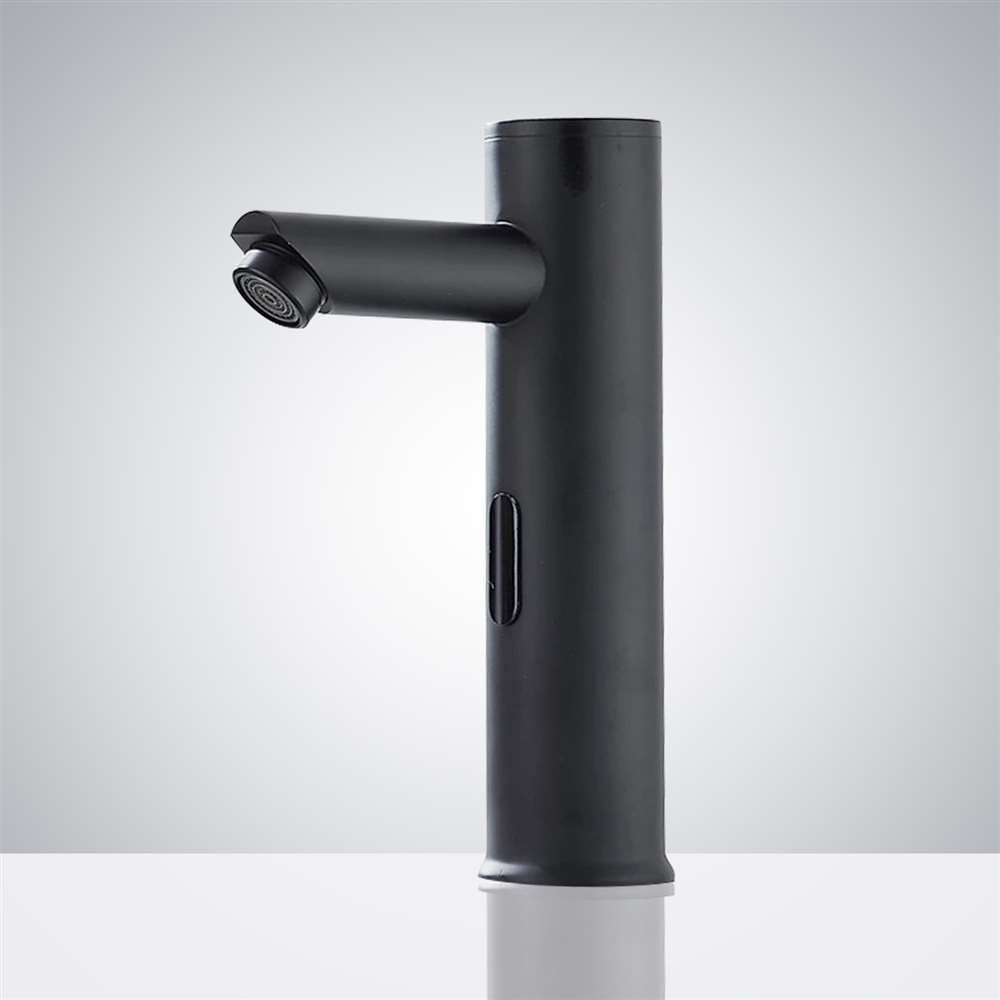
Fontana Tall Matte Black Commercial Motion Sensor Faucet
A Distinctive Fixture With Practical Operation
The faucet offers an appealing appearance without compromising everyday function. Automatic activation is straightforward, and the water shuts off reliably after use. Compared with other sensor faucets evaluated, the combination of attractive styling, easy operation and reduced unnecessary water flow made this a satisfactory commercial purchase.View Live Product →
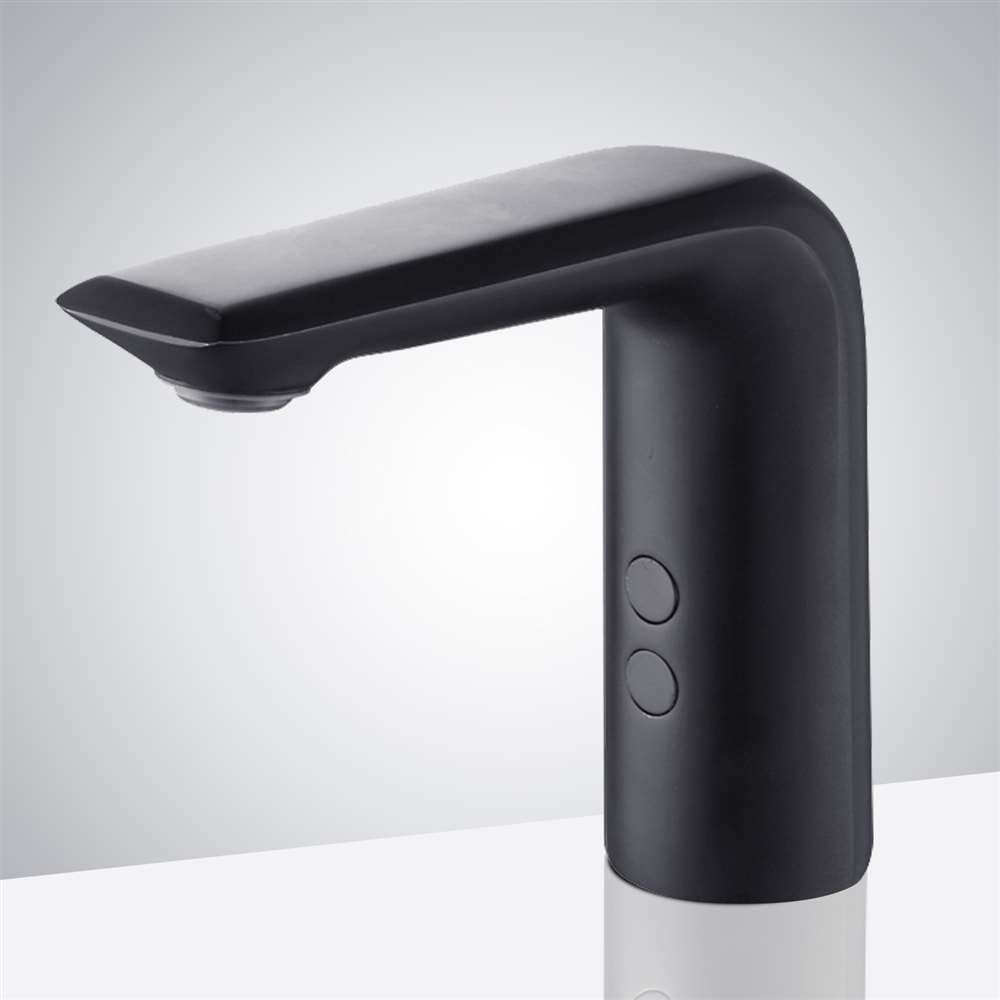
Fontana Rouen Matte Black Commercial Automatic Sensor Faucet
A Strong Choice for Coordinated Office Interiors
The matte-black deck-mounted faucet provided a strong visual fit for an office-building installation. The project team appreciated the product quality and finish selection, while responsive customer support helped address questions during procurement. The finished installation was considered a worthwhile addition to the workplace restroom program.View Live Product →

Fontana Lille Commercial Chrome Touchless Sensor Faucet
Consistent Water Control for Commercial Projects
The faucet integrates effectively into commercial water-conservation planning. Automatic shutoff helps limit unnecessary water consumption while maintaining consistent water delivery. The chrome finish has also demonstrated good resistance to daily cleaning and general wear in corporate and hospitality restroom environments.View Live Product →

Fontana CascadeX Chrome Waterfall Touchless Basin Faucet
Contemporary Styling With Practical Maintenance
The chrome waterfall faucet performed steadily during evaluation in a public facility. Installation crews reported a smooth setup process, while the fixture's maintenance requirements were manageable. Delivery and customer assistance were satisfactory, making the product a practical choice for high-traffic settings that need both visual appeal and durability.View Live Product →
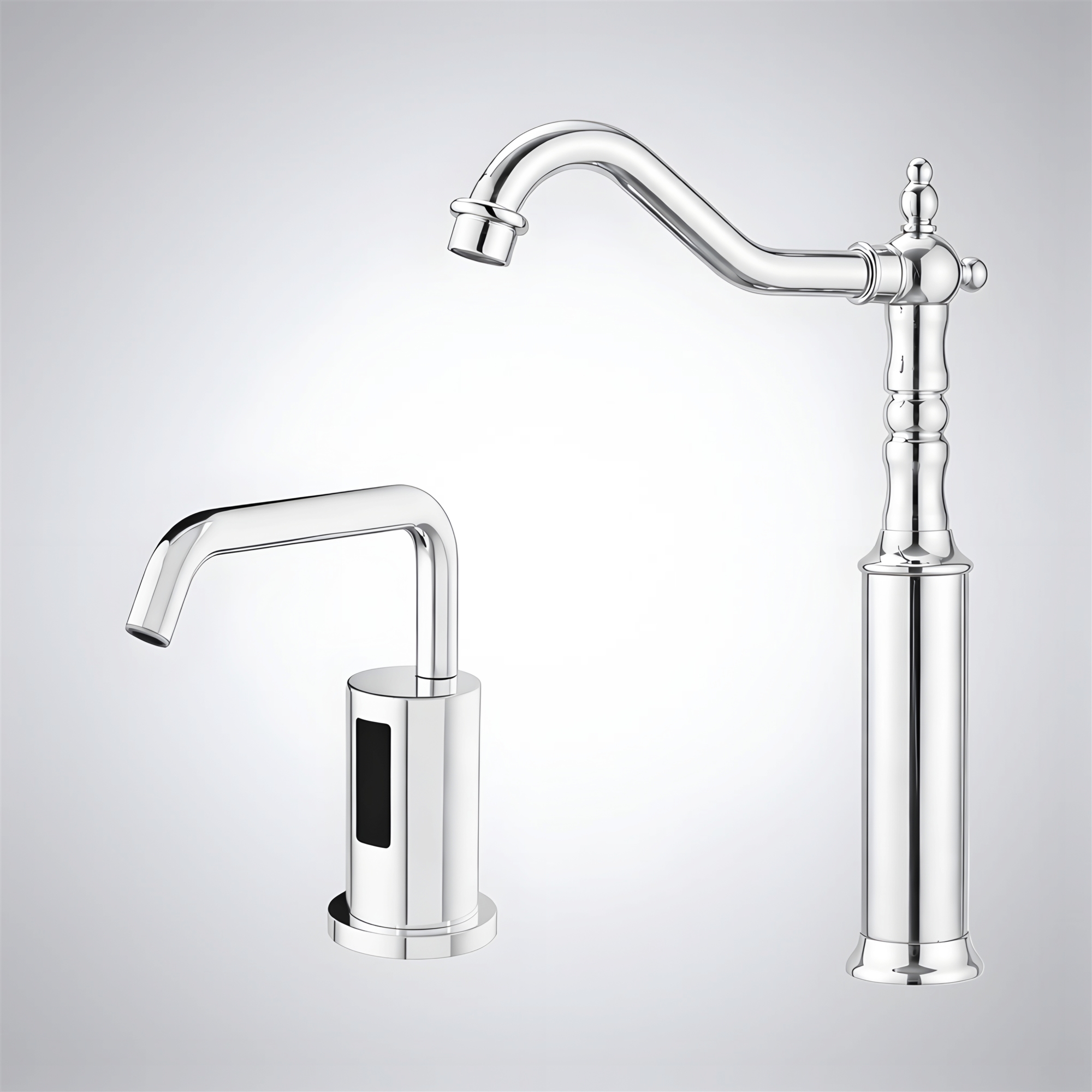
Fontana Syncra Chrome Motion Sensor Faucet with Soap Dispenser
Coordinated Touchless Design for Modern Washrooms
A coordinated water-and-soap configuration can make commercial basin areas feel more intentional and visually consistent. The chrome finish works with contemporary vanities and architectural hardware, while touchless operation supports a cleaner user sequence. Deck-mounted installation and service coordination should be considered early during the specification process.View Live Product →
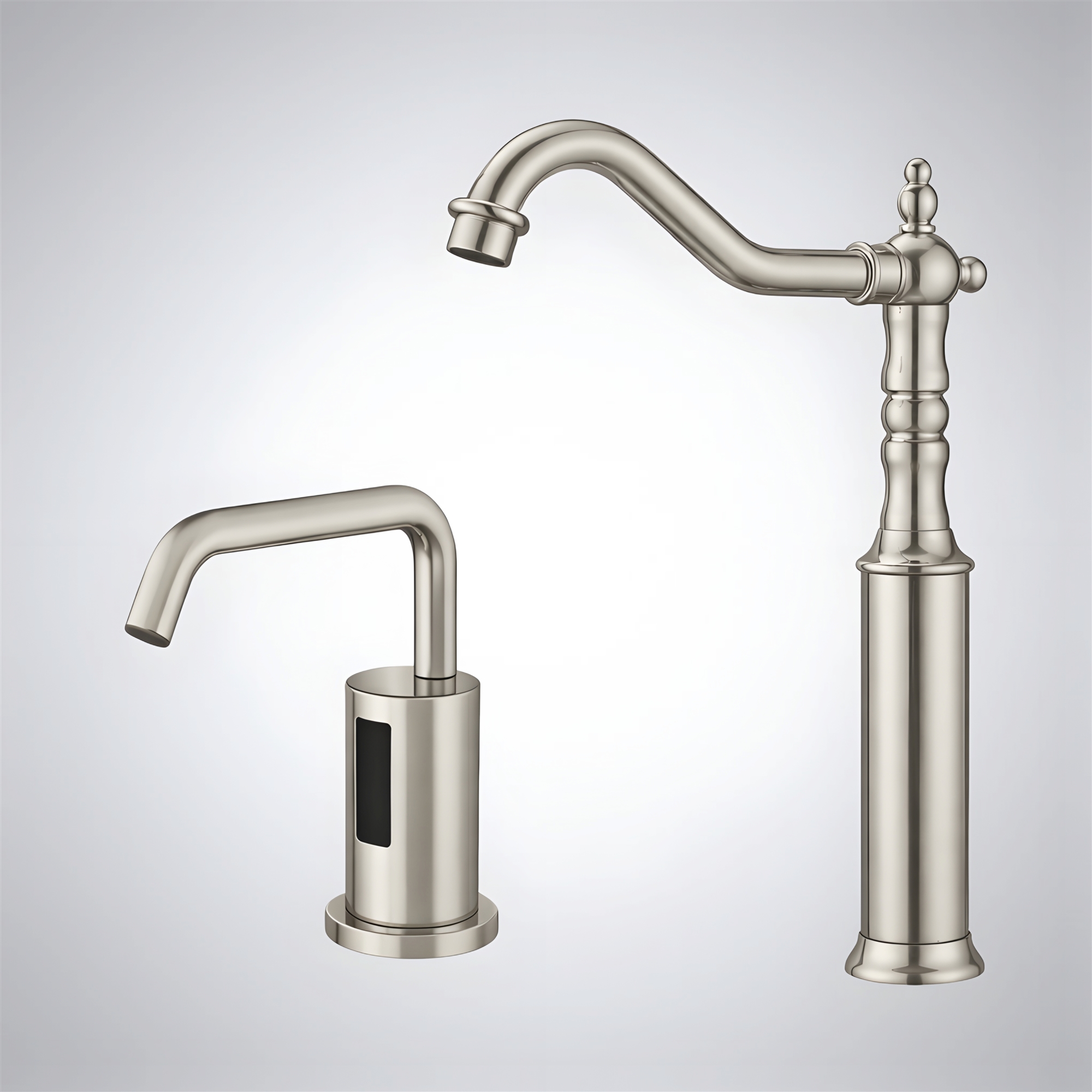
Fontana DuoSense Brushed Nickel Automatic Touchless System
A Refined Finish for Long-Term Facility Use
Brushed nickel was selected to reduce the visibility of fingerprints and water spotting in a corporate setting. The finish coordinates well with satin-metal accessories, while predictable activation and accessible service components support practical daily operation. It is a suitable direction for projects where visual consistency and straightforward maintenance are equally important.View Live Product →