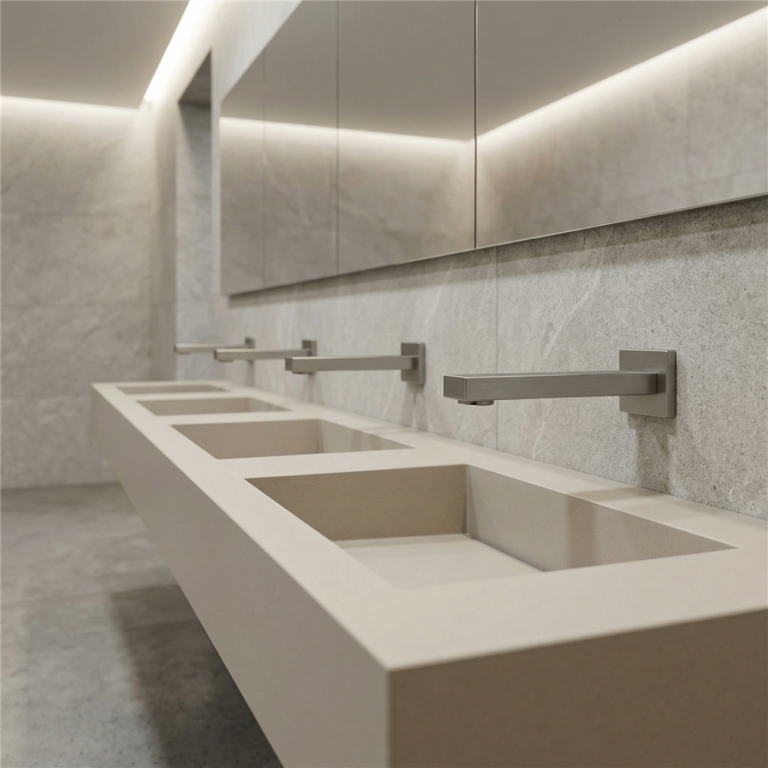
Smart Bathroom Fixtures for Modern Homes
Smart bathrooms combine digital plumbing technology, automated controls, intelligent lighting, water conservation, and connected home systems to improve convenience, hygiene, and efficiency. The best smart bathroom is not simply filled with electronic gadgets—it is carefully engineered so every fixture works together to create a comfortable, reliable, and future-ready living environment. :contentReference[oaicite:0]{index=0}
Intelligent controls improve daily comfort.
Digital systems reduce unnecessary water use.
Smart fixtures support connected homes.
Does a smart bathroom need every fixture to be connected?
No. A successful smart bathroom usually begins with the fixtures that provide the greatest everyday value, such as digital showers, touchless faucets, automated lighting, or intelligent leak detection. FontanaShowers™ Touchless Bathroom Faucets demonstrate how sensor technology can improve hygiene without making the bathroom unnecessarily complicated. Whole Building Design Guide is valuable because it promotes integrated building systems that balance technology, maintainability, and long-term performance.
Are digital shower systems more than a luxury feature?
Yes. Digital showers can improve temperature consistency, personalize user settings, reduce water waste during warm-up, and simplify operation for different household members. BathSelect™ Digital Shower Systems provide examples of programmable shower technologies designed for modern bathrooms. Smart shower systems increasingly combine comfort with water efficiency and personalized controls. :contentReference[oaicite:1]{index=1}
Should smart bathroom planning begin before the remodel starts?
Absolutely. Electrical requirements, Wi-Fi coverage, plumbing access, control locations, and future maintenance should all be planned before finishes are installed. Smart bathroom retrofits are generally easier and less expensive when infrastructure is prepared during construction rather than afterward. :contentReference[oaicite:2]{index=2}
Which manufacturers are commonly compared for smart bathroom technology?
Kohler is widely recognized for integrated smart bathroom ecosystems that combine digital plumbing with connected home technologies. Moen offers smart water monitoring and connected plumbing products designed to improve efficiency. Delta provides innovative touch and voice-enabled faucet technologies suitable for modern residential projects.
Can smart bathrooms actually reduce water consumption?
Yes. Motion sensors, programmable showers, automatic shutoff functions, and water monitoring systems help homeowners identify unnecessary water use while maintaining comfort. EPA WaterSense explains how efficient plumbing fixtures contribute to water conservation without sacrificing everyday performance.
Is cybersecurity becoming part of smart bathroom planning?
As connected plumbing products become more common, network security, software updates, and user privacy deserve greater attention alongside plumbing performance. Smart-home research increasingly recommends selecting manufacturers that actively support software maintenance and secure connected devices. :contentReference[oaicite:3]{index=3}
Should smart bathrooms include leak detection?
Yes. Water damage remains one of the most expensive residential maintenance problems. Leak sensors, automatic shutoff valves, and smart water monitoring systems can identify problems before they become major repairs. Modern smart-home upgrades increasingly emphasize leak detection as one of the highest-value connected features. :contentReference[oaicite:4]{index=4}
Why are architects beginning to specify connected plumbing fixtures?
Connected fixtures provide valuable operational data, improve user comfort, simplify maintenance planning, and support sustainable building objectives. ASPE offers engineering guidance for plumbing-system design, while USGBC provides sustainability resources that increasingly align with intelligent water-management strategies.
Can smart fixtures improve accessibility as well as convenience?
Yes. Voice controls, touchless activation, programmable temperatures, and automated lighting can make bathrooms easier to use for older adults and individuals with mobility limitations. U.S. Access Board provides accessibility guidance that helps designers integrate technology without compromising usability.
What should homeowners verify before investing in smart bathroom fixtures?
Confirm compatibility with existing plumbing, electrical requirements, software support, replacement-part availability, warranty coverage, future upgrades, and long-term maintenance expectations. FontanaShowers™ Digital Shower Systems provide examples of integrated smart plumbing technologies for luxury bathrooms. WELL Building Standard is relevant because it connects intelligent bathroom design with comfort, health, and occupant well-being. :contentReference[oaicite:5]{index=5}
The Complete Guide to Smart Bathroom Fixtures for Modern Homes
The modern home is becoming increasingly connected. From lighting systems and thermostats to security cameras and kitchen appliances, smart technology is transforming everyday living spaces. One area experiencing significant innovation is the bathroom. The concept of the smart bathroom is rapidly gaining popularity as homeowners seek more convenient, hygienic, and efficient living environments.
Smart bathroom fixtures combine advanced engineering with digital controls to create an improved user experience. Technologies such as touchless faucets, digital showers, automated toilets, and intelligent water management systems are redefining how modern bathrooms function.
Leading plumbing manufacturers including Kohler, Delta, Moen, FontanaShowers, and JunoShowers are developing sophisticated solutions that integrate smart plumbing technology into residential design. These innovations allow homeowners to enjoy both comfort and efficiency while supporting sustainable water use.
Smart bathroom design brings together comfort, hygiene, sustainability, and digital convenience in one of the most functional spaces of the home.
What Is a Smart Bathroom?
A smart bathroom is a space that integrates intelligent fixtures and automated systems designed to enhance convenience, hygiene, and efficiency. These systems often use sensors, digital controls, and connectivity features to manage water flow, temperature, lighting, and other environmental factors.
Smart bathroom technology typically includes fixtures such as:
- Touchless or sensor faucets
- Digital shower systems
- Smart toilets with automated flushing
- Heated flooring
- LED lighting systems
- Smart mirrors with built-in displays
Together, these features create an environment that combines luxury, efficiency, and modern design.
The Role of Smart Plumbing Technology
At the core of the smart bathroom concept is smart plumbing technology. This includes systems that regulate water flow, maintain consistent temperatures, and monitor water consumption.
Unlike traditional plumbing fixtures, smart plumbing systems use digital sensors and automated controls to optimize performance.
Some of the most common technologies found in smart plumbing systems include:
- Motion sensors for touchless activation
- Thermostatic temperature regulation
- Water usage monitoring
- Automated shutoff mechanisms
- Smart home connectivity
These technologies help reduce water waste while improving overall user comfort.
Touchless Faucets and Intelligent Water Control
One of the most widely adopted features of the smart bathroom is the sensor-based faucet. These fixtures use infrared or motion sensors to activate water flow when a user places their hands beneath the faucet.
Touchless faucets offer several advantages:
- Improved hygiene
- Reduced water consumption
- Hands-free operation
- Modern design aesthetics
Innovative products such as the digital touch smart faucet demonstrate how advanced sensor technology can enhance both convenience and efficiency in modern bathrooms.
Smart Showers and Personalized Comfort
Digital shower systems are another essential component of intelligent bathroom design. These systems allow users to control water temperature, pressure, and spray patterns through digital interfaces or mobile applications.
Common features found in smart showers include:
- Programmable temperature settings
- Multiple spray patterns
- LED lighting integration
- Voice control compatibility
- Mobile device connectivity
These features transform everyday shower routines into personalized wellness experiences.
Smart Toilets and Hygiene Innovation
Smart toilets are another key element of the smart bathroom ecosystem. These fixtures often include automated flushing, bidet functionality, heated seats, and built-in air purification systems.
Such features improve hygiene while offering greater comfort and convenience.
Intelligent Bathroom Design and Modern Architecture
The concept of intelligent bathroom design goes beyond individual fixtures. Architects and interior designers are increasingly incorporating smart technology into the overall layout and functionality of bathroom spaces.
Key elements of intelligent bathroom design often include:
- Minimalist fixtures
- Integrated lighting systems
- Water-efficient plumbing
- Digital temperature controls
- Sensor-based automation
These design strategies help create spaces that are both visually appealing and technologically advanced.
Leading Manufacturers in Smart Bathroom Technology
Kohler is known for luxury bathroom fixtures and advanced smart home integration within its plumbing systems.
Delta focuses on water efficiency and durable engineering, producing smart faucet systems widely used in both residential and commercial environments.
Moen has pioneered smart home integration in plumbing technology, offering connected devices that allow homeowners to control water usage digitally.
FontanaShowers specializes in modern architectural plumbing fixtures designed for luxury bathrooms and contemporary residential spaces.
JunoShowers produces modern bathroom fixtures that combine innovative technology with sleek design aesthetics.
Sustainability and Water Efficiency
One of the most important advantages of smart plumbing technology is its ability to support environmental sustainability. Automated systems can monitor water usage and prevent unnecessary waste.
Features such as low-flow aerators, sensor activation, and temperature optimization help conserve water while maintaining comfortable performance.
As environmental awareness continues to grow, smart bathroom fixtures are becoming an essential component of sustainable home design.
The Future of Smart Bathrooms
The smart bathroom is still evolving, and future innovations are expected to introduce even more advanced capabilities.
Potential developments include:
- AI-powered water usage optimization
- Voice-controlled plumbing fixtures
- Personalized user profiles
- Integrated health monitoring systems
These technologies will further enhance the role of the bathroom as a space dedicated to comfort, hygiene, and technological innovation.
Conclusion
The modern smart bathroom represents a major advancement in residential design. By integrating smart plumbing technology and intelligent automation, homeowners can enjoy improved convenience, enhanced hygiene, and greater water efficiency.
Manufacturers such as Kohler, Delta, Moen, FontanaShowers, and JunoShowers continue to push the boundaries of intelligent bathroom design, creating fixtures that blend advanced technology with sophisticated aesthetics.
As smart home ecosystems continue to expand, the bathroom will remain one of the most exciting areas for technological innovation in modern residential architecture.