Zero-Downtime Restrooms
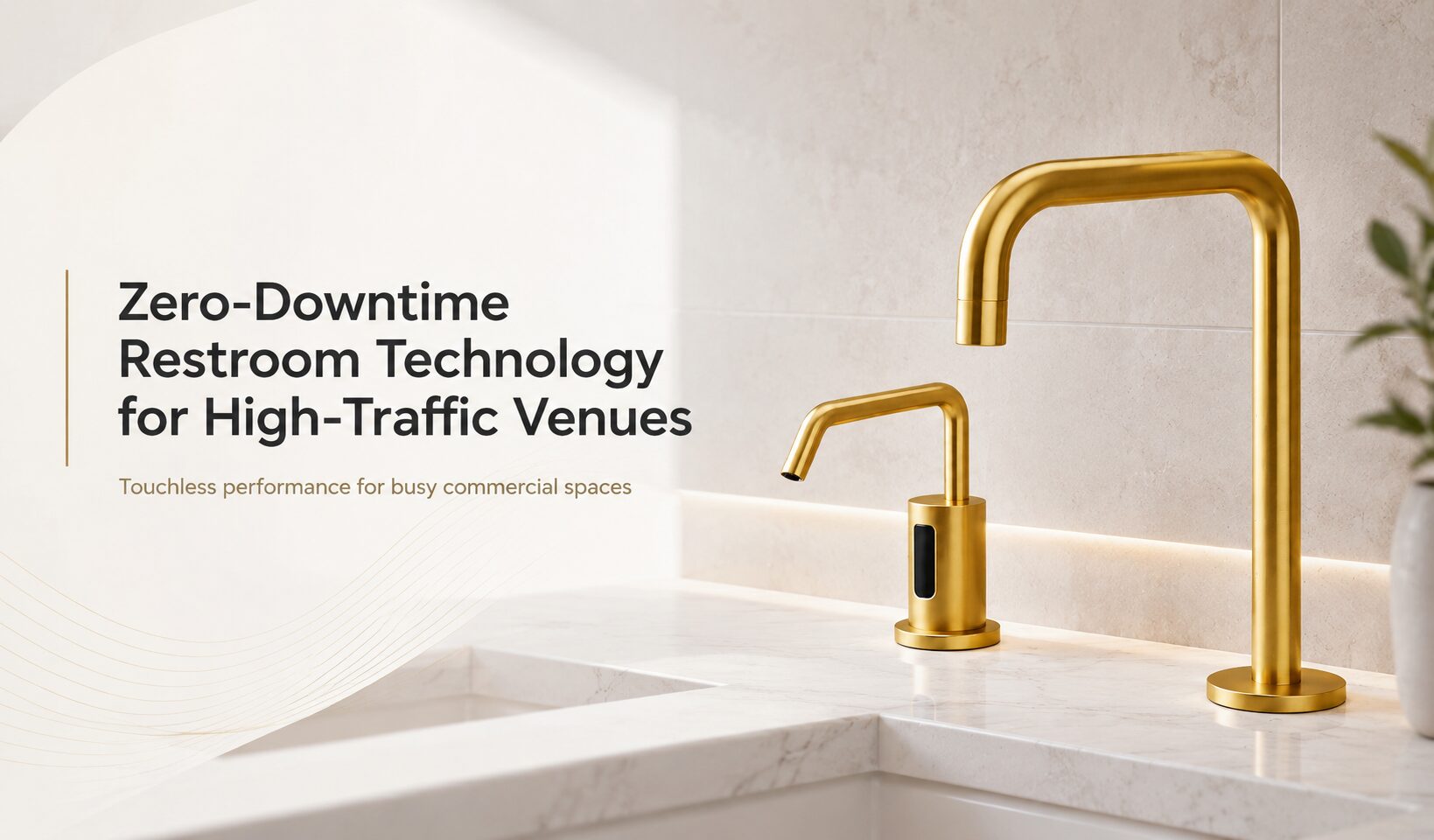
How Fontana Touchless systems help reduce operational interruptions during concerts, sports events, intermissions, halftime peaks, and continuous high-capacity restroom usage.
Why Restroom Downtime Becomes a Venue Operations Problem
In a stadium, concert hall, arena, theater, campus field house, or multipurpose entertainment venue, restroom downtime is never just a plumbing issue. It can affect crowd movement, guest satisfaction, cleaning schedules, security routes, concessions traffic, and the way visitors judge the entire venue. When thousands of people move through concourses at the same time, one closed restroom bank can create a chain reaction. Lines grow, guests spill into walkways, nearby restrooms become overloaded, and maintenance teams are forced to respond under pressure instead of following a planned service routine.
Zero-downtime restroom technology is not a single product claim. It is a design strategy built around dependable touchless activation, standardized fixture families, accessible service points, controlled water delivery, durable finishes, predictable cleaning access, and quick isolation of small failures before they become large operational interruptions. Fontana Touchless systems fit this planning model because they are designed for commercial restroom environments where hygiene, speed, durability, and low-maintenance operation must work together.
For architects, plumbing engineers, facility directors, and owners, the restroom package should be treated like a performance system. The goal is to keep every handwashing station, soap station, and fixture bank ready through pre-event surges, halftime breaks, intermissions, post-event exits, staff cleaning windows, and daily back-of-house use.


The Zero-Downtime Logic Behind Fontana Touchless Systems
A high-traffic restroom succeeds when users understand the fixture instantly, the sensor responds consistently, water stops when use is complete, soap delivery is predictable, and maintenance staff can access components without tearing apart finished surfaces. Fontana Touchless faucets and coordinated faucet-soap-dryer solutions support that logic by reducing user contact, limiting unnecessary handling, and helping the handwashing zone move people forward instead of slowing them down.
During concerts and sports events, restroom use is not evenly distributed. Guests arrive early, rush facilities before the event, return in heavy waves at halftime or intermission, and often create a final surge after the event ends. The sink zone must absorb that rhythm. Manual handles, inconsistent soap dispensers, clogged aerators, hard-to-reach service panels, and nonstandard fixtures can turn a small maintenance item into a public-facing problem. Touchless systems reduce shared contact points and create a more intuitive sequence: approach, activate, rinse, soap, dry, exit.
The value is especially clear when fixture families are repeated across multiple restroom banks. Maintenance teams can stock fewer parts, train technicians on fewer models, and resolve issues faster. Cleaning crews can wipe around consistent spout forms, dispenser locations, and counter layouts without learning a different fixture setup in every zone. That consistency is one of the strongest ways to reduce downtime across a large venue.
Fast user flow
Hands-free activation helps guests move through wash stations without pausing to operate handles or touch shared surfaces.
Lower contact burden
Touchless water and soap delivery reduce common contact points in dense public washrooms.
Service consistency
Repeated fixture platforms simplify maintenance response, replacement planning, and staff troubleshooting.
Designing for Peak Events, Not Average Occupancy
Many restroom problems begin when teams design around average use. A high-capacity venue rarely fails during a quiet hour. It fails during the compressed window when thousands of guests need the same service at once. For that reason, the restroom should be planned as an event-flow zone. Entrances, queue lines, sink banks, drying areas, mirrors, waste openings, doors, and exits all need enough clarity to prevent the handwashing area from becoming a bottleneck.
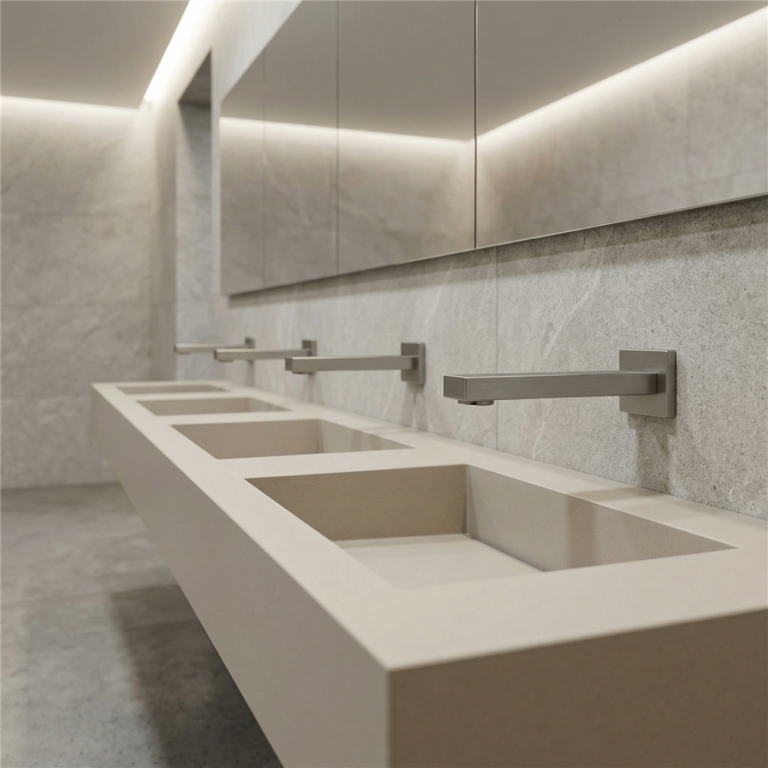
Fontana Touchless fixtures can support that flow when paired with the right architectural layout. Long sink runs, repeated faucets, predictable spacing, wall-mounted soap or integrated systems, and coordinated drying locations help guests complete the task quickly. Where counter clutter creates cleaning delays or crowding, integrated wall-mounted systems can free the deck area and make the room easier to maintain. Where retrofit conditions limit wall access, deck-mounted automatic faucets may provide a practical upgrade path while still improving hygiene and user speed.
The design goal is not simply to install touchless technology. The goal is to keep the restroom open, clean, and easy to reset between waves of use. That requires fixtures that work with the basin, drain location, wall finish, access panel, power supply, soap reservoir, and custodial routine.


Operational Interruptions Fontana Touchless Planning Helps Reduce
Restroom interruptions often come from small issues that compound under traffic: a user leaves a manual faucet running, a soap dispenser empties during peak use, a fixture is difficult to clean around, an exposed part is damaged, a battery replacement is missed, or a technician cannot isolate a single problem without affecting the wider room. AEC teams can reduce these risks by specifying touchless systems with predictable activation, controlled water flow, serviceable components, and a maintenance plan that starts during design instead of after opening day.
Fontana systems are well suited to this planning approach because the product range includes commercial sensor faucets, wall-mounted touchless options, integrated faucet and soap configurations, and multi-function touchless units for coordinated hygiene zones. In a sports venue, that means fixture banks can be organized by use case: rugged concourse restrooms, premium club restrooms, staff zones, team areas, family restrooms, and retrofit spaces. In a theater, the same logic applies during intermission. In a campus athletic facility, the restroom may need to support athletes, students, visitors, and event crowds without constant service disruption.
| Downtime Risk | AEC Planning Response | Fontana Touchless Benefit |
|---|---|---|
| Peak crowd surges | Use repeated touchless fixture banks with clear approach and exit paths. | Supports faster handwashing and reduces manual-handle delay. |
| Cleaning delays | Coordinate basin shape, counter slope, fixture spacing, and accessible surfaces. | Cleaner deck areas and fewer shared touchpoints simplify reset between events. |
| Service confusion | Standardize faucet and dispenser families across similar restroom zones. | Maintenance teams can train faster and stock fewer replacement parts. |
| Uncontrolled water use | Specify automatic shutoff and sensor-controlled delivery. | Water runs only when activated, helping reduce waste and unattended flow. |
| Large-area closure | Provide zone shutoffs, service panels, accessible controls, and clear documentation. | Small issues can be isolated faster without closing a full restroom bank. |
Venue Case-Study Context for High-Traffic Restroom Planning
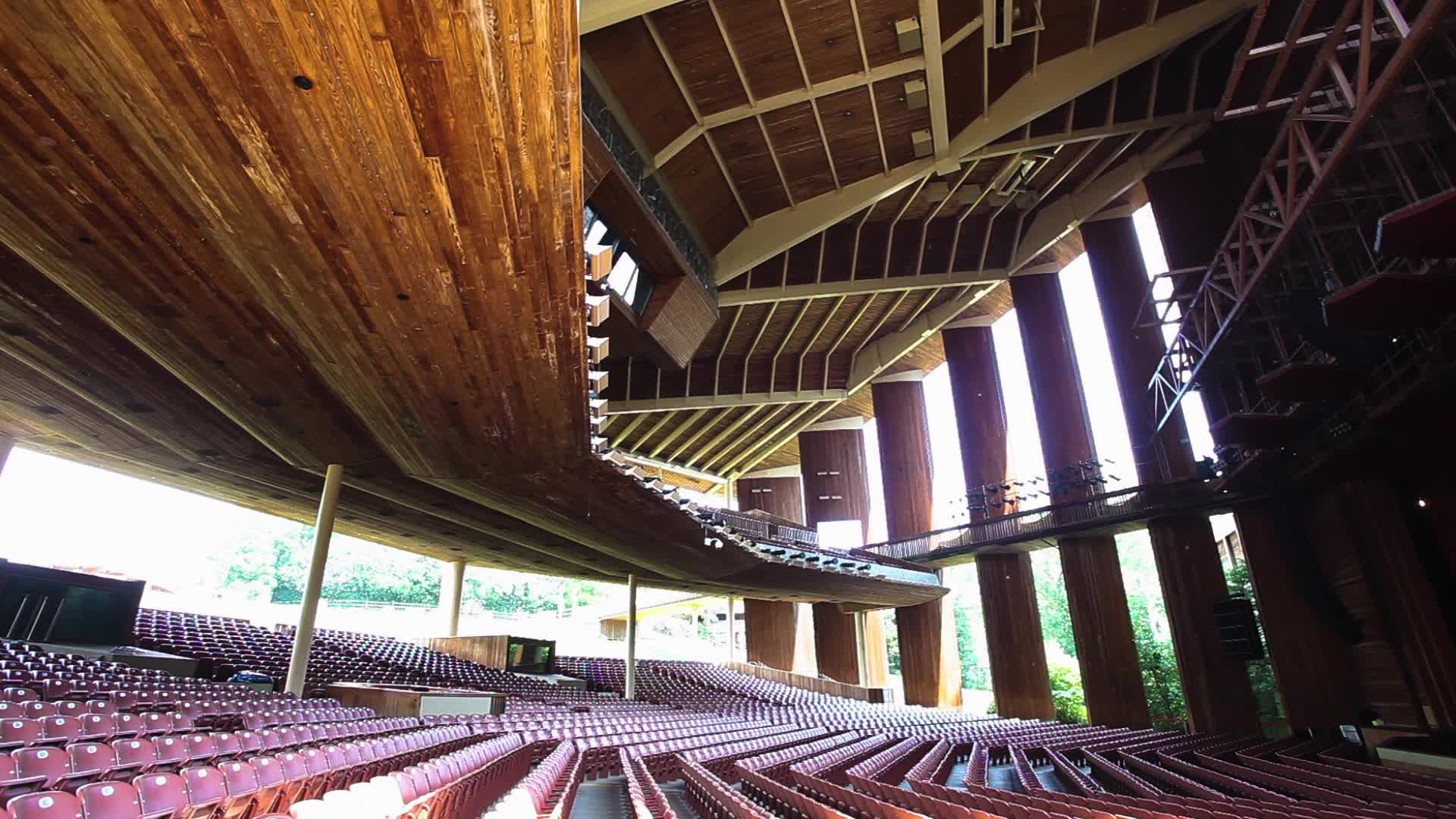
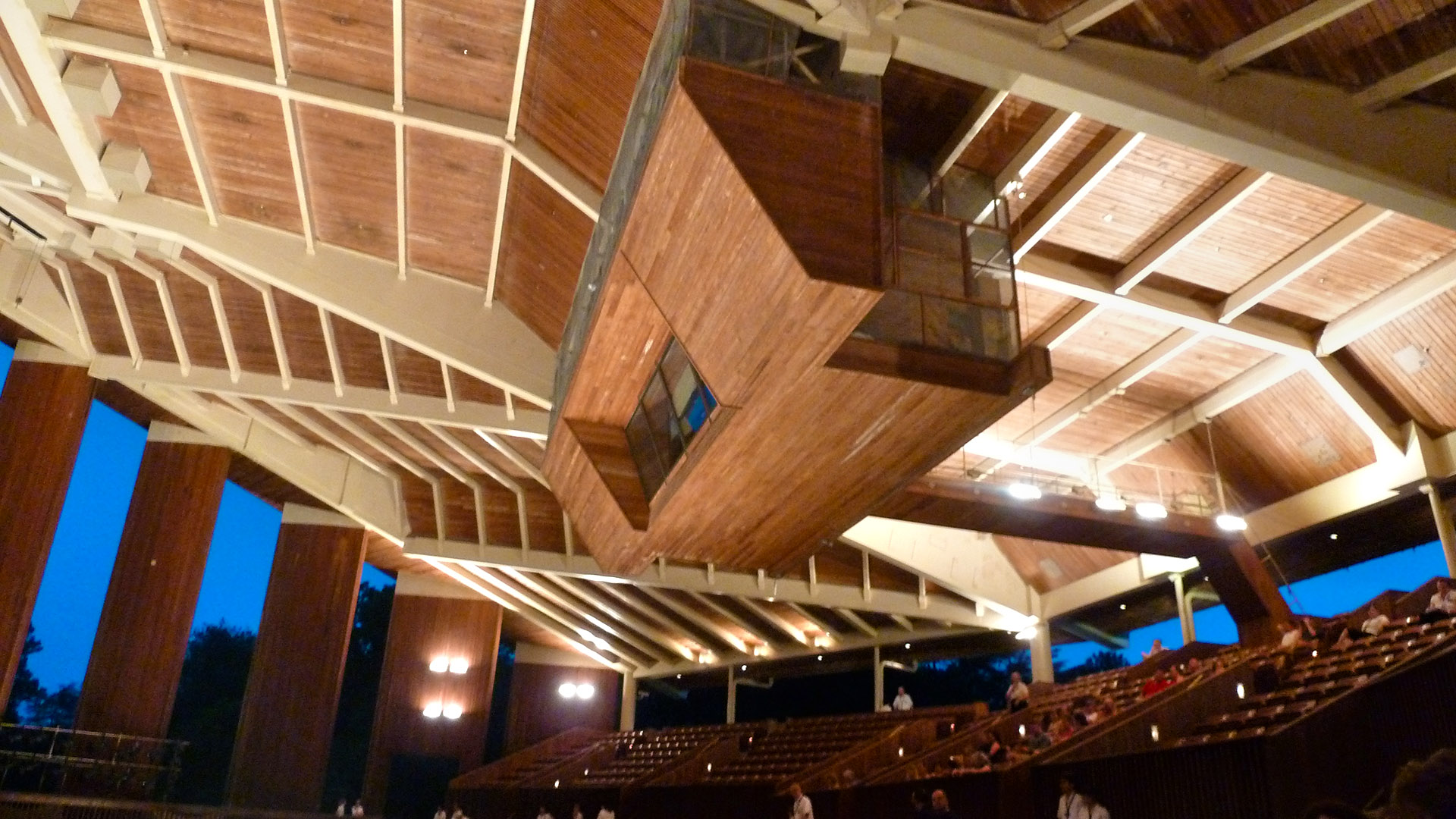
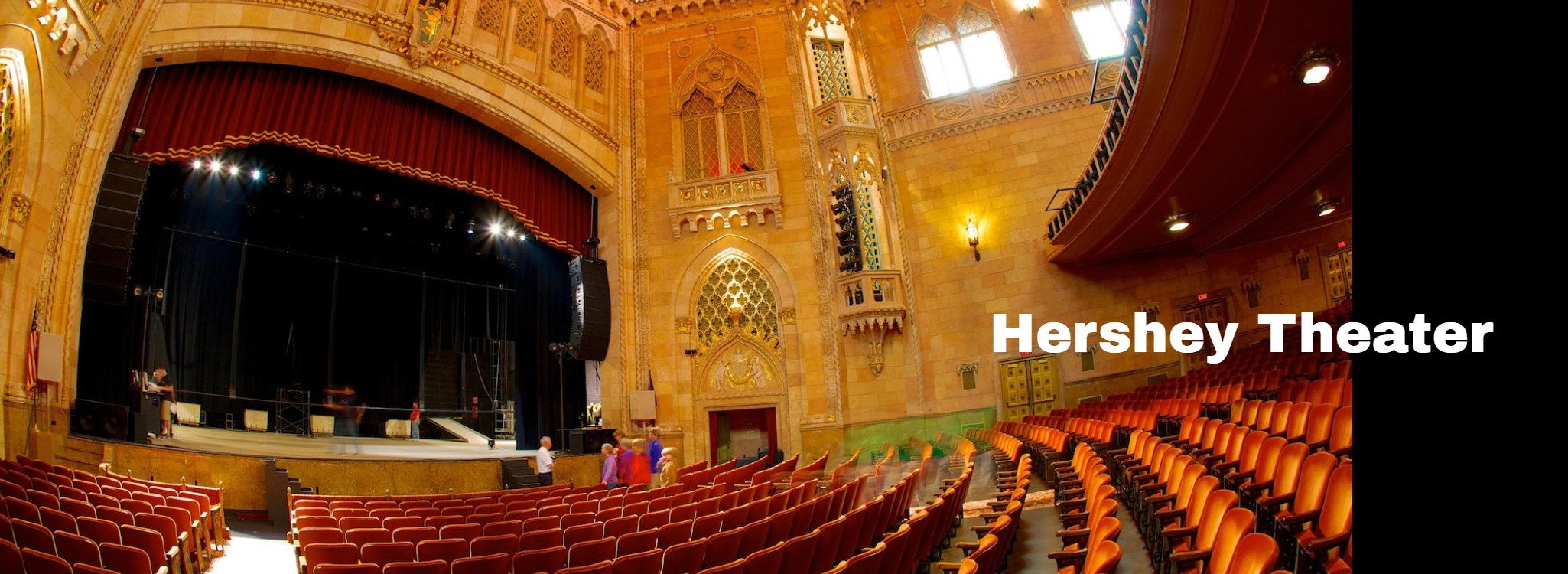
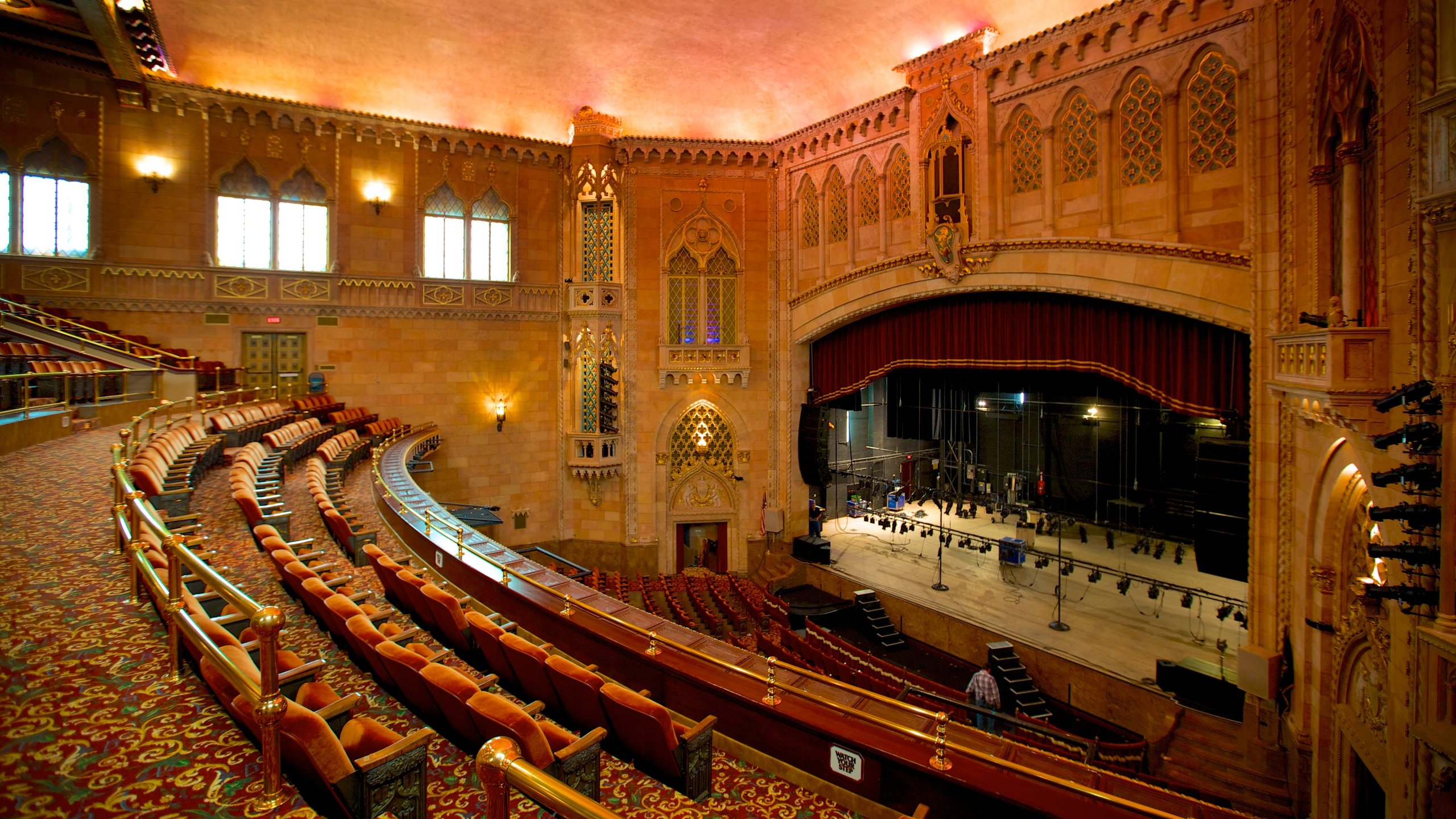
Fontana project and planning pages show why the zero-downtime restroom conversation matters across different venue types. The Las Vegas MLB Stadium context highlights a large, high-profile sports venue where restroom fixtures must serve concentrated event traffic, long lifecycle expectations, and high visibility. The UNL Memorial Stadium reference reinforces the pressure of game-day scale, where the restroom program has to support waves of users in short windows. The Wolf Trap and Hershey Theatre references show that performance venues experience a different but equally demanding rhythm: arrivals, intermission, and exit periods. The UConn Field House planning page brings the focus to campus athletic renovation, where fixtures must support daily use and event flexibility.
Together, these examples show that zero-downtime restroom design is not limited to one building type. It applies wherever public use is intense, concentrated, and visible. The fixture package becomes part of the operational strategy. It has to look appropriate for the architecture, but it also has to protect uptime.


Specification Checklist for Architects, Engineers, and Facility Teams
Zero-downtime restroom performance should be written into the specification process. Design teams should coordinate power supply preferences, sensor access, faucet spacing, soap refill paths, shutoff locations, basin geometry, aerator strategy, finish durability, cleaning chemical exposure, and closeout documentation. Owners should ask for a fixture schedule that maintenance teams can actually use after turnover. That schedule should identify model numbers, replacement parts, service panels, power locations, cleaning instructions, warranty information, and inspection intervals.
For continuous high-capacity usage, the strongest designs use redundancy. Distributed restroom clusters prevent one closure from overloading the entire venue. Repeated fixture families make parts replacement faster. Accessible controls reduce repair time. Touchless faucets with automatic shutoff reduce the risk of unattended flow. Integrated systems can improve circulation by combining water, soap, and drying in one coordinated zone where appropriate. Durable finishes keep the restroom looking cleaner through repeated cycles of use and cleaning.
The final measure of success is simple: guests should not notice the restroom system. They should move through it quickly, wash without confusion, see a clean and modern space, and return to the event. Facility teams should be able to clean, refill, inspect, and repair without turning every issue into a public interruption. That is the operational promise behind zero-downtime restroom technology.
Specify for access
Place controls, shutoffs, reservoirs, and transformers where trained staff can reach them quickly.
Repeat the kit
Use consistent fixture families across zones to reduce training and spare-part complexity.
Design the reset
Plan how crews will clean, refill, inspect, and reopen each restroom between traffic waves.
Specified Touchless Faucet & Soap Dispenser Gallery
The following Fontana touchless faucet and soap dispenser combinations can support commercial restroom fixture planning where finish consistency, coordinated hygiene, and repeatable fixture families are important for high-traffic venue operations.


Featured Fontana Project & Planning Pages
Related Stadium Restroom Infrastructure Links
Use these related references for additional AEC planning context around stadium restrooms, smart restroom systems, sensor accuracy, fixture lead times, approved vendors, and infrastructure best practices.
Conclusion: Keep the Restroom Online When the Venue Is at Full Capacity
Zero-downtime restroom design is about protecting the guest experience and the operations team at the same time. Fontana Touchless systems help AEC teams plan restroom zones that are easier to use, easier to clean, easier to service, and better prepared for the traffic rhythm of concerts, sports events, theaters, arenas, and campus venues.
Zero-Downtime Restroom Technology Resources
High-traffic venues require restroom systems engineered for uptime, rapid servicing, durable electronics, maintenance efficiency, and uninterrupted fixture performance during peak demand.
- Sloan commercial sensor faucets support dependable operation across demanding public restroom environments.
- Zurn sensor systems help reduce maintenance disruptions and improve fixture reliability.
- Fontana Touchless Faucets support hands-free restroom operation in high-capacity facilities.
- BathSelect commercial sensor faucets provide touchless solutions for modern public restrooms.
- Chicago Faucets electronic systems deliver durable performance for transportation and civic facilities.
- Populous specializes in stadiums and venues requiring reliable public infrastructure.
- HKS supports sports, entertainment, and hospitality venue development projects.
- IFMA provides facility management guidance focused on operational continuity.
- Henderson Engineers supports MEP coordination for high-occupancy public facilities.
- ASPE supports plumbing engineering practices for resilient restroom infrastructure.
Zero-downtime restroom strategies prioritize reliable fixtures, accessible servicing, coordinated engineering, and operational resilience throughout the facility lifecycle.