
DO-160 Touchless Fixtures: Aircraft Lavatory Qualification & Specification
Specifying a touchless fixture for an aircraft lavatory requires separate evaluation of environmental qualification, equipment configuration, electrical and hydraulic integration, installation approval, service access, and revision control. Ground-building standards can provide useful reference criteria, but they should not be presented as substitutes for aircraft-specific qualification or approved installation data.
DO-160 Touchless Fixture Qualification — Technical Summary
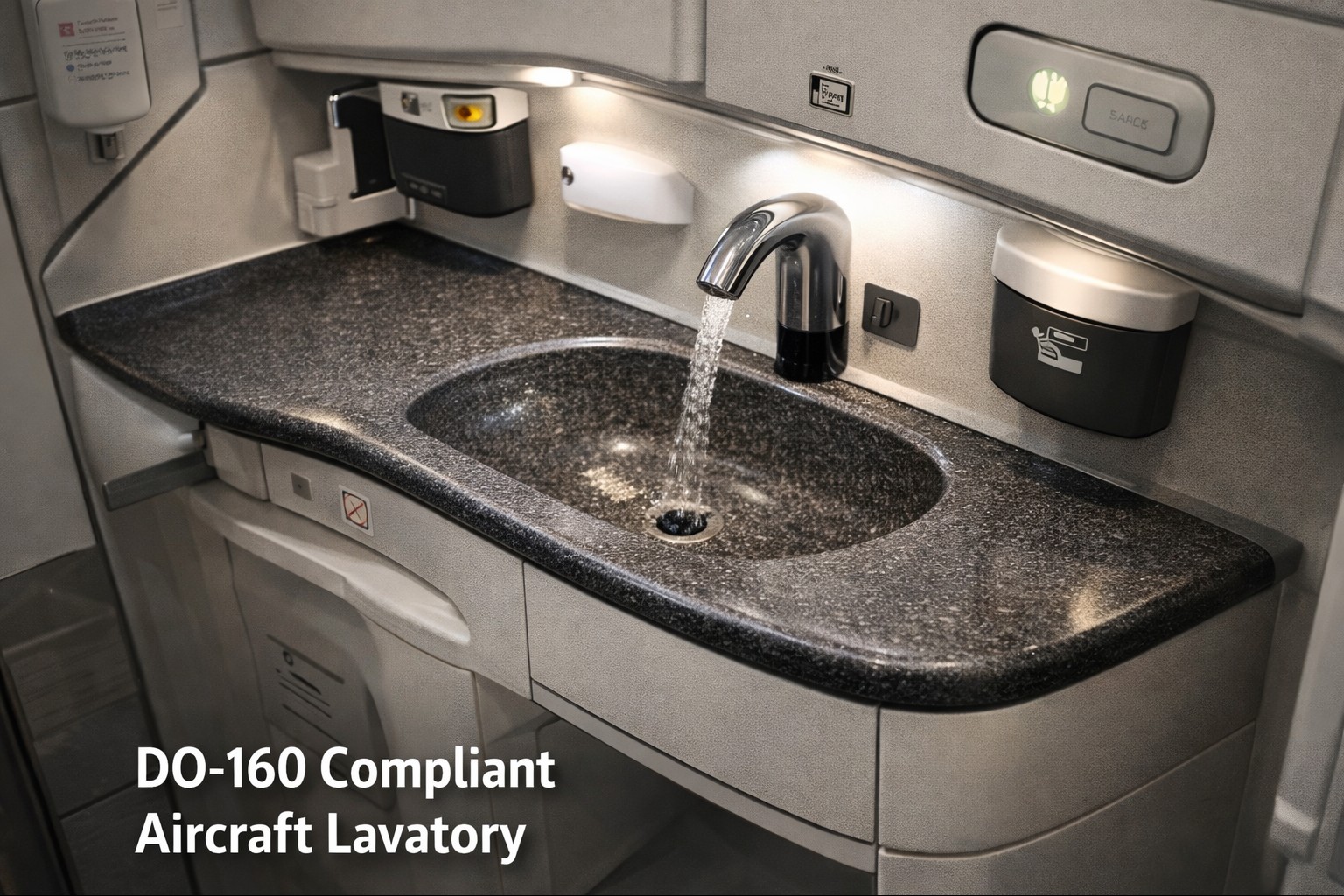
DO-160 provides environmental test methods for airborne equipment. For a touchless aircraft-lavatory assembly, applicable qualification may address temperature and altitude, humidity, vibration, waterproofness, fluids susceptibility, electrical input conditions, radio-frequency susceptibility, and other installation-dependent exposures. Passing selected tests does not independently approve a faucet for installation. The proposed aircraft configuration must also be supported by appropriate installation, certification, interface, and configuration-control data.
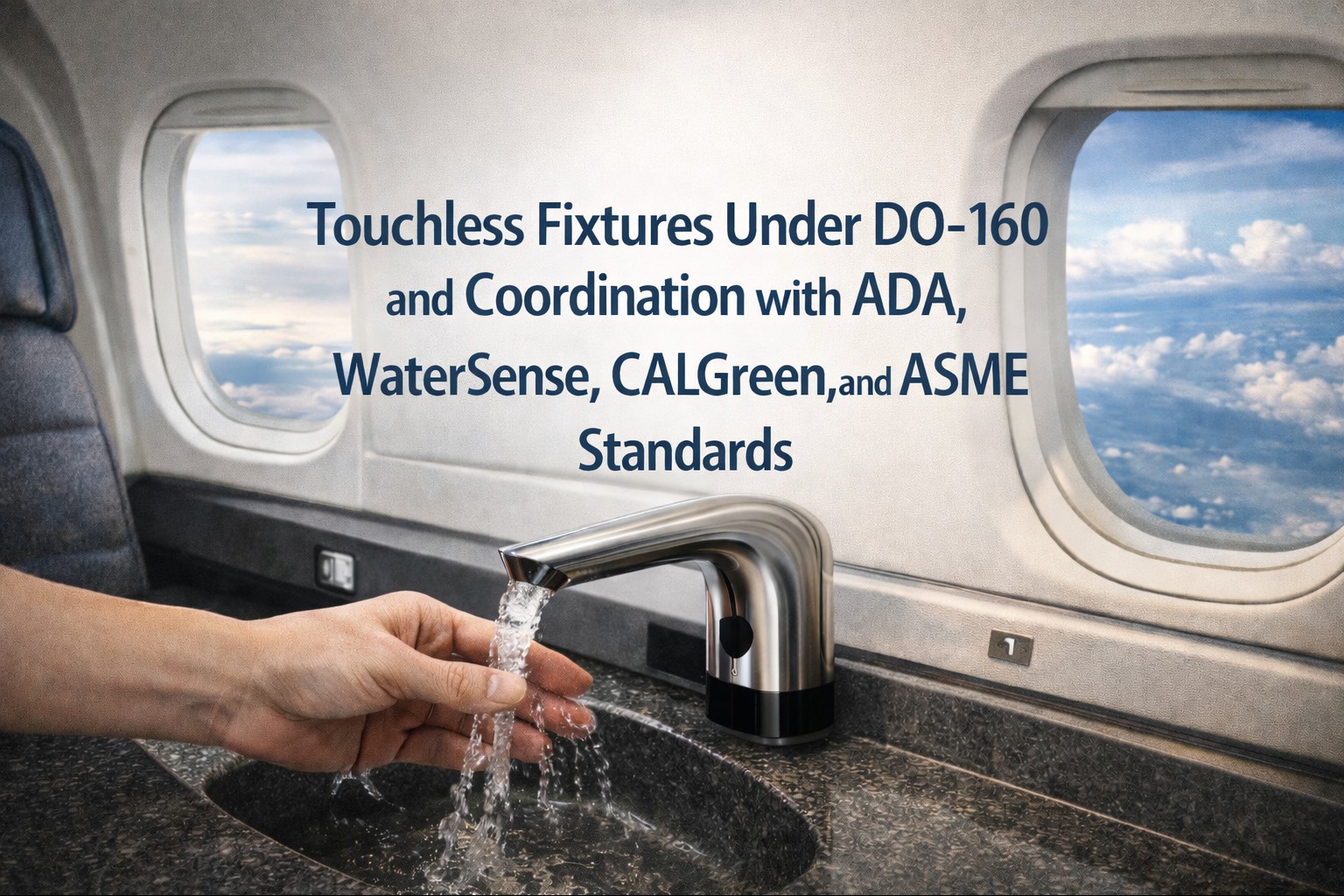
What DO-160 Qualification Establishes for Touchless Fixtures
RTCA DO-160 provides environmental test procedures for airborne equipment. Qualification should be tied to a defined equipment article, selected sections and categories, installation location, test configuration, acceptance criteria, deviations, and recorded results.
For a sensor-operated lavatory assembly, the qualified article may include the visible spout as well as the sensor, electronic controller, solenoid valve, power-conversion hardware, connectors, harnesses, mounting components, and associated interfaces. Testing one element does not automatically qualify every revised component or future configuration.
| DO-160 Section | Environmental Review | Fixture Evidence to Examine |
|---|---|---|
| Section 4 — Temperature and Altitude | Verify performance under the temperature and altitude categories selected for the installation. | Sensor operation, valve response, sealing, electronics, and recovery following environmental exposure. |
| Section 6 — Humidity | Review the assembly under the applicable humidity exposure. | Connector condition, corrosion, optical sensing surfaces, enclosure integrity, and post-test electronic function. |
| Section 8 — Vibration | Determine whether the mounted equipment retains physical and functional integrity. | Mounting retention, valve stability, harness support, connector security, and post-vibration operation. |
| Section 10 — Waterproofness | Evaluate protection against the applicable water exposure. | Enclosure configuration, connector protection, ingress observations, sealing, and operating results. |
| Section 11 — Fluids Susceptibility | Review effects of specified fluids on exposed materials. | Finish condition, elastomer compatibility, markings, sensor optics, and continued equipment operation. |
| Section 16 — Power Input | Confirm operation under selected electrical-input conditions. | Rated input, transient behavior, restart logic, controller response, and valve condition after interruption. |
| Section 20 — RF Susceptibility | Assess required function under the applicable RF environment. | Wiring configuration, test category, operational criteria, false activation, missed activation, and recorded anomalies. |
The applicable DO-160 sections and categories depend on the proposed installation. This matrix is a technical review framework and does not state that a particular faucet has completed or passed every listed test.
Environmental Qualification Is Not Aircraft Installation Approval
A qualification report describes how a defined equipment configuration performed under specified environmental test conditions. The aircraft installation introduces additional questions involving mounting, electrical loading, hydraulic connections, routing, service access, structural interfaces, configuration effectivity, and interaction with other aircraft systems or approved modifications.
Review the tested part number and revision against the proposed installation bill of materials. If the project introduces a different controller, connector, transformer or converter, harness length, solenoid, sensing component, or mounting arrangement, the project team should document whether existing qualification remains applicable.
The transport-category airplane airworthiness requirements provide regulatory context. The exact certification or alteration pathway depends on the aircraft and proposed modification.
Qualification vs Approval
“Tested to selected DO-160 sections” describes environmental qualification evidence. “Approved for installation” requires aircraft-specific, configuration-controlled data and an applicable approval process. These statements should remain separate in specifications, submittals, and procurement documents.
How Building Standards Relate to Aircraft Touchless Fixtures
Architects and engineers may use airport-terminal restrooms, ground-based lavatory mockups, commercial sensor faucets, accessibility criteria, and plumbing-fixture standards as parallel design references. The critical issue is keeping each requirement within its proper scope.
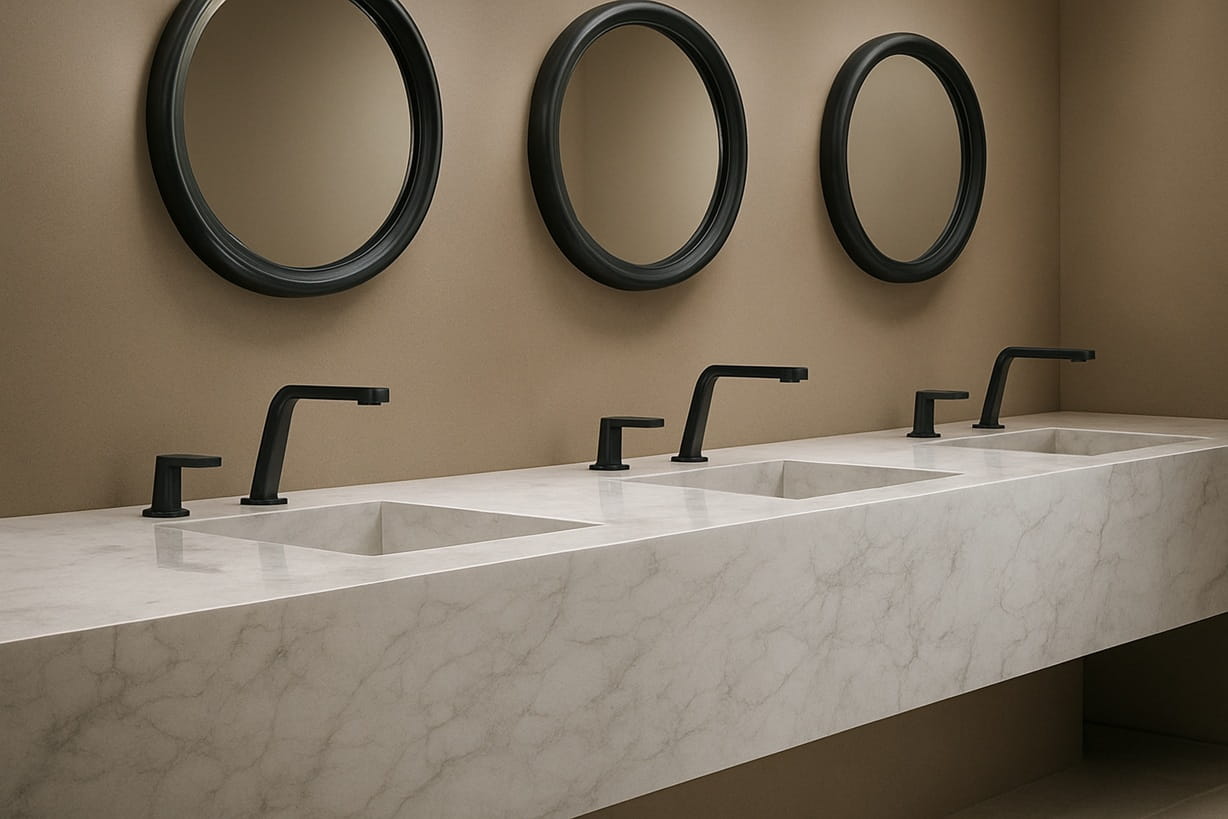
ADA Accessibility
The 2010 ADA Standards are applicable to covered buildings and facilities. Reach, operability, clearances, and user-interface principles can inform design development, but they should not be presented as aircraft environmental qualification.
EPA WaterSense
EPA WaterSense establishes efficiency and performance criteria for products within its program scope. WaterSense labeling does not constitute aircraft installation approval.
CALGreen
CALGreen is California’s Green Building Standards Code. It can be relevant to covered terminal, maintenance, training, or support buildings in California, but its requirements are not equivalent to airborne qualification.
ASME / CSA Plumbing Fittings
ASME A112.18.1 / CSA B125.1 addresses plumbing supply fittings within its scope. Product evidence may assist hydraulic and component review, while airborne environmental and aircraft-installation requirements remain separate.
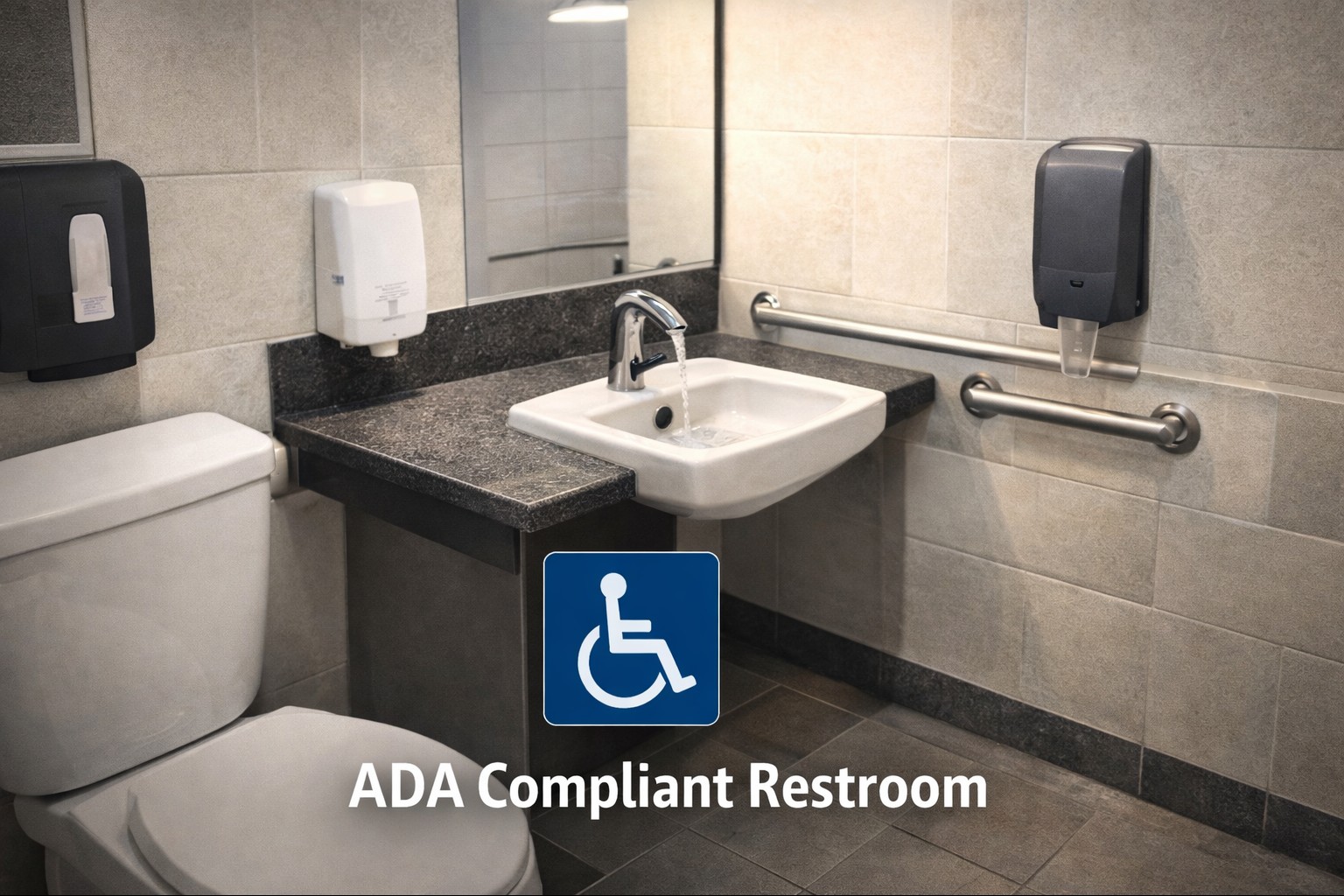
Keep Compliance Evidence Separated
Maintain separate documentation for aircraft environmental qualification, aircraft installation approval, ground-facility accessibility, plumbing product certification, water-efficiency criteria, and local building-code requirements. Place the exact model, document, revision, and applicable scope beside each compliance statement.
Related Aviation and Touchless Fixture Research
For additional aircraft-focused fixture coordination, review aviation touchless faucet planning covering compact lavatory geometry, handwashing interfaces, low-flow strategies, and service coordination.
For broader sensor-faucet selection, submittal documentation, sensing, power, maintainability, and commissioning, see the architect specification guide for touchless faucets and soap systems .
DO-160 Touchless Fixture Submittal Matrix for Aircraft Lavatories
A technically complete submittal should connect every performance claim to a defined piece of equipment and revision. The documentation should identify the faucet, controller, sensor, solenoid, electrical hardware, mounting arrangement, water interfaces, aircraft effectivity, service procedure, and qualification evidence.
| Review Item | Document to Request | Acceptance Question |
|---|---|---|
| Configuration | Revision-controlled parts list, assembly drawing, and model identification. | Does the proposed installation match the configuration represented by the qualification evidence? |
| Environmental Qualification | DO-160 report identifying edition, sections, categories, setup, deviations, acceptance criteria, and results. | Are the selected environmental categories appropriate for the actual equipment location? |
| Electrical Integration | Load data, power-input requirements, wiring diagram, protection strategy, connector details, and fault behavior. | Can the aircraft electrical system support the complete assembly under normal and abnormal conditions? |
| Hydraulic Integration | Pressure, flow, inlet connection, shutoff, leakage, valve, and basin interface information. | Does the proposed fixture operate correctly with the installed water system and basin geometry? |
| Maintenance | Access drawings, troubleshooting instructions, component replacement sequence, and recommended spares. | Can technicians inspect and replace service components without unnecessary removal of surrounding lavatory construction? |
| Aircraft Approval | Configuration-specific certification, alteration, installation, and effectivity records. | What approved data authorize installation on the affected aircraft? |
Compare Touchless Fixture Brands by Documented Scope
Commercial sensor faucets can provide useful references for sensing, hydraulic behavior, component access, low-flow operation, finish systems, and service strategy. Those characteristics should not be transferred into an aircraft specification unless the proposed configuration has appropriate airborne qualification and installation evidence.
FontanaShowers Aviation Fixtures
Use the aviation touchless fixture information as a product-inquiry starting point. Request the exact model, configuration drawing, electrical specification, installation documentation, service information, and applicable qualification evidence.
Sloan Optima
Review Sloan Optima product information within the manufacturer’s stated application. Commercial faucet documentation does not independently establish airborne vibration, waterproofness, electrical, or RF qualification.
TOTO ECOPOWER
Review the published TOTO touchless faucet configuration and power requirements within its documented use. Any aircraft adaptation requires separate feasibility, qualification, integration, and approval assessment.
Cross-Market Sensor Faucet Review
A commercial sensor faucet collection can help identify sensing architectures, geometries, finishes, and service strategies. Compare options by documented interfaces and evidence rather than appearance alone.
Engineering Decisions Before Selecting an Aircraft Touchless Fixture
- Define aircraft effectivity. Identify the aircraft, lavatory monument, equipment location, mounting geometry, water interface, power source, and maintenance access.
- Select relevant DO-160 categories. Relate environmental tests to the actual installation zone and expected exposure rather than using a generic compliance statement.
- Control hardware revisions. Compare the tested sensor, electronics, valve, power device, connectors, harness, and software or firmware revision with the proposed assembly.
- Coordinate hydraulic performance. Verify pressure, flow, shutoff, basin impact point, inlet connection, filtration, leakage control, and water-system compatibility.
- Plan service access. Ensure sensor modules, solenoids, filters, connectors, and control components remain accessible for inspection and replacement.
- Separate ground standards. ADA, WaterSense, CALGreen, and ASME/CSA documentation should be applied only within the scope for which each standard or program is relevant.
- Establish installation approval. Document the aircraft-specific certification or alteration process and identify the approved data authorizing the installation.
- Commission the installed fixture. Verify sensing, shutoff, false activation, water delivery, power recovery, fault behavior, access, and configuration at handover.
For product-specific investigation, begin with the Fontana aviation touchless fixture resource , then request current documentation tied to the exact proposed model. A standard name appearing in promotional material should not replace the applicable qualification report or aircraft approval record.
DO-160 Touchless Fixture FAQs
Does DO-160 qualification approve a touchless faucet for aircraft use?
Which DO-160 tests can be relevant to an aircraft lavatory fixture?
Can a commercial touchless faucet be installed in an aircraft lavatory?
What documents should be requested for a DO-160 touchless fixture?
Does testing a sensor automatically qualify the complete faucet assembly?
Primary Standards and Technical References
Use current editions, jurisdictional requirements, aircraft-specific certification data, and exact-model manufacturer documentation when making specification or approval decisions.
- RTCA DO-160 Environmental Test Information
- 14 CFR Part 25 — Transport Category Airplanes
- 2010 ADA Standards for Accessible Design
- EPA WaterSense
- California CALGreen
- ASME A112.18.1 / CSA B125.1 Plumbing Supply Fittings
- FontanaShowers Aviation Touchless Fixtures
- Sloan Optima Product Information
- TOTO Touchless Faucet Product Information