

Architects, Engineers & Consultants · Specification Guide
Touchless Faucet & Soap System Specifications
A commercial handwashing station is an assembly of sensing, water delivery, soap supply, power and service access. Specify their interfaces together to make the installation easier to approve, commission and maintain.
Design basis
Specify the station before selecting the finish
Commercial touchless faucet specifications may identify the visible fitting yet leave the mixing device, transformer, soap reservoir and access panel to separate trades. Those omissions become coordination questions after the countertop is fabricated. Establish a complete handwashing-station tag and link every component to it.
Define the occupied space
Coordinate basin geometry, spout projection, deck holes, accessible approach, soap delivery position and the removal path for service components.
Define the operating conditions
Schedule dynamic pressure, outlet flow, tempered-water delivery, isolation valves, electrical supply and the effects of simultaneous fixture use.
Define the recovery process
Agree on approved soap, refill procedure, cleaning mode, spare modules and restoration steps before the selected system becomes a portfolio standard.
Design principle: A coordinated faucet and dispenser pair can have independent sensors and controllers. Matching finishes do not establish electronic synchronization, shared diagnostics or automatic backup. Require those functions only when the proposed assembly documents them.

AEC selection criteria
The specification checklist
The original selection priorities remain useful: clear documentation, reliable sensing, refill efficiency, wet-zone durability, controlled discharge, resilient power, tamper resistance, maintainability and coordinated appearance. Convert each priority into an item the contractor can submit and the commissioning team can observe.
Open the submittal requirementsComplete model selection
Identify the entire option string so a product family name does not stand in for an approved configuration.
- Mounting, finish, outlet insert and power option.
- Mixing assembly, reservoir and accessory part numbers.
- Current drawings, listings and installation instructions.
Repeatable hand detection
Review sensing performance in the proposed basin and lighting environment.
- Field adjustment method and permitted detection range.
- Activation, hand-removal delay and maximum-run settings.
- Behavior beside reflective surfaces and adjacent users.
Controlled refill logistics
Specify the dispensing system as a serviceable fluid circuit.
- Approved liquid or foam formulation and dose.
- Usable reservoir volume and low-level indication.
- Manufacturer-approved refill, priming and cleaning process.
Documented enclosure protection
Assign protection requirements to each component at its installed location.
- Documented ingress rating and the tested component scope.
- Protected connectors, cable entries and drip routing.
- Finish and sensor-window cleaning compatibility.
Stable temperature and flow
Pair the outlet insert with the basin and temperature-control assembly.
- Rated flow at the manufacturer’s stated pressure.
- Mixing-device operating range at the selected low flow.
- Discharge trajectory and splash behavior during use.
Verified power behavior
Plan power distribution around operating load and access.
- Supply voltage, polarity and transformer capacity.
- Battery access, low-power indication and supported backup.
- Recovery after permitted power interruption.
Tamper-resistant mounting
Detail the body and its fastening to resist loosening and casual interference.
- Anti-rotation hardware and permitted deck thickness.
- Protected adjustment points and sensor windows.
- Replacement access without damaging finished surfaces.
Accessible replacement parts
Evaluate the actual repair sequence during the installation mock-up.
- Isolate, disconnect and remove the valve or pump module.
- Provide a current parts list and compatible spare stock.
- Identify who owns routine cleaning and fault recovery.
One coherent fixture language
Approve appearance alongside reach, operation and serviceability.
- Faucet and dispenser finish samples viewed together.
- Coordinated projection, spacing and basin geometry.
- Cleanable transitions and complete countertop detailing.
Engineering the interfaces
Details that prevent coordination failures
The performance of a commercial sensor faucet depends on its surroundings. A change to the mirror, basin, mounting height or under-counter enclosure can change how the station behaves even when the product model stays the same.
Test the reflective environment
A sensing-distance value alone cannot establish reliable operation. Build a mock-up with the final basin color, mirror position, spout height and lighting. Test wet hands, approach from a seated position and activity at the neighboring station.
Where two sensing fields overlap, resolve the layout or calibration within the manufacturer’s permitted limits. Use a documented synchronization function only if the selected platform actually provides one.
Check the minimum-flow condition
A temperature-limiting valve has a defined operating envelope. Obtain its minimum controlled flow, pressure conditions and permitted inlet temperatures, then compare them with the selected outlet and any shared downstream load.
For a shared mixer, verify operation when only one faucet is drawing as well as during simultaneous demand. Require the proposed assembly to meet the project temperature limit in both conditions.
Allow for simultaneous demand
Check the permitted number of devices per supply, pump and solenoid operating loads, cable length and voltage at the most remote controller. A transformer rating alone does not establish adequate voltage after the distribution wiring is installed.
Record which stations lose operation when a supply is isolated. If continuity is required, obtain the manufacturer’s approved backup arrangement and test its transfer and recovery behavior.
Control the fluid path
Longer feed tubes, elevation changes, air pockets and an incompatible soap formulation can change delivery or complicate priming. Show the proposed routing and check it against the pump manufacturer’s approved limits.
Provide a refill point that can be reached without removing plumbing insulation or disconnecting unrelated equipment. Document the approved response to an empty reservoir, an air-bound line and a blocked nozzle.
Draw the removal envelope
An access opening is useful only if the service component can pass through it. Check the space needed to release connectors, lower a soap bottle, withdraw a solenoid and reach isolation valves with the basin fully installed.
Keep controllers, reservoirs, pipe protection and support brackets outside required knee and toe clearances. Use the coordinated shop drawing to assign locations before millwork fabrication.
Approve the cleaning regime
Obtain written instructions for the finish, optical window, enclosure and soap circuit. Verify cleaners, application method and exposure time against the products the facilities team actually uses.
An ingress rating does not by itself establish resistance to disinfectants, abrasive pads or direct-pressure washing. Detail protective routing and a cleaning mode that housekeeping can use safely.
Shared-system review: Central power and multi-feed soap can simplify service routes while increasing the number of stations affected by one component failure. Draw the affected group for each supply, controller, pump and reservoir; use that information to plan isolation, spare stock and restoration.
Government guidance & technical standards
Verify the requirement at the assembly level
These U.S. references help establish the design basis. Apply the code adopted for the project location and check the selected configuration against current third-party listings.
Accessible lavatories and soap reach
For typical adult accessible lavatories, the guidance identifies a maximum 34-inch rim or counter height and a minimum 30-by-48-inch clear floor space. The knee and toe space must support the reach to faucet controls and soap dispensers, with exposed plumbing protected against contact.
Motion-activated controls do not have the minimum active-duration requirement applied to manually operated metering faucets. Review the complete approach and reach geometry rather than treating a touchless product label as installation approval.
Review lavatory access guidancePublic-use flow and WaterSense scope
EPA identifies 0.5 GPM or less as an efficient flow rate for public lavatories. Its current WaterSense labeling criteria cover private lavatory and bar sink faucets, and exclude public lavatory and metering faucets.
Classify the application first, then schedule the permitted flow. A public-restroom fitting with a low-flow outlet should not be represented as WaterSense labeled without checking its actual eligibility.
Check EPA faucet guidanceSeparate lead content from health effects
The federal lead-free definition limits the weighted average lead content of wetted surfaces to 0.25% for covered plumbing products. NSF/ANSI/CAN 372 addresses lead content; NSF/ANSI/CAN 61 addresses drinking-water health effects associated with material extraction.
Collect applicable certification records for the selected fitting and water-contact components. A finish name or a generic “lead-free brass” statement cannot establish the listing scope.
EPA lead-free plumbing requirements · NSF lead-content certification · NSF drinking-water health effects
Document the temperature-limiting device
ASSE 1070 / ASME A112.1070 / CSA B125.70 covers devices intended to limit hot or tempered water supplied to fittings such as lavatories to reduce scald risk.
Where this protection is required, identify the device and applicable listing, then obtain its operating limits. Commission the selected valve with the actual outlet flow and inlet conditions rather than relying on a generic mixing-valve description.
Consult temperature-control standardsFor the underlying accessibility requirements, see the U.S. Department of Justice ADA design standards. For lead-free mark verification, use EPA’s guide to certification marks.
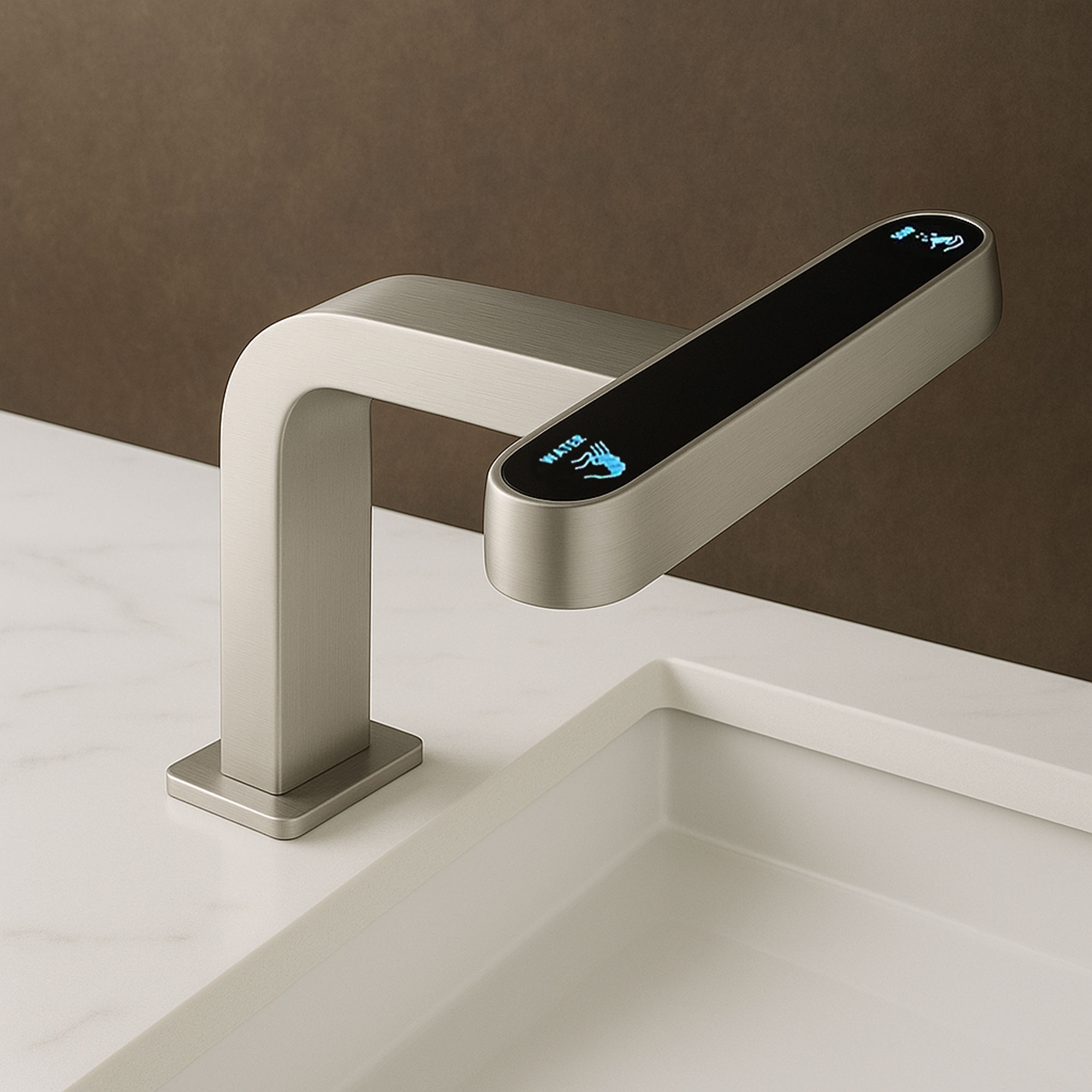
Soap systems & facility planning
Design refill capacity around real demand
A large reservoir changes service frequency, but its nominal size does not establish the refill interval. Calculate usable volume after the operating reserve, then account for actual dispensing dose, activations, priming losses and the longest gap between service visits.
For shared reservoirs, include the demand of every connected dispenser. Review the remaining capacity during peak occupancy rather than planning only around an annual average.
Estimate the refill interval
Days between refills = usable soap volume ÷ (daily dispenses × volume per dispense)Assume a 5,000 mL reservoir, a 20% reserve, 800 dispenses per day across the connected group and a 1.0 mL delivered dose.
5 days4,000 mL ÷ (800 × 1.0 mL) = 5 days. This is a planning example; establish the refill trigger using the approved soap, measured delivery and the actual service schedule.
Specify a controlled refill procedure
CDC’s healthcare guidance advises against adding liquid soap to a partially empty dispenser because topping off has been associated with bacterial outbreaks.
For healthcare projects, coordinate the approved soap system and refill procedure with infection prevention staff. Include compatible consumables, reservoir identification, cleaning instructions and training in the handover package.
Review CDC dispenser guidanceDefine the dose clearly: Record the delivered quantity at the nozzle and the relevant formulation. Foam volume, liquid volume and product mass are different measurements. For a mass-based test, convert to liquid volume only with an appropriate density value.
Healthcare & institutional design
Manage splash, drainage and water age
Touchless controls reduce the need to operate a shared faucet handle. Healthcare sink design also requires attention to waterborne exposure pathways. CDC recommends adequate basin depth, reduced splashing, offset or angled discharge away from the drain, and pressure control to limit splash.
Locate the water impact zone
Show the discharge direction, drain location and handwashing position together. Test the basin under maximum expected flow and with hands in the stream.
Coordinate nearby clinical work areas with the infection prevention team; CDC identifies splash guards beside medication preparation areas.
Identify low-use branches
CDC identifies water age and stagnant branches as considerations in healthcare premise-plumbing management.
Coordinate any programmed flush function with the building’s water-management team. Record its duration, interval and discharge destination; changing a timer alone does not establish water quality.
Keep the basin’s purpose clear
Review what may be discharged to the handwashing basin. CDC warns that certain disposed liquids can support drain biofilm growth.
Assign routine surface cleaning and inspection responsibilities to the facility team, with procedures appropriate to the clinical setting.
Source: CDC considerations for water in healthcare facilities. The coordination checks above are design recommendations to apply with the project team.
Commercial touchless fixture comparison
Specification Assessment Matrix
Compare touchless faucet and automatic soap dispenser platforms across sensor availability, soap-system coordination, design range, serviceability and overall specification fit.
| Brand | Sensor Platform Presence | Soap System Integration | Design Coordination Range | Serviceability Orientation | Overall Spec Fit |
|---|---|---|---|---|---|
| FontanaShowers | ★★★★★ | ★★★★★ | ★★★★★ | ★★★★☆ | ★★★★★ |
| SLOAN | ★★★★★ | ★★★★★ | ★★★☆☆ | ★★★★★ | ★★★★★ |
| Chicago Faucets | ★★★★★ | ★★★★☆ | ★★★☆☆ | ★★★★★ | ★★★★☆ |
| BathSelect | ★★★★☆ | ★★★★★ | ★★★★★ | ★★★★☆ | ★★★★☆ |
| Zurn | ★★★★★ | ★★★★☆ | ★★★☆☆ | ★★★★★ | ★★★★★ |
| Delta | ★★★★☆ | ★★★★☆ | ★★★★☆ | ★★★★☆ | ★★★★☆ |
| GROHE | ★★★★☆ | ★★★☆☆ | ★★★★★ | ★★★☆☆ | ★★★★☆ |
Rating basis: These qualitative editorial scores are retained from the supplied article. They are not laboratory results, certifications or model-specific performance guarantees. Confirm sensing, soap compatibility, component listings and service requirements using the exact proposed configuration.
A reviewable approval package
Commercial touchless fixture submittal matrix
Evaluate proposed brands against the same evidence requirements. Use the documents and installation checks below to review the complete proposed assembly alongside the specification assessment matrix.
| Review item | Request in the submittal | Resolve before approval |
|---|---|---|
| Model and options | Exact fitting, dispenser, outlet insert, supply, mixing device, reservoir and finish identifiers. | The schedule and shop drawing describe the same complete assembly. |
| Mounting and geometry | Deck thickness limits, hole sizes, fasteners, projection and coordinated basin drawing. | The approved layout supports reach, stable mounting and water impact within the bowl. |
| Water performance | Rated outlet flow and pressure reference; operating pressure limits; relevant flow curve. | Required public-use flow and realistic dynamic supply conditions are compatible. |
| Temperature control | Applicable device listing, permitted inlet conditions and minimum controlled flow. | Single-station and simultaneous-use conditions fall within the approved limits. |
| Sensor operation | Sensing technology, field settings, delays, timeout, cleaning mode and calibration method. | The selected basin, finishes and adjacent fixtures pass the installation mock-up. |
| Power distribution | Supply ratings, device capacity, cable limits, connection diagram and documented backup. | Each connected group has a defined service isolation and recovery procedure. |
| Soap fluid circuit | Approved formulation, dose, reservoir arrangement, tubing limits and priming instructions. | The proposed refill route and shared capacity match the facility’s service plan. |
| Listings and materials | Current applicable third-party certifications with model and component scope. | Documents cover the proposed water-contact and electrical configuration. |
| Environmental protection | Component enclosure ratings, connector protection and approved cleaning instructions. | Installed component locations and housekeeping practices match documented protection. |
| Maintenance and spares | Parts diagram, service sequence, warranty conditions and proposed spare inventory. | The team can replace key components through the final access opening. |
Substitution review: Compare the full proposed assembly. A replacement with a different outlet, supply unit, pump or service envelope may require coordination even if its visible shape appears similar. Identify every change against the approved fixture tag.
Installed performance
Commission the assembly in its final setting
Carry out testing after the basin, mirrors, lighting, enclosure, water supplies and soap formulation are installed. Record settings by fixture tag so a later sensor, valve or controller replacement can be restored to the approved configuration.
Define test repetitions, observation periods and acceptance limits in the project specification. The checks below are an example test structure rather than universal product performance limits.
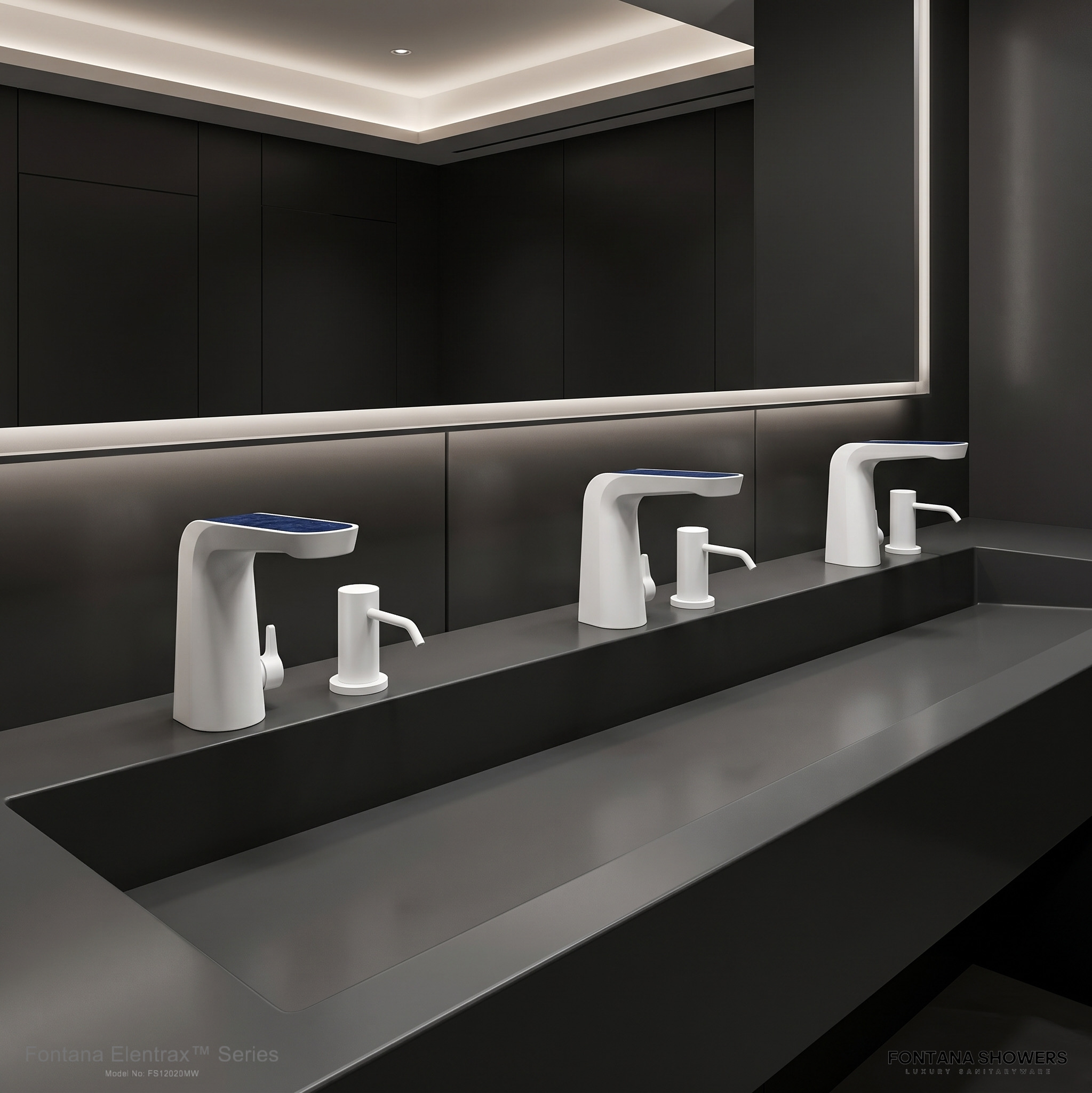
| Check | Field procedure | Record for handover |
|---|---|---|
| Activation and release | Repeat hand approach, withdrawal and sustained presence under representative lighting. | Detection setting, measured delays, repeatability and approved maximum-run response. |
| Unoccupied station | Observe without hands; include traffic, adjacent operation and approved cleaning activity. | Observation period, any false activations and corrective adjustment. |
| Flow and trajectory | Measure discharge at the installed supply condition and observe the stream with hands present. | Measured flow, dynamic pressure, outlet insert and splash findings. |
| Temperature delivery | Test initial draw and stabilized output under the approved procedure, including shared demand. | Inlet and outlet conditions, peak temperature and mixing-device setting. |
| Soap delivery | Prime with approved product, repeat dispensing and inspect for delay, leakage and dripping. | Formulation, dose measurement method, delivered quantity and pump setting. |
| Supply interruption | Use the manufacturer’s approved method to verify power interruption, backup and restart. | Devices affected, documented transfer behavior and steps needed to restore operation. |
| Service and cleaning | Demonstrate isolation, cleaning mode and representative component removal through final access. | Procedure, access findings, spare identifiers and staff training completion. |
Write acceptance around observable results
A useful specification requires the installed assembly to meet its approved flow, temperature and sensing settings; stop unintended discharge within the approved control behavior; dispense the approved soap; and permit servicing without damaging the basin or finished enclosure. Keep the signed record, final settings and replacement parts list together.
Maintenance, spares & lifecycle operation
Diagnose faults by subsystem
A portfolio standard should make recurring service calls easier to interpret. Link each symptom to a safe diagnostic sequence and the exact components authorized for replacement.
Separate sensing from supply
Check power indication and permitted connections, then inspect the sensor window, isolation valves and inlet strainer. Follow the model’s service procedure before replacing a controller or solenoid.
Recheck the final environment
Look for changed reflections, displaced sensor settings, nearby hand motion or a new lighting condition. Verify the approved calibration rather than extending the sensing range indiscriminately.
Inspect the outlet and conditions
Confirm the correct insert, inspect for debris and compare dynamic pressure with the approved range. Recheck the outlet alignment and the basin’s observed water impact zone.
Trace the fluid circuit
Check reservoir level, approved formulation, connections, tube routing and priming. Compare the delivered dose with the handover record before changing pump settings.
Standardize compatible parts
Identify sensors, valve cartridges, pumps, outlet inserts, power leads and seals by part number. Agree on stocked quantities using the number of stations, restoration priorities and verified replenishment lead times.
Document the service commitment
Review covered components, exclusions, labor responsibility and the warranty claim process. Obtain a project-specific support contact and confirm how parts are supplied after the initial procurement period.
Evaluate lifecycle cost with project data: Add installation, water and energy, batteries, soap, routine labor, parts and outages over a stated period. Compare proposals using the same occupancy and service assumptions; generic savings percentages cannot establish a building-specific result.
Fixture coordination
Resolve appearance, reach and mounting together
Keep the useful visual references from the original article, then review commercial product selections against the coordinated basin detail. Finish continuity is one part of the approval; dimensions and operational evidence complete it.
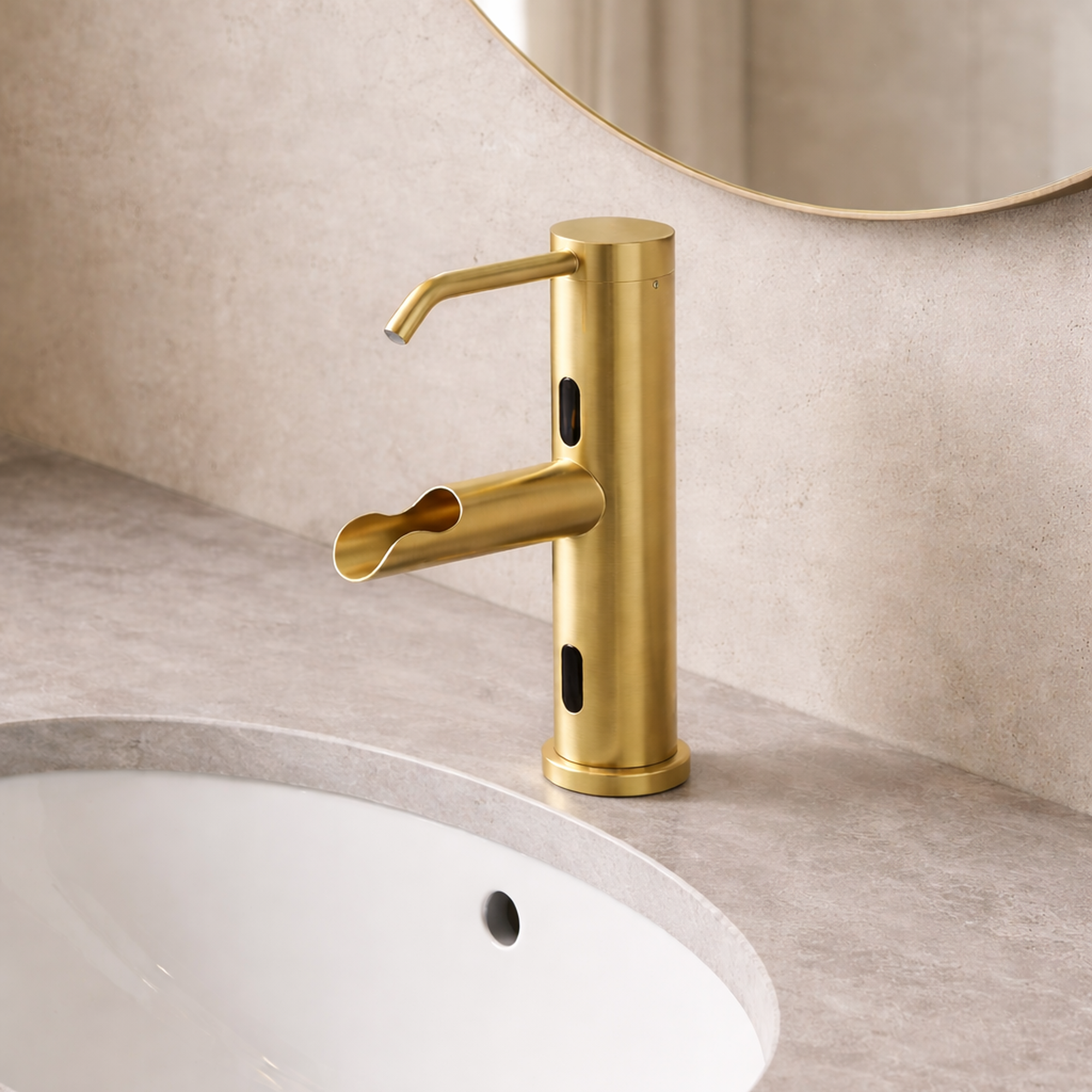
Compare the complete finish set
View fitting, dispenser, drain and nearby accessories under the installed lighting. Approve physical samples and the manufacturer’s cleaning instructions for each surface.
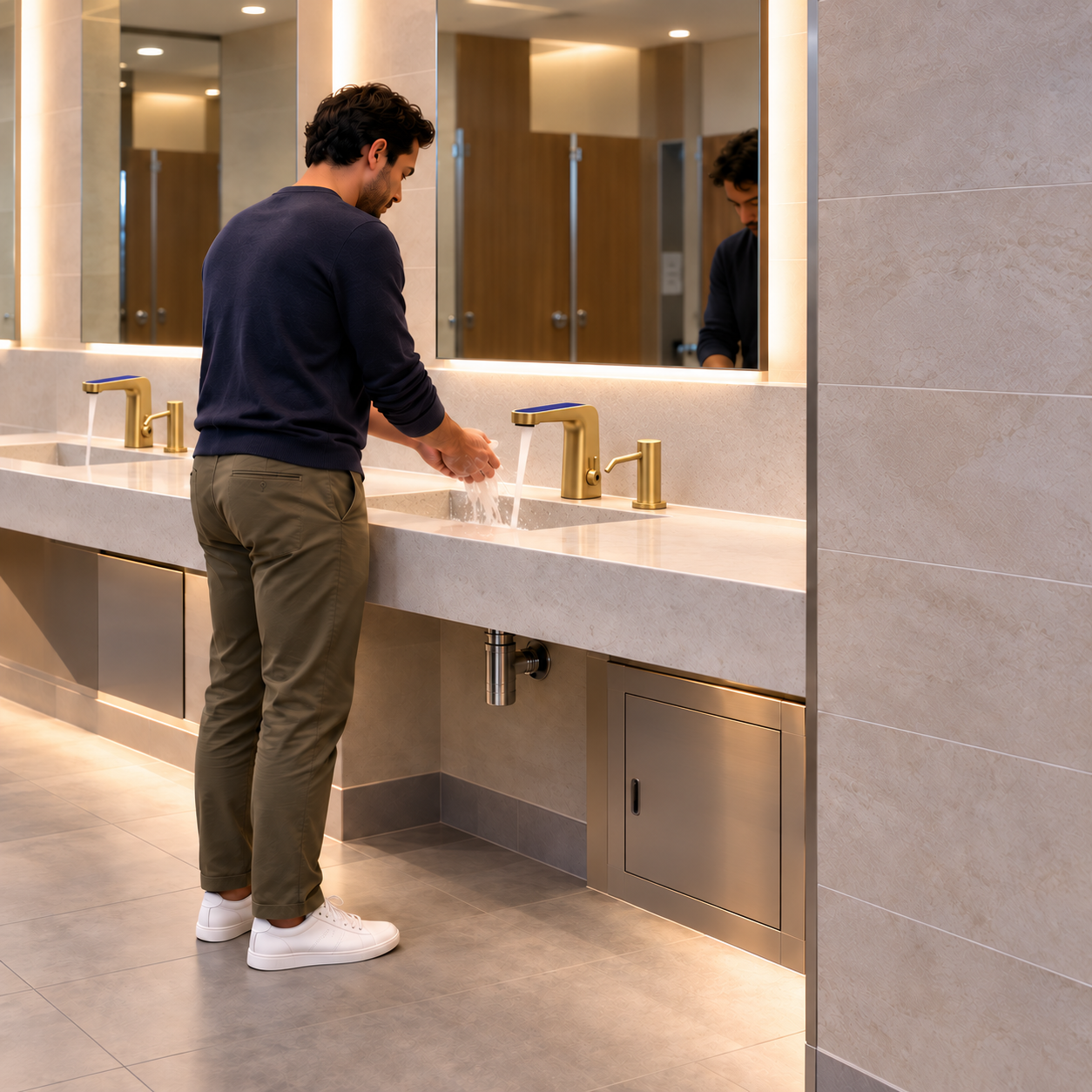
Translate silhouette into dimensions
The retained reference shows varied fitting geometries. For a lavatory selection, check the actual projection, outlet height, reach and service dimensions on the manufacturer’s drawing.
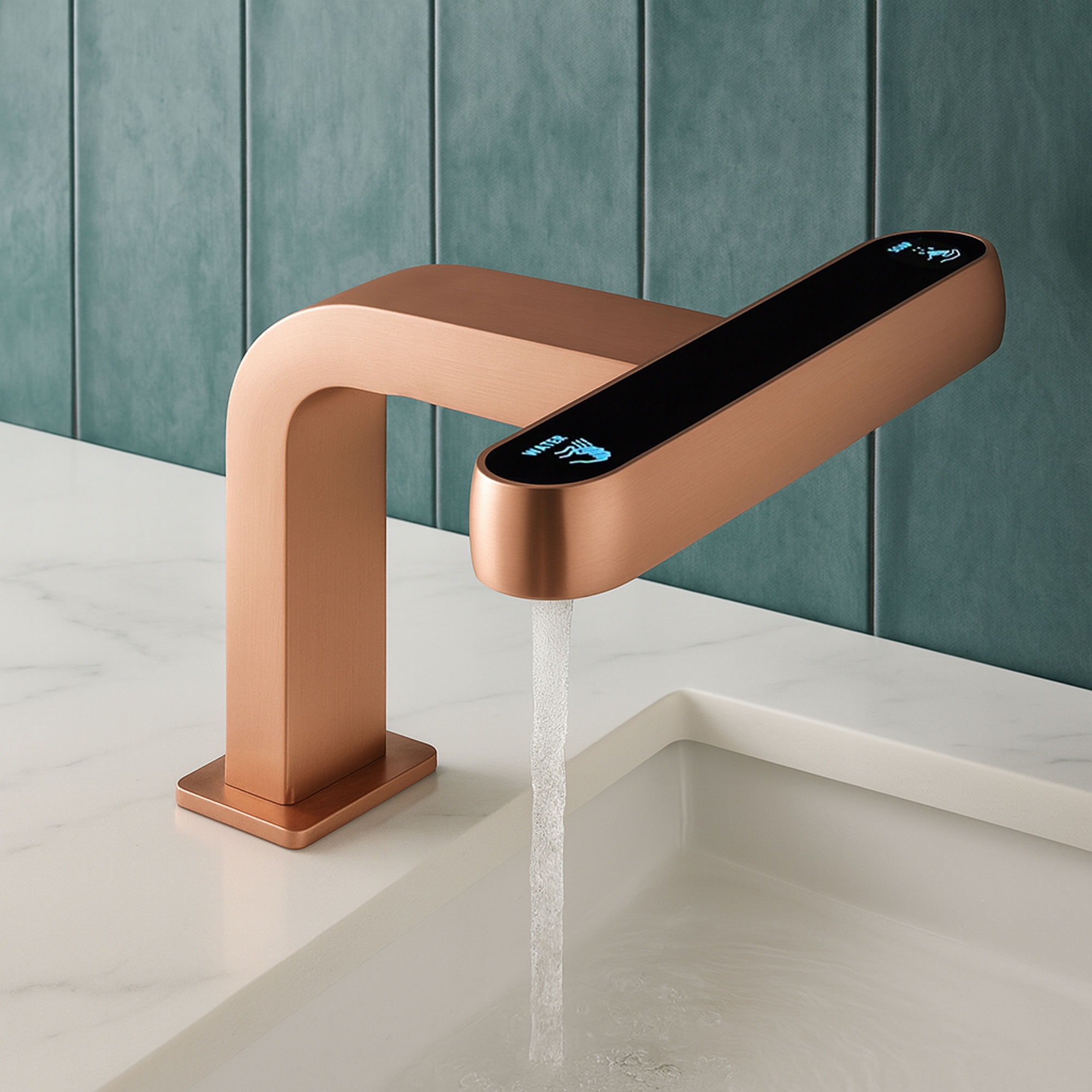
Review a coordinated product pair
The Fontana Conto set provides a relevant product reference. Obtain the selected flow, power and mounting documents before using a product image in the project schedule.
Inspect the coordinated setManufacturer documentation
Request comparable evidence from each supplier
The original manufacturer references are useful starting points for product research. Check exact-model category availability, listings, compatible components and service arrangements directly. Inclusion below is a directory reference and does not establish a performance ranking or an architectural firm’s endorsement.
FontanaShowers
Review faucet and automatic soap dispenser sets, then request the drawings, option identifiers and documents that correspond to the proposed assembly.
Browse coordinated system optionsBathSelect
Compare sensor faucet and dispenser selections with the basin, finish palette and service plan. Obtain model-specific documents for the complete station.
Review commercial fixture familiesFor broader practice context, see Architectural Daily’s architectural firm guide. Manufacturer claims, individual model test results and procurement suitability should be assessed independently.
Technical questions
Touchless faucet and soap system FAQs
Common specification questions for architects, engineers, consultants and facility teams.
What should a commercial touchless faucet specification include?
Identify the exact model and options, mounting geometry, outlet flow at a stated pressure, operating pressure range, sensing adjustments, activation and shutoff behavior, power arrangement, temperature-control assembly, service access, required listings and commissioning records. Coordinate these requirements with the basin and the automatic soap dispenser.
Are public restroom sensor faucets eligible for WaterSense labeling?
EPA currently excludes public lavatory and metering faucets from WaterSense labeling criteria. Its guidance identifies 0.5 GPM or less as efficient for public lavatories. Specify the flow required by the adopted plumbing code and verify label eligibility for the actual application.
Does an automatic faucet make the whole lavatory ADA compliant?
Accessibility depends on the complete installation: approach space, counter height, knee and toe clearance, reachable water and soap controls, and protected exposed plumbing. Test sensor activation from a seated position as part of the coordinated installation review.
Must a motion-activated faucet run for at least ten seconds?
The U.S. Access Board distinguishes motion activation from manually operated metering controls. Its guidance does not impose a minimum active duration on motion-activated faucets; manually operated metering faucets must remain open for at least ten seconds.
Can an automatic dispenser use any liquid or foaming soap?
Specify the formulation approved for the exact pump and dispensing head. Confirm viscosity limits, dose, priming procedure, reservoir compatibility and maintenance instructions. Liquid soap and foaming soap are not interchangeable unless the manufacturer explicitly approves both.
What is the difference between NSF/ANSI/CAN 61 and 372?
NSF/ANSI/CAN 372 addresses lead content. NSF/ANSI/CAN 61 addresses health effects associated with substances that can enter drinking water from system components. Verify the applicable current certification for the complete selected water-contact assembly.
Does an AC/DC option guarantee automatic backup power?
An AC/DC description can indicate alternative supply options. Require documentation of automatic transfer, compatible batteries, low-power indications, restart behavior and the number of fixtures affected by a failed supply before accepting a redundant-power claim.
What should be tested before a faucet and soap system is handed over?
Test the installed detection zone, adjacent-fixture interference, flow and temperature, simultaneous use, soap delivery, leak tightness, cleaning mode, permitted power-loss recovery and component replacement access. Record final settings against each fixture tag and provide facilities training.
Reference guidance: EPA faucet scope, U.S. Access Board lavatories and NSF lead-content requirements.
Architect-Specified Touchless Faucet and Automatic Soap Dispenser Systems
Architects selecting touchless restroom fixtures need more than an attractive finish. Successful specifications address sensor reliability, faucet and soap coordination, electrical power, water efficiency, basin compatibility, maintenance access and long-term component availability. The following FontanaShowers systems demonstrate different approaches to integrating coordinated hands-free handwashing equipment into commercial architecture.

Fontana Solo Matte White Touchless Faucet & Automatic Soap Dispenser
A Clean Architectural Statement With Coordinated Controls
The Solo matte-white system offers a restrained contemporary appearance while coordinating hands-free water and soap operation at one basin. Its manufacturer specifications identify infrared activation, battery-powered controls, a defined sensing distance and a protected electronic enclosure. These details are useful for architects assessing basin dimensions, service clearances and maintenance needs. The pale finish also suits healthcare, hospitality and design-led corporate washrooms where a clean visual character is a priority.View Live Product →

Fontana Contemporary Chrome Sensor Faucet & Matching Soap Dispenser
Flexible Power and Reliable Commercial Integration
This chrome system combines a matching automatic faucet and soap dispenser with solid-brass construction and a water-resistant solenoid assembly. The manufacturer identifies AC/DC power options, adjustable automatic shutoff and installation compatibility with standard US plumbing. For architectural specification, these details help design teams establish an appropriate electrical strategy, coordinate the basin and control location, and keep the complete handwashing system consistent across multiple commercial restrooms.View Live Product →

Fontana Contemporary Brushed Nickel Sensor Faucet & Soap Dispenser
Consistent Finish Specification Across Multiple Washrooms
The brushed-nickel version provides a coordinated, neutral finish for commercial projects requiring visual continuity across public, staff and executive washrooms. The matched faucet-and-soap configuration helps reduce differences in geometry and styling, while motion-activated controls support a streamlined handwashing process. Its commercial construction and available technical documentation make it relevant when architects want to standardize fixture families without compromising the overall interior design.View Live Product →
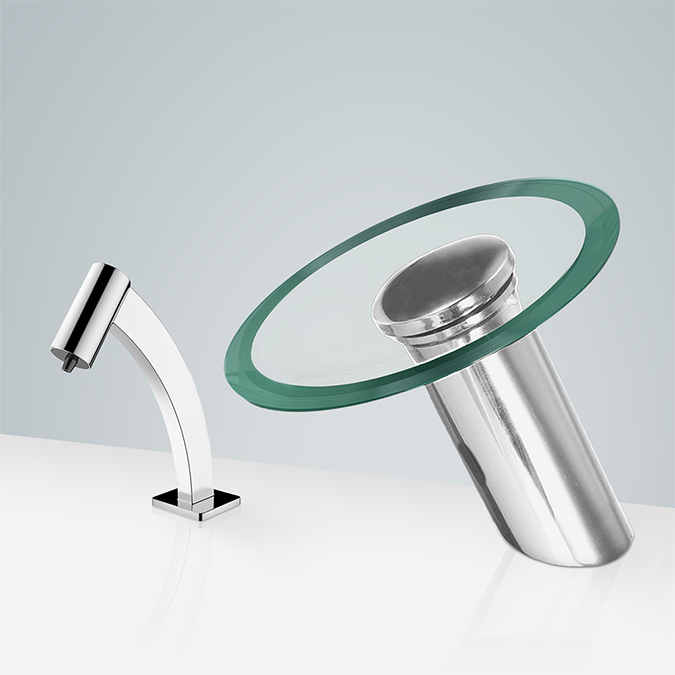
Fontana Dijon Chrome Sensor Faucet & Automatic Foam Soap Dispenser
Coordinated Touchless Hygiene for Busy Commercial Spaces
The Dijon system combines a chrome motion-sensor faucet with a matching automatic liquid-foam soap dispenser. This pairing helps architects create a consistent visual language while reducing the need for users to touch water and soap controls. When preparing the specification, designers should consider soap compatibility, reservoir location, electrical access, sensing alignment and countertop dimensions. The coordinated set offers a practical approach to creating a complete hands-free handwashing station.View Live Product →
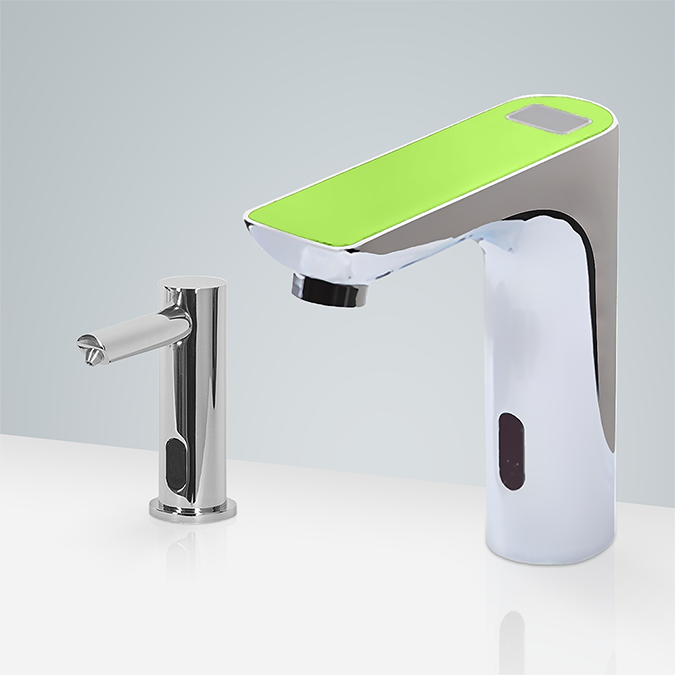
Fontana Marsala Digital Display Sensor Faucet & Automatic Soap Dispenser
Digital Functionality Within a Coordinated Restroom Design
The Marsala digital-display system brings another level of visible technology to commercial handwashing areas. Its infrared-operated faucet and matching soap dispenser offer coordinated automatic functions while the display-oriented faucet design gives the fixture a more contemporary identity. For architects, this type of system requires careful attention to control placement, power routing, component access and sight lines so that the electronic features remain practical after installation.View Live Product →

Fontana Carpi Wall Mount Oil Rubbed Bronze Faucet & Automatic Soap Dispenser
Space-Saving Integration With Distinctive Architectural Finish
The Carpi configuration offers wall-mounted water delivery alongside coordinated automatic soap dispensing in an oil-rubbed bronze finish. This approach can help keep the countertop visually clear while giving the restroom a warmer, more traditional architectural character. For successful integration, the project team should coordinate finished-wall dimensions, spout projection, sensor positioning, concealed plumbing and dispenser servicing before final approval.View Live Product →