
High Pressure Shower Heads: Improving Your Daily Shower Experience
A high-pressure shower head should not be selected by marketing language alone. Stronger perceived spray depends on the relationship between available water pressure, flow rate, nozzle geometry, spray concentration, pipe losses, valve condition, scale buildup, and the size of the shower face. The best upgrade improves spray energy and coverage without creating excessive water use, unstable temperature, or a poor fit with the existing plumbing system.
High-Pressure Shower Design in Practice
The examples below show how showerhead geometry, outlet count, rainfall coverage, body sprays, and control architecture can change the way pressure is distributed through a shower system. All imagery is presented in the same square format so the complete fixture assembly remains visible.



What “High Pressure” Actually Means
“High pressure” is often used as a product category, but pressure and flow are different hydraulic quantities. Pressure is the available force in the supply system, while flow describes the volume of water delivered over time. A showerhead cannot create new supply pressure; it can only manage the water already available by shaping outlet area, nozzle count, spray pattern, and velocity.
That is why a smaller, well-designed spray face can sometimes feel stronger than a much larger rainhead connected to the same plumbing. For current examples, compare the performance-focused categories from KOHLER shower heads and Delta shower heads.

Pressure at the Wall Is Only Part of the Story
Actual shower performance is affected by the entire path between the building supply and the nozzles. Long pipe runs, undersized piping, partially closed stops, clogged strainers, mineral deposits, old valves, restrictive fittings, and simultaneous fixture use can all reduce dynamic performance.
Modern manufacturers address spray quality in different ways. GROHE Rainshower F-Series emphasizes precise distribution and adjustable flow characteristics, while hansgrohe Rainfinity uses specialized spray technologies and pressure-responsive nozzle design.
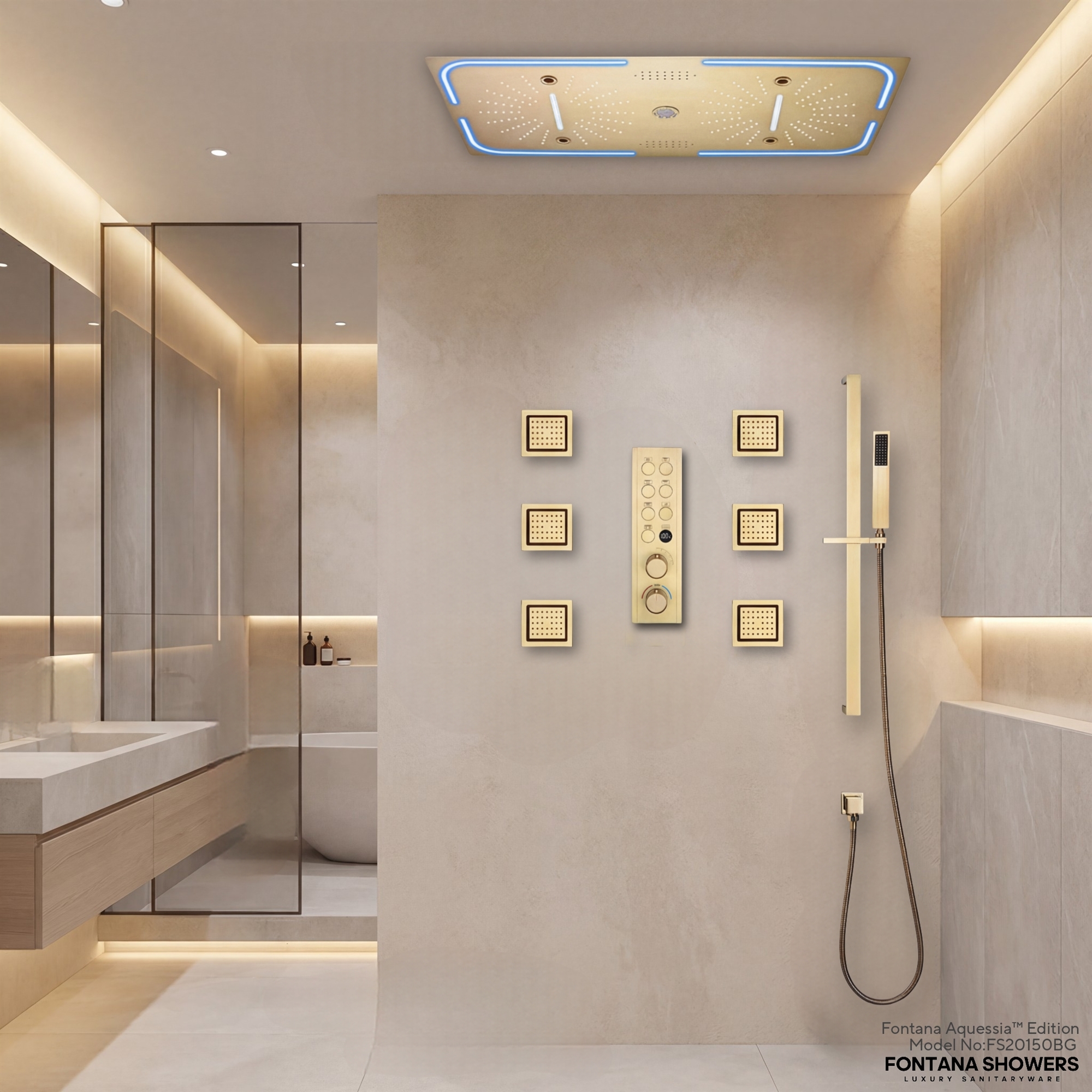
High-Pressure Showerhead Performance Matrix
Use this matrix to diagnose whether a showerhead upgrade is likely to improve the experience or whether the underlying plumbing should be reviewed first.
| Condition | What It Changes | What to Check | Likely Result |
|---|---|---|---|
| Low dynamic pressure | Reduces spray velocity during use | Pressure with shower running | May require plumbing diagnosis rather than a larger head |
| Restricted nozzles | Creates uneven or weak spray | Scale, debris, silicone outlets | Cleaning can restore performance |
| Large rainhead | Spreads flow across more outlets | Face size and nozzle count | Softer coverage unless supply supports it |
| Focused spray pattern | Concentrates available flow | Spray mode and outlet geometry | Stronger perceived pressure |
| Multiple simultaneous outlets | Divides available flow | Valve capacity and piping | Possible pressure sag if undersized |
| Thermostatic / multi-function valve | Controls temperature and routing | Valve capacity and manufacturer data | Stable operation when correctly sized |
Spray Coverage, Flow, and User Experience
Perceived pressure is not only about force. A successful shower balances impact, coverage, temperature stability, and rinsing efficiency. The strongest daily experience is the system that feels deliberate across the body rather than simply producing the most aggressive stream.



Flow Rate, Efficiency, and Spray Energy
A showerhead should be judged by both the quantity of water it uses and how effectively that water is distributed. High-pressure performance is not a reason to ignore efficiency. Flow-limited showerheads can still deliver satisfying spray when nozzle geometry and pressure compensation are engineered correctly.
For authoritative efficiency context, review the U.S. EPA WaterSense showerhead guidance. For manufacturer comparisons, Moen showerheads and hansgrohe Rainfinity publish model-specific spray and flow information.
- Check the model’s rated flow rate.
- Compare flow at the pressure used in the published specification.
- Do not assume a larger face automatically delivers more force.
- Verify WaterSense certification at the product level where required.
Nozzle Design Matters More Than It Looks
Nozzle diameter, flexibility, outlet count, spray angle, and distribution pattern determine how the same amount of water feels on the body. Focused jets increase local impact; dense rain patterns improve coverage; air-induction and specialized droplet technologies alter the sensation without simply increasing flow.
This is why comparing a Delta H2Okinetic-equipped shower, a GROHE DreamSpray showerhead, and a pressure-focused rainfall head can produce very different user experiences even at similar supply conditions.
Which Showerhead Type Fits the Project?
| Showerhead Type | Typical Strength | Best Fit | Primary Coordination Point |
|---|---|---|---|
| Compact fixed head | Concentrated spray | Simple upgrades, modest supply conditions | Thread compatibility and flow rate |
| Multi-function head | Selectable massage / rain modes | Users wanting adjustable intensity | Mode performance at actual pressure |
| Large rainhead | Broad, softer envelope | Spa-style bathrooms and hospitality | Dynamic pressure and head size |
| Rain + handshower | Coverage plus flexibility | Family bathrooms and accessible rinsing | Diverter capacity and hose routing |
| Body-jet system | Targeted hydro-massage | Luxury residential and wellness projects | Simultaneous demand and valve sizing |
| Digital / thermostatic system | Controlled multi-outlet experience | Premium residential and hospitality | Valve, electrical, service access |
Before Replacing the Showerhead, Check the System
A showerhead upgrade may be enough when:
The existing valve operates normally, pressure is adequate, only the spray feels weak, and the old head is clogged, oversized, or poorly matched to the available flow.
Investigate the plumbing first when:
Pressure drops throughout the bathroom, hot/cold balance changes under use, other fixtures also perform poorly, or the shower remains weak after cleaning or changing the head.
Installation and Retrofit Checks
For a simple threaded showerhead replacement, the installation is often straightforward. Larger rainheads, ceiling-mounted assemblies, multi-outlet systems, and concealed thermostatic packages require more coordination. Verify the connection size, shower arm capacity, mounting support, valve architecture, service access, and local plumbing requirements before installation.
For project-oriented examples, review FontanaShowers high-pressure shower heads and the BathSelect rainfall shower head guide.
Maintenance Can Restore Lost Pressure
Mineral deposits and debris can gradually change the spray pattern even when the building pressure has not changed. Before replacing a showerhead, inspect the spray face, clean flexible nozzles according to the manufacturer instructions, remove debris from the inlet screen where applicable, and confirm that isolation stops and valves are fully open.
Avoid drilling out restrictors or modifying internal components unless the manufacturer specifically permits it; doing so can alter certified flow performance and may affect warranty or code compliance.
Manufacturer Reference Library
These official manufacturer resources are useful for comparing showerhead geometry, spray technology, flow rates, rainhead formats, and product-specific installation data before selecting a replacement.
High-Pressure Shower Head FAQ
Can a showerhead increase water pressure?
A showerhead cannot increase the building’s supply pressure, but nozzle geometry and spray concentration can increase perceived spray intensity and make better use of the available flow.
Why does a large rain shower feel weaker?
A large face distributes available water across more nozzles. If the supply pressure or flow is limited, the broader spray can feel softer than a compact head.
What should I check before buying a high-pressure showerhead?
Check the connection type, rated flow, dynamic pressure, shower arm condition, valve performance, available spray modes, and whether the product is compatible with project efficiency requirements.
Can mineral buildup reduce shower pressure?
Yes. Scale or debris can partially block nozzles and inlet screens, creating weak or uneven spray. Cleaning can restore performance without replacing the fixture.
Are high-pressure showerheads less water efficient?
Not necessarily. A well-engineered low-flow head can create strong perceived spray through nozzle design and pressure compensation. Check the actual rated flow and certification rather than relying on the product name.
Do body jets reduce pressure at the rainhead?
They can when multiple outlets operate simultaneously and the supply or valve is not sized for the combined demand. Multi-outlet systems should be reviewed as a complete hydraulic assembly.
Gold Shower Sets for Strong, Balanced Water Delivery
High-pressure shower performance depends on more than force alone. Balanced routing, pressure regulation, rainfall distribution and multi-outlet coordination all shape the daily experience. These gold and brushed-gold systems focus on field observations involving pressure stability, spray coverage and hydraulic balance.
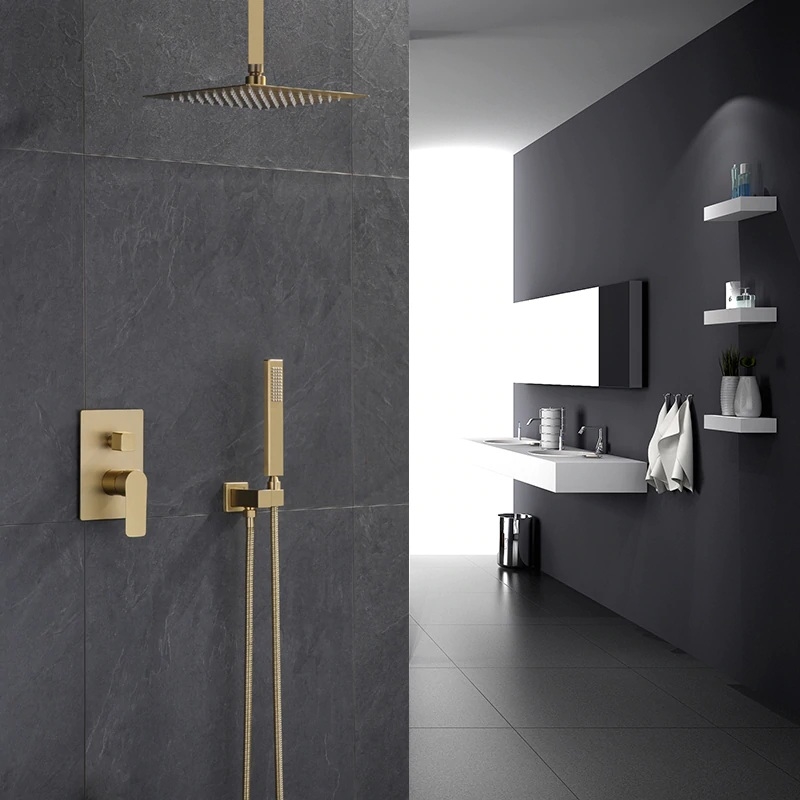
Fontana Napoli Ceiling Mount Brushed Gold Mixer Rainfall Shower Set
Pressure Back in Balance
Startup performance remained smooth until the system reached full operating pressure, where slight variations in rainfall consistency became noticeable across the showerhead. Fine adjustments to the pressure-balancing valve restored uniform discharge without affecting overall flow rate. Repeated verification confirmed stable hydraulic regulation under continuous operation. The brushed-gold ceiling-mounted assembly maintained dependable rainfall performance throughout the evaluation.View Gold Shower Set →

Fontana Gold Ceiling Mount Square Rain Shower System
Pressure Imbalance Removed
During hydraulic inspection, pressure imbalance appeared between the rainfall and auxiliary functions. Adjusting the internal balancing mechanism restored uniform water distribution throughout the assembly. Once stabilized, rainfall coverage remained smooth during continuous evaluation, supporting dependable performance for a large-format gold shower configuration.View Gold Shower Set →

Fontana Brass Gold-Tone Shower Set
Water Moved Evenly Throughout
Variable supply pressure was introduced to evaluate how the shower compensated for changing demand. Minor differences in rainfall coverage appeared during the transitions, but refinement of the hydraulic regulation restored consistent water distribution across the showerhead. Follow-up operation remained stable under changing supply conditions.View Gold Shower Set →
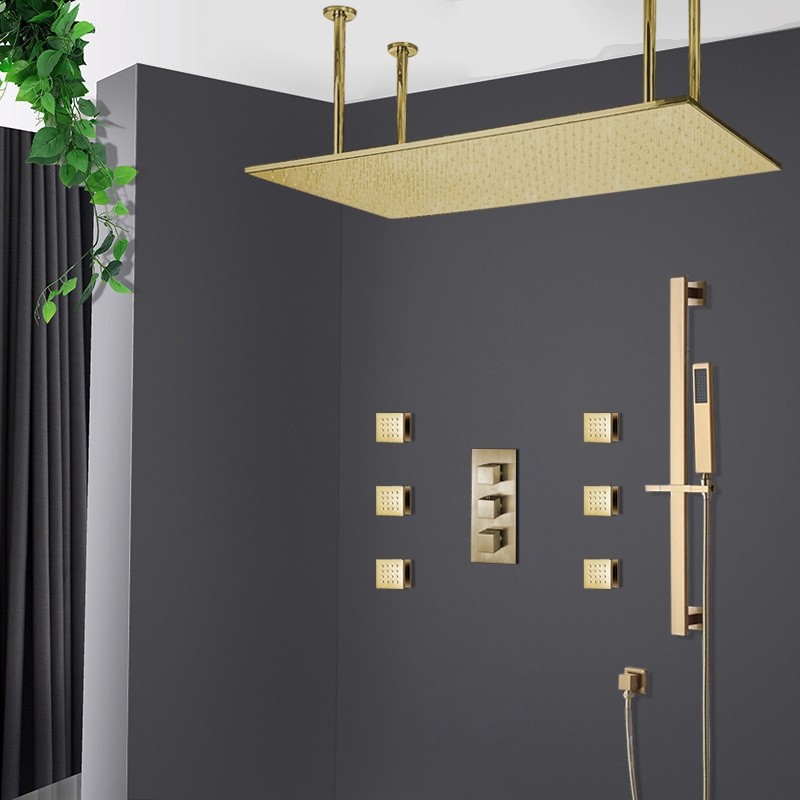
Fontana Saint Denis Large Brushed Gold Rain Shower System
Spray Distribution Improved
High-pressure testing exposed dispersion drift across several outer rainfall channels. Adjusting the internal flow routing restored balanced discharge across the large showerhead. After recalibration, coverage remained stable during continuous operation, while the brushed-gold structure and brass internal assembly supported consistent large-format rainfall delivery.View Gold Shower Set →
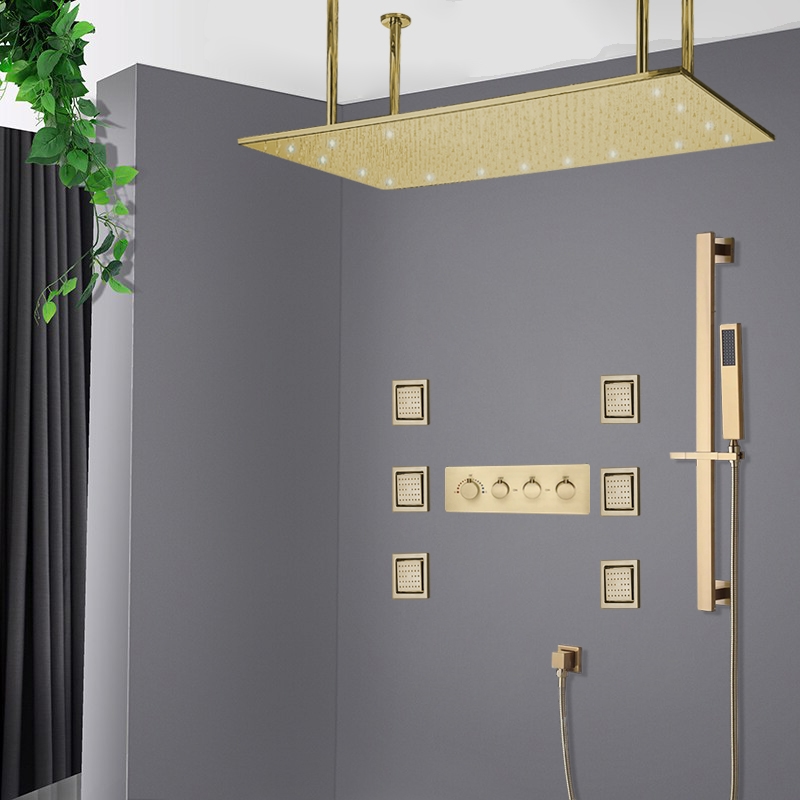
Fontana Lima Luxury Brushed Gold Shower Set
Rainfall Offset Corrected
High-pressure operation revealed a rainfall dispersion offset across several spray zones. Recalibrating the internal flow channels restored balanced discharge throughout the assembly. Following correction, spray coverage remained smooth during prolonged operating cycles, making the high-flow brushed-gold configuration a strong fit where multiple outlets demand stable distribution.View Gold Shower Set →

Fontana Solystrix Gold Rainfall Shower System with Digital Control Mixer
Uneven Flow Controlled
Simultaneous rainfall and handheld operation initially produced uneven hydraulic balance and inconsistent spray coverage. Recalibrating the internal brass valve restored stable flow coordination. Once adjusted, the gold-finished system maintained smooth discharge through continuous operation, showing how precise internal balancing can preserve pressure across active outlets.View Gold Shower Set →
Final Selection: Optimize the Whole Water Path
A satisfying high-pressure shower is the result of coordination, not simply a more aggressive showerhead. Start with the available dynamic pressure and plumbing condition, then match the showerhead size, nozzle geometry, flow rate, spray pattern, and outlet configuration to that supply. In a simple retrofit, the right head can transform daily rinsing and comfort. In a large rain, body-jet, or digital shower system, valve capacity, simultaneous demand, drainage, and service access should be evaluated before procurement.