
Top Architectural Firms: Project Fit and Selection Criteria
Selecting an architectural firm calls for more than reviewing a portfolio. Owners need to examine relevant built work, the people assigned to the project, technical coordination, and the firm’s ability to deliver within the brief, budget, and schedule.
This comparison introduces ten firms and provides a practical framework for evaluating their suitability. Treat the table as a shortlist: confirm current capabilities, staffing, references, and local licensing directly with each practice.
Quick Navigation
Start with the firm comparison, then review the evidence to request before preparing a shortlist or issuing a request for proposals.
Architectural Firm Comparison Matrix
The firms below represent different project contexts and scales. These descriptions are starting points for research, not measures of comparative performance. Ask each practice for completed projects similar to your brief and identify the individuals who would lead your commission.
| Firm | Best For | Specialization | Project Scale | Design Style | Global Reach | Rating |
|---|---|---|---|---|---|---|
| Gensler | Commercial Mixed-Use | Architecture, interiors, urban planning | Large-scale international projects | Modern, research-driven | High | 4.9/5 |
| Foster + Partners | Landmark Buildings Urban Design | High-profile architecture and masterplanning | Major global developments | Innovative, sleek, future-facing | High | 4.8/5 |
| Zaha Hadid Architects | Iconic Design Cultural Projects | Bold architecture and sculptural concepts | Mid to large iconic builds | Avant-garde, fluid, signature-led | High | 4.8/5 |
| Perkins&Will | Healthcare Education | Sustainable, human-centered environments | Institutional and commercial | Functional, contemporary | High | 4.7/5 |
| SOM | Skyscrapers Urban Projects | Architecture, engineering, planning | Very large and technical projects | Elegant, structural, modernist | High | 4.8/5 |
| Bjarke Ingels Group | Innovative Concepts Mixed Use | Concept-driven architecture and urban design | Mid to large-scale developments | Playful, contemporary, strategic | Medium-High | 4.7/5 |
| HOK | Corporate Sports | Commercial architecture, interiors, planning | Large institutional and business projects | Balanced, efficient, professional | High | 4.7/5 |
| Kohn Pedersen Fox | Towers Hospitality | High-rise and luxury development design | Large premium developments | Refined, urban, high-end | High | 4.7/5 |
| HDR | Infrastructure Healthcare | Architecture, engineering, civic planning | Large technical and public-sector work | Practical, sustainable, systems-led | Medium-High | 4.6/5 |
| CannonDesign | Education Health | Integrated design solutions | Institutional and urban projects | People-focused, research-led | Medium | 4.6/5 |
What Distinguishes a Suitable Project Team
A recognized firm name may help form a shortlist, but the proposed project team determines how the work is delivered. Review the team’s relevant experience, defined responsibilities, and record on comparable completed buildings.
Design plus delivery
Ask how the firm carries an approved concept through documentation, consultant coordination, permitting, and construction. Request examples of decisions made when design intent met budget or site constraints.
Sector-specific expertise
A hospital, hotel, office tower, and civic building place different demands on circulation, building systems, operations, and approvals. Prior experience should match the complexity of the proposed commission.
Long-term project value
Define performance expectations early, including energy use, accessibility, maintainability, and flexibility. These outcomes need measurable targets and assigned responsibilities.
How to evaluate an architectural firm before hiring
Apply the same written criteria to every shortlisted practice. The U.S. General Services Administration’s Design Excellence guidance offers a useful evaluation model: consider design goals, budget, schedule, performance, and user requirements. Its process is a reference for structured selection, not a rule for every private commission.
Match the firm to the project type
The best-known firm is not always the best fit. Check whether the practice has delivered projects similar in scope, complexity, and market sector to your own.
Review built work carefully
Images and concepts help, but completed projects reveal more about consistency, material quality, usability, and attention to detail.
Understand the team process
A good architecture firm should explain how it handles communication, consultants, timeline management, and design changes from start to finish.
Technical Requirements to Test in Each Proposal
Rather than asking whether a firm follows current trends, ask how its team will document the requirements that affect this particular building.
Energy Performance
Request an energy target, the modeling scope, and the stages at which results will be checked. Confirm the locally adopted energy code first; the U.S. Department of Energy explains how energy codes are adopted by states and localities.
Accessibility Review
Ask who will check accessible routes, entrances, shared amenities, and applicable alterations. The U.S. Access Board’s ADA Standards provide federal scoping and technical provisions; the team should also identify applicable state and local requirements.
Consultant Coordination
Ask for a responsibility matrix showing who coordinates architecture, structure, mechanical systems, fire protection, and specialist disciplines. Confirm how conflicts and design changes are recorded and resolved.
Frequently asked questions
These questions address the checks an owner should complete before appointing an architectural team.
What makes an architectural firm top-tier?
A top-tier firm usually combines strong design thinking, technical reliability, relevant project experience, and the ability to manage complex delivery challenges.
How should I compare architecture firms?
Compare firms by project type, built portfolio, communication style, sector experience, sustainability approach, and how well they fit your goals.
Are large firms always better than boutique studios?
Not always. Larger firms may bring broader resources, while smaller studios can offer more direct collaboration and a tailored design process.
Why keep a comparison table on the page?
A comparison table makes the post easier to scan, helps readers compare firms quickly, and adds clear structure to the article.
Build a Shortlist Around the Project Brief
Use the matrix to identify practices worth contacting. Before appointment, obtain comparable references, meet the proposed team, verify professional responsibility, and compare written scopes against the same budget, schedule, and performance requirements.
Return to Firm Comparison Go Back to TableCommercial Sensor Faucet Review Evidence for AEC Comparison, Ratings & Project Selection
The review evidence is organized around the same questions AEC teams use when comparing commercial products and project partners: design integration, technical documentation, MEP coordination, commissioning, serviceability, sector suitability and long-term support. Ratings remain visible as a review signal, but they are considered alongside the specific project evidence behind each product rather than treated as a stand-alone specification score.
AEC Product Comparison Lens
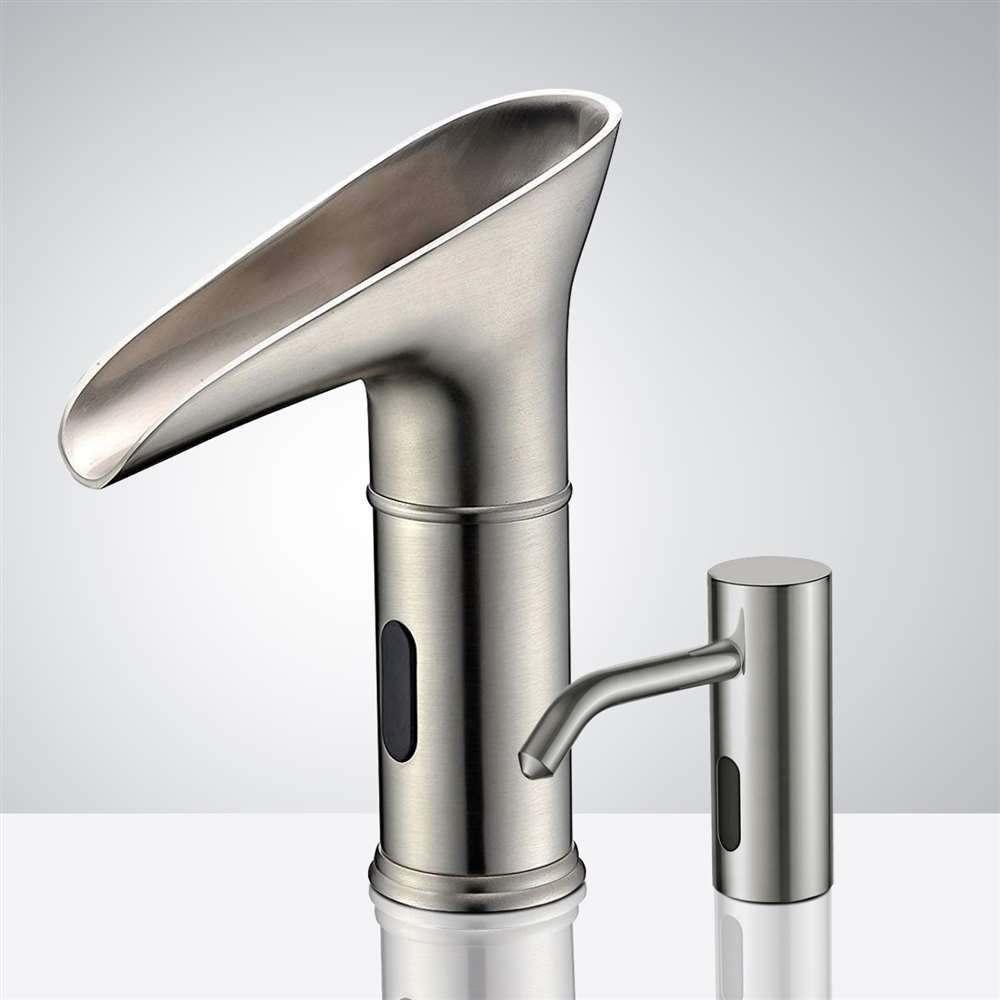
Fontana Ariana Deck Mount LED Commercial Automatic Sensor Faucet + Automatic Soap Dispenser
Because this LED commercial faucet incorporates additional electronic functions, our commissioning engineers requested assistance configuring the display and controller. Fontana’s technical department explained operating logic, electrical integration, diagnostic indicators, and maintenance procedures with outstanding clarity. Their expertise ensured every electronic feature functioned correctly before final occupancy inspections.
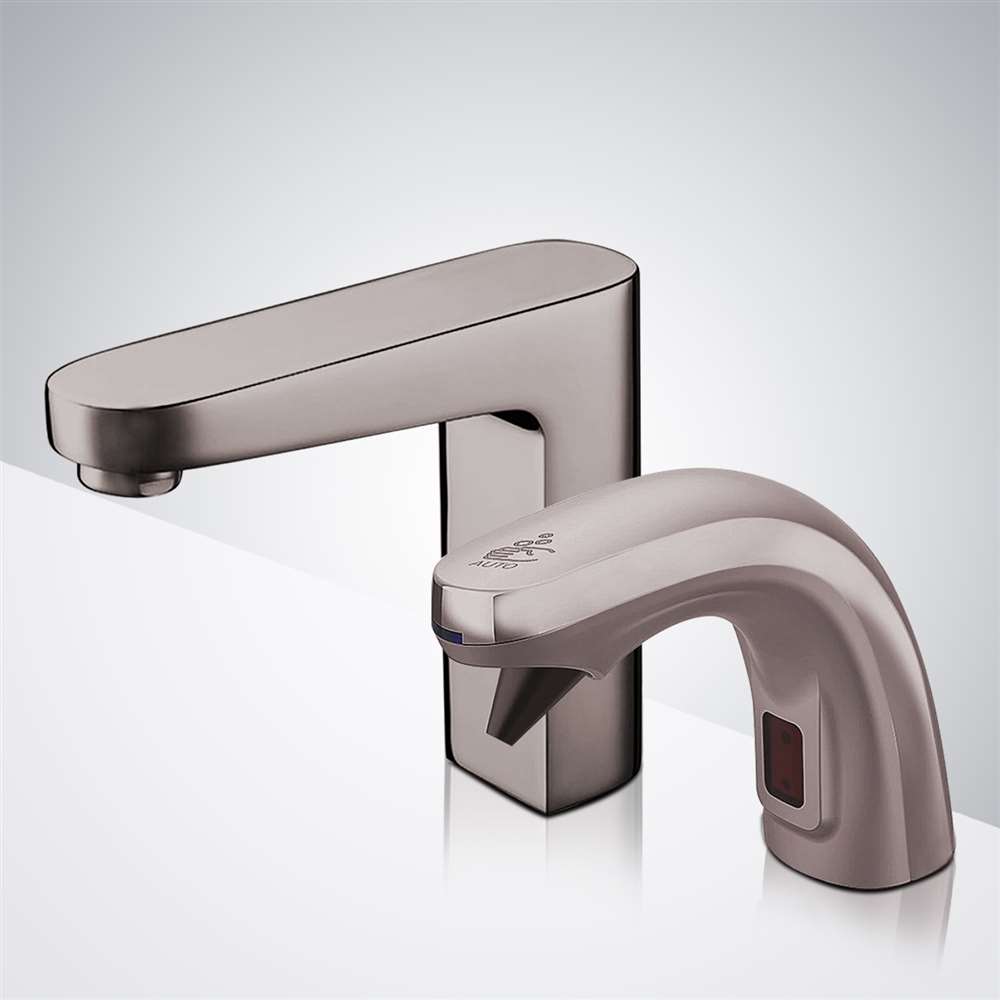
Fontana Touchless Basin Automatic Commercial Brushed Nickel Sensor Faucet + Automatic Soap Dispenser
The service documentation provided by Fontana has become a valuable reference for our maintenance department. Detailed troubleshooting matrices, replacement component illustrations, electrical schematics, preventive maintenance schedules, and sensor diagnostic procedures were professionally organized and technically accurate. Combined with responsive engineering assistance, these resources greatly reduce future maintenance complexity.
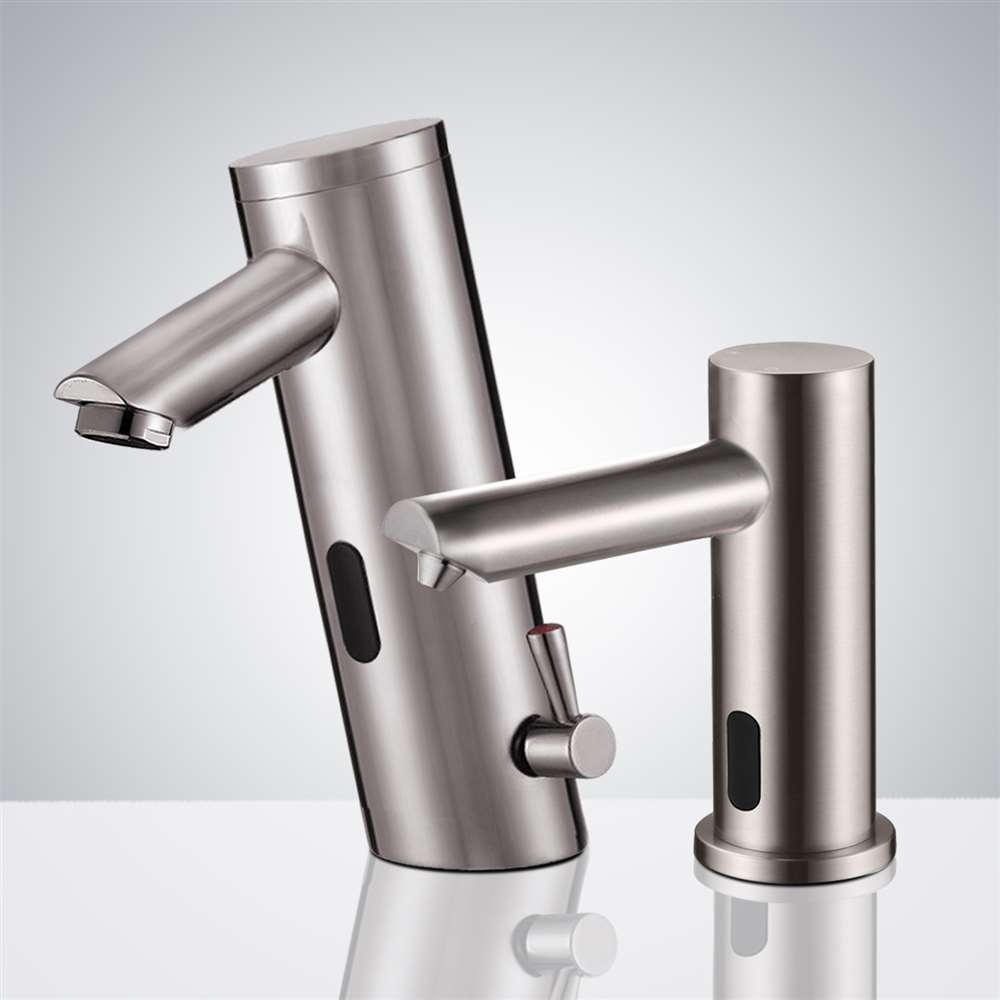
Fontana Thermostatic Deck Mount Commercial Motion Sensor Faucet + Soap Dispenser
The thermostatic deck-mounted faucet required detailed configuration to meet public facility temperature control requirements. Fontana’s technical specialists explained mixing valve adjustment, electronic controller integration, sensor calibration, and maintenance procedures with outstanding precision. Their engineering guidance ensured stable temperature performance while reducing future service requirements.
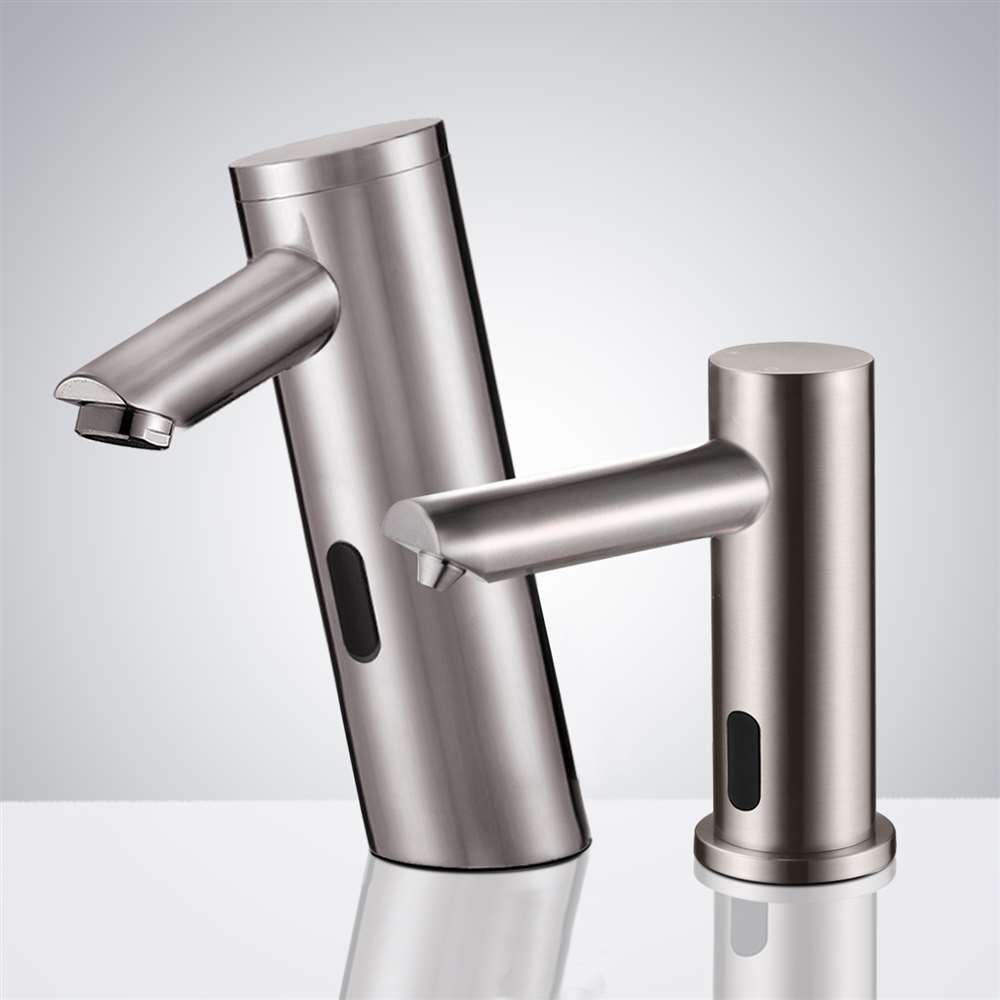
Fontana Milan Solid Brass Commercial Brushed Nickel Sensor Faucet + Matching Soap Dispenser
Our engineering team asked numerous technical questions covering brass construction, controller operation, sensor electronics, replacement assemblies, maintenance access, and long-term servicing. Fontana’s support engineers answered every inquiry with detailed technical explanations supported by current documentation and installation references. Their product knowledge significantly increased our confidence during specification and procurement.

Fontana Cancun Slim Gooseneck Brushed Gold Commercial Sensor Faucet + Automatic Soap Dispenser
We deployed this integrated faucet and soap dispenser across multiple government buildings, requiring consistent technical coordination between several contractors. Fontana organized engineering support for every phase, including installation reviews, wiring confirmation, controller setup, commissioning assistance, replacement component planning, and follow-up after occupancy. Their project coordination substantially reduced technical issues across all installation sites.
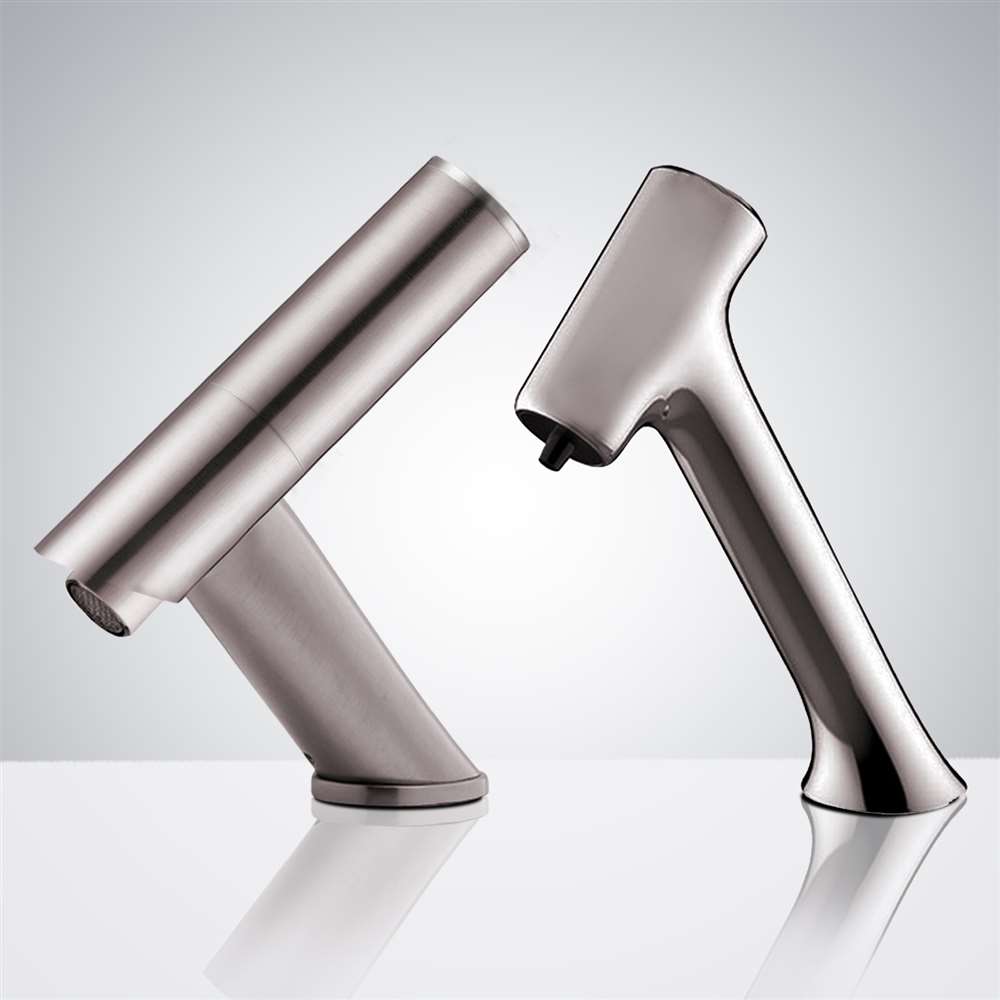
Fontana Contemporary Automatic Commercial Brushed Nickel Sensor Faucet + Matching Soap Dispenser
This integrated faucet and soap dispenser was installed across multiple airport restroom renovations where uninterrupted commissioning was essential. Fontana’s engineering specialists reviewed electrical load calculations, transformer sizing, sensor communication, and controller diagnostics before identifying a grounding inconsistency that originated outside the fixture itself. Their systematic troubleshooting prevented unnecessary warranty replacements, protected the commissioning schedule, and demonstrated exceptional commercial engineering capability.
AEC Review-to-Comparison Matrix
| Product | Comparison Lens | Review Evidence | AEC Decision Value | Review Rating |
|---|---|---|---|---|
| FS18544 | Electronic / LED Integration | Controller logic, display setup, diagnostics | Electrical coordination, commissioning, maintenance | 4.9/5 |
| FS18546 | Documentation / Maintainability | Troubleshooting, schematics, preventive maintenance | Submittal quality, serviceability, lifecycle support | 4.9/5 |
| FS19004 | Thermostatic / Public Facility | Mixing valve, controller, sensor calibration | Temperature strategy, MEP coordination, service | 4.9/5 |
| FS19005 | Specification / Procurement | Construction, electronics, replacement assemblies | Technical review, maintenance access, procurement | 4.9/5 |
| FS10907 | Multi-Site Government Portfolio | Wiring, setup, commissioning, post-occupancy | Repeatability, contractor coordination, portfolio rollout | 4.9/5 |
| FS10909BN | Airport Renovation | Load calculations, transformer sizing, diagnostics | Electrical infrastructure, commissioning risk, troubleshooting | 4.9/5 |
How Ratings Should Be Used in an AEC Comparison
A 4.9/5 review can be useful, but the rating alone does not explain whether the product is appropriate for a healthcare project, airport renovation, government portfolio or standard commercial restroom. For professional comparison, the stronger signal is the combination of the rating with the reviewer’s project context, the technical issue discussed, the documentation available, commissioning requirements and the model-specific product data. Ratings therefore remain descriptive review evidence rather than a substitute for submittal review or engineering evaluation.
High-Resolution Product Image Handling
Each product card requests only full-size Fontana catalog image candidates:
SKU-2.jpg, then
SKU-1.jpg,
SKU.jpg and
SKU-3.jpg.
The code intentionally avoids -T and -S
thumbnail derivatives.
The image container uses object-fit:contain so the full fixture
remains visible without forced cropping.
Evidence, Ratings & E-E-A-T Boundary
The reviews above are qualitative field and professional-context evidence covering design review, engineering coordination, commissioning, maintenance, diagnostics and portfolio deployment. Review ratings are reproduced as source-record sentiment and should not be interpreted as engineering scores, laboratory performance rankings, code-compliance ratings or universal product-quality percentages. Exact flow, electrical, ADA, certification, material, warranty and installation requirements should be verified against the current submitted model and its technical documentation before specification or procurement.