

Public Health by Design
Low-Lead & Touchless Technologies in Modern Infrastructure
In high-occupancy buildings — schools, healthcare, airports, hospitality — low-lead materials and touchless operation reduce risk and support evidence-based design. The FontanaTouchless series exemplifies how fixtures can align with public health, sustainability, and code evolution.
NSF/ANSI 61
cUPC / UPC / CPC
WaterSense
LEED v4.1 · WELL
Introduction
Public health has become a defining factor in architectural design, especially in high-occupancy buildings. The shift toward touchless technology and low-lead materials represents more than convenience — it is an architectural response to epidemiological awareness, environmental responsibility, and code evolution.
FontanaShowers and its FontanaTouchless series exemplify how fixture design can directly support health-centric infrastructure by combining water safety, hygiene, and human-centered functionality.
Why this matters in specs
Lead limits and hygiene requirements show up in submittals, inspections, and commissioning, not only in marketing claims.
Where it shows up first
Schools, healthcare, transit, and hospitality typically adopt low-lead and touchless requirements early due to usage intensity.
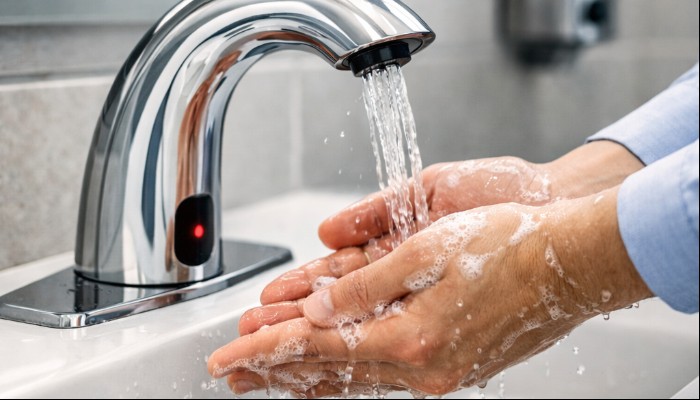
Low-Lead Standards: Protecting the Invisible Infrastructure
The NSF/ANSI 372 certification defines “low-lead” compliance, limiting lead content to 0.25% or less in wetted surfaces.
Lead contamination often originates within plumbing assemblies. Using low-lead brass alloys and verified coating processes in FontanaTouchless systems helps minimize leaching and supports sustainability frameworks such as LEED v4.1 and WELL Feature 30.
Request NSF/ANSI 372 attestations and alloy declarations with submittals; confirm wetted-surface calculations and third-party listing scope.
Documentation Checklist
- NSF/ANSI 372 certificate (≤0.25% lead in wetted surfaces)
- NSF/ANSI 61 potability listing
- cUPC listing and current model numbers
- Material safety data and brass alloy specification
- LEED/WELL contribution letters
If the project has a commissioning plan, include fixture flush and calibration steps in closeout documentation to reduce call-backs.
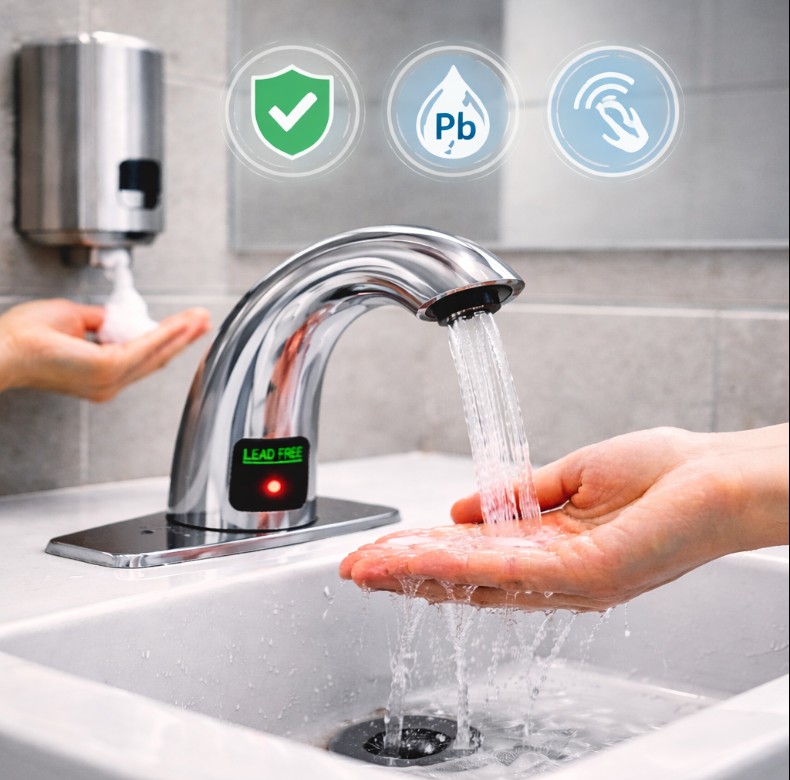
Hygiene as Design
Touchless Operation: Hygiene as a Design Imperative
Touchless activation addresses pathogen transmission. Manual faucets are frequent contact points. FontanaTouchless uses sensors to enable hygienic handwashing without sacrificing control or efficiency.
In real facilities, “better hygiene” has to be paired with predictable behavior. That means stable sensor performance, clear run-time defaults, and a shutoff strategy that prevents nuisance splashing while still supporting thorough handwashing.
Pair faucets with touchless soap and paper or air systems; specify default run-time and hygiene flush to match usage profiles.
Water Quality: Potability, Stagnation, and Real-World Use
Water quality risk does not come only from the municipal source. In many buildings, the biggest swings happen inside the facility through stagnation, low-use zones, and temperature instability.
For fixture specification, the goal is to reduce unintended exposure pathways while keeping systems maintainable. That is why NSF/ANSI 61 listing and verified materials matter, especially when fixtures sit in wings that cycle between high-use and low-use.
Touchless systems can support better outcomes when they include predictable flow control and an operations plan. If a project is sensitive, consider periodic hygiene flush settings and align them with the building’s water management strategy.
Coordinate with the plumbing engineer on minimum fixture flow and any scheduled flush strategy so the design intent matches facility operations.
What to Verify in Submittals
- NSF/ANSI 61 listing scope for potable contact components
- Flow rate options and whether they support local efficiency requirements
- Valve response and shutoff logic to prevent after-flow and drips
- Recommended maintenance cycle for aerators and sensors
- Battery vs. hardwire design impacts on access and service intervals
High occupancy zones
Prioritize fast sensor response and stable shutoff timing to reduce queues and water waste.
Low use zones
Prioritize maintainability and a clear plan for periodic operation to reduce stagnation risk.
Integration: Power, Controls, and Facility Operations
A fixture becomes a building system the moment you specify sensor control, power strategy, and consistent maintenance access.
For design teams, integration starts with basics: identify who owns power decisions, confirm access panels or service routes, and standardize settings across restrooms so performance is consistent building-wide.
In many commercial projects, the best outcome comes from choosing an approach that facilities teams can support long-term. Hardwired power can reduce battery service, while battery systems can simplify retrofit constraints. The right choice depends on access, schedule, and operations capacity.
Include a simple settings schedule in the closeout package: run-time, sensor range, shutoff behavior, and any flush logic. It saves time later.
Integration Checklist for Architects and Engineers
- Power type confirmed (battery or hardwired) and access method documented
- Sensor behavior standardized across fixture groups (range, run-time, shutoff)
- Accessibility and reach clearances verified at lavatory layout stage
- Compatible soap and drying systems selected to support the full handwash sequence
- Service plan defined for batteries, filters, aerators, and sensor cleaning
Require a brief on-site calibration and training handoff after installation, not only a paper submittal.