
Climate-Responsive Façades: The Way Buildings Learn Lessons from Nature
However owing to climate volatility, facades must transform from static boundaries to responsive systems that could respond to their environments in much the same way that living organisms do.
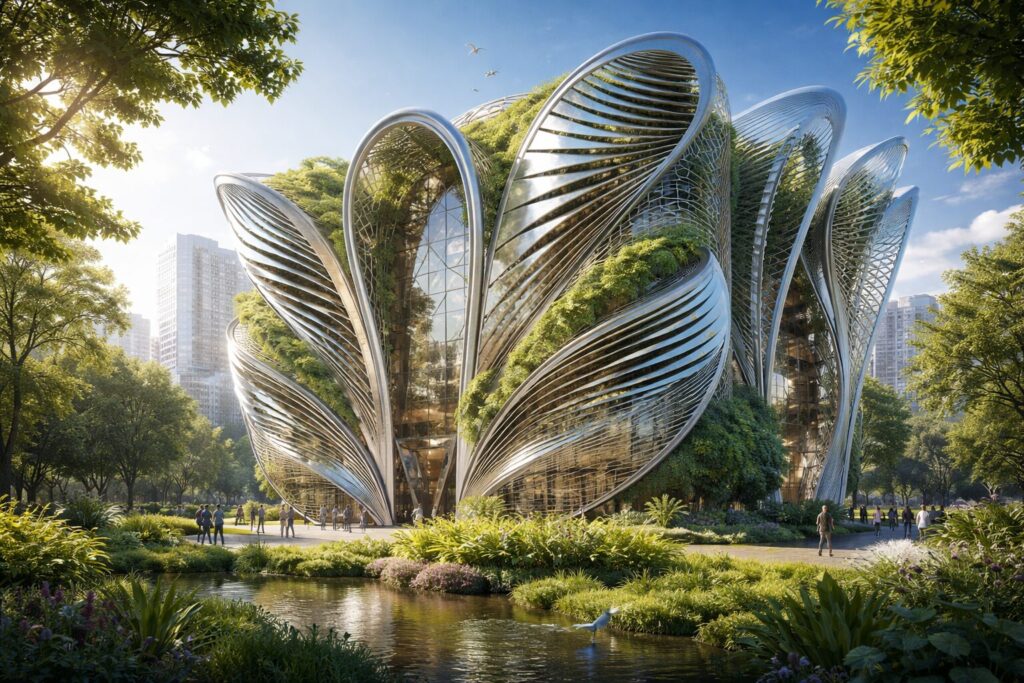
The Need for Climate-Responsive Building Envelopes
Buildings account for a significant share of global energy use. Climate-responsive façades reduce operational loads by adapting to daily and seasonal changes rather than resisting them.
Dynamic Response
The adaptive system reacts to solar radiation, temperature differences, and wind patterns to minimize energy consumption.
Vernacular Logic, Modern Tools
Traditional methods of shading and ventilation have combined with sensors, materials, and digital control.
Learning From Nature: Biomimicry in Façade Design
Nature provides successful designs for ventilation, shading, and moisture and thermal regulation.
Termites’ Vent
In terms of ventilation, the Eastgate Centre has passive air movement systems, which take their inspiration from termite hill designs.

Vegetated & Living Façades
The purpose of living walls is to regulate temperature, purify the air, manage moisture, and create biodiversity.

”Skin” Adaptive Thinking
Modern façades are becoming more like natural skin, adapting opacity, shade, and resistivity.

Technical Typologies of Climate-Responsive Façades
Passive strategies, active/adaptive systems, and sensor-driven intelligence.
1) Passive Strategies
- Orientation & articulation
- Fixed shading (brise-soleil, fins)
- Thermal mass + insulation
2) Active & Adaptive Systems
- Kinetic louvers / moving panels
- Electrochromic / thermochromic glazing
- Phase-change materials (PCMs)
” alt=”Adaptive facade concept image” />
3) Sensor-Driven
Integrated sensors and building management systems facilitate predictive functions regarding façade performance.
Built Precedents in Climate-Responsive Façade Design
Real projects show how performance can come from passive intelligence and hybrid systems.
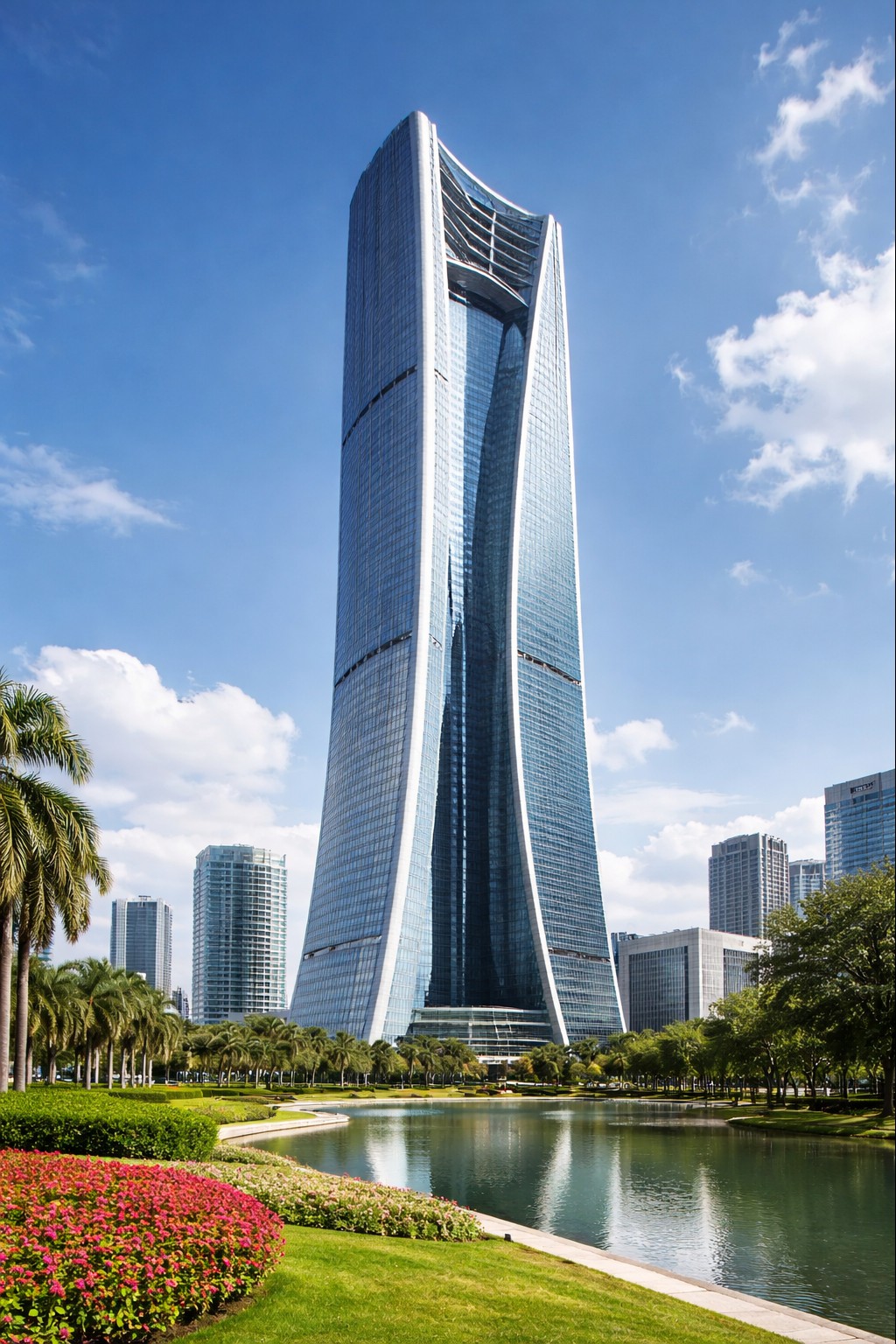
Pearl River Tower, Guangzhou
Integrates a high-performance façade approach with environmental strategies to reduce energy demand.
Eastgate Centre, Harare
Termite-mound-inspired passive cooling shows how low-tech logic can achieve high performance.
Digital Tools and Performance Simulation
This allows parametric modeling and CFD to be used to simulate façade performance early on in projects to optimize daylight, airflow, and thermal.

Interior Systems – Further Continuation of Environmental Design
Interior design is one area where effective plumbing and sanitation technology contributes to water conservation, public health, and performance design.
Architectural Shower Systems

Touchless & Hospitality Fixtures

Conclusion: Towards Living Building Envelopes
Climate-responsive façades move architecture from being matter-defined enclosures to responsive systems. This is achieved by integrating biomimetics, smart materials, sensing technology, and simulation-based design.