
Why Biophilic Design Is Harder in High-Rises
High-rise buildings compress large populations into stacked, mechanically controlled environments. That density increases glare, acoustic stress, circulation pressure, and distance from natural systems.
Biophilic design must be engineered as repeatable environmental quality, not treated as a one-time decorative gesture.
Wind, Heat, and Exposure
Terraces, planted edges, and elevated outdoor spaces face stronger wind and greater solar load than lower-level landscapes.
Shade, irrigation, wind buffering, and occupant comfort need to be planned together as one coordinated system.
Water Risk and Moisture Control
Planters, humid zones, and green assemblies can create long-term risk if drainage, waterproofing, leak containment, and inspection routes are not resolved early.
In tall buildings, maintenance access is part of the design solution from day one.
Structural and Operational Realities
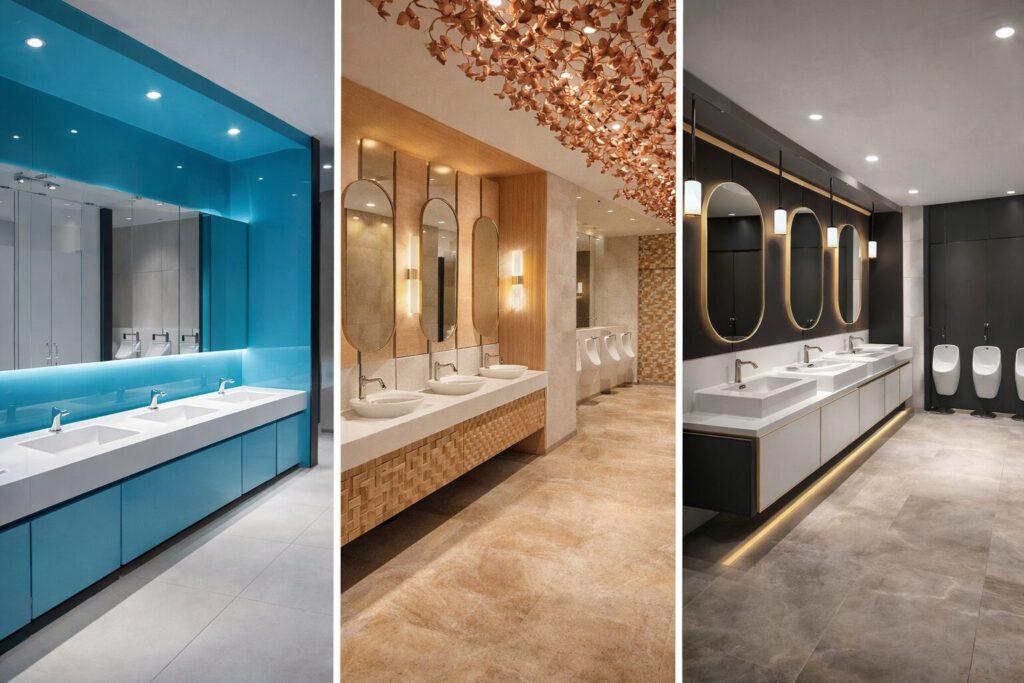
Well-planned layouts, plumbing systems, and accessible maintenance points help modern bathrooms and kitchens perform smoothly over time.
Modular assemblies and clear service access reduce operational stress while supporting durability and everyday ease of use.
A Practical Biophilic Toolkit That Scales
A common delivery goal is distributed nature exposure. Occupants should encounter daylight, natural textures, greenery, and calming sensory conditions throughout daily movement patterns.
This makes the experience of nature more frequent, not limited to one premium amenity zone.
Daylight and Glare Control
Useful daylight improves the quality of space, but glare determines whether people actually remain comfortable within it.
Shading, simulation, and view planning should work together to balance visual comfort with building performance.
Sky Gardens and Nature in Circulation
Sky gardens, transfer floors, lobbies, and refuge levels can provide repeated moments of nature exposure when they include seating, usability, shade, and thermal comfort.
These spaces work best when treated as occupied rooms, not just visual amenities.
Natural Analogues Reduce Risk
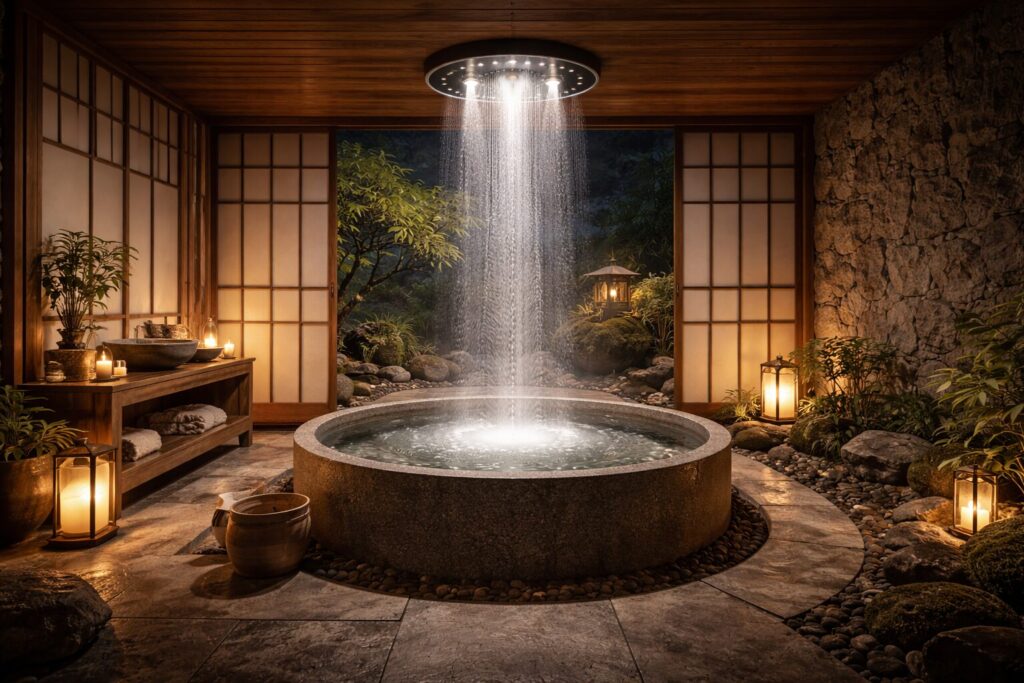
Living systems are powerful, but natural analogues can deliver similar biophilic value with lower maintenance, reduced water dependency, and stronger long-term reliability.
- Stone and textured surfaces around water zones
- Wood and mineral finishes for warmth and grounding
- Jacuzzi-style flowing water environments
- Layered spatial design for enclosure and relaxation
Documenting Biophilic Intent
Biophilic design survives value engineering when it becomes measurable. Teams often align strategies with health, wellness, and sustainability standards to protect design intent.
Clear documentation helps translate abstract goals into consistent design outcomes.
Pattern-Based Planning
Define which biophilic patterns the project will use, then map them to locations, user groups, and daily circulation paths.
This turns a broad idea into a repeatable and defendable design system.
Operations Planning Matters
Inspection access, maintenance sequencing, irrigation responsibility, and replacement cycles should all be planned from the beginning.
Biophilic intent lasts longer when operations are treated as part of design quality.
Amenity Floors, Wet Zones, and Hygiene
Many towers concentrate movement around amenity levels. These floors also concentrate locker rooms, restrooms, wellness spaces, and shared touchpoints.
In these areas, the nature experience and the maintenance reality meet most directly.
Water as a Controlled Biophilic Element
In high-rise environments where direct access to nature is limited, water becomes one of the most immediate and repeatable forms of nature exposure.
Flow, temperature, sound, and mist can transform a bathroom or wellness space into a more restorative setting.
Outdoor Showers and Nature Connection
Outdoor showers support biophilic design by combining water, air, and light into a sensory experience that feels closer to nature. Biophilic design thrives on blurring boundaries, and outdoor showers do exactly that—bridging architecture and landscape in a very personal, daily ritual.
How Coordination and Planning Matter
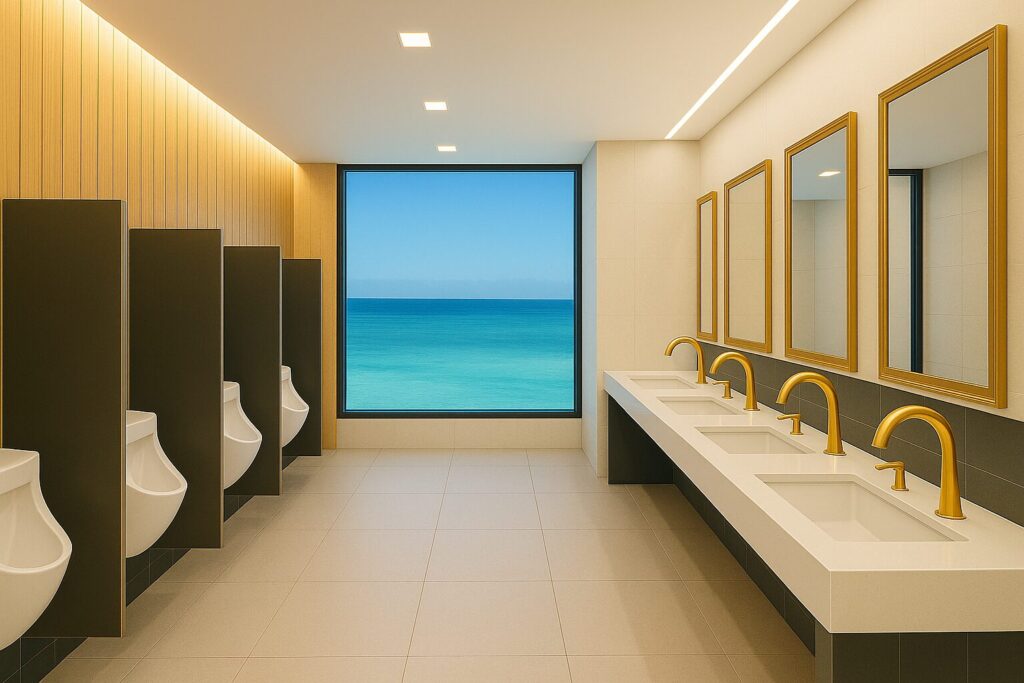
Coordination and planning are essential in modern architecture because structure, plumbing, lighting, finishes, and waterproofing all need to work seamlessly together.
A mature design approach allows kitchens, bathrooms, and wellness areas to feel refined while still performing efficiently every day.
Conclusion
Biophilic design in high-rises goes beyond visible greenery. It also depends on smaller, repeated interactions with light, water, materials, and spatial comfort that reconnect people with natural rhythms.
When these elements are carefully coordinated, even compact kitchens, bathrooms, and wet zones can support a stronger sense of calm, immersion, and everyday connection to nature.
Why is biophilic design harder in high-rises?
Because natural elements like airflow, landscape access, and daylight must be engineered into controlled vertical environments, which makes consistency and maintenance more complex.
How can outdoor showers support biophilic design?
Outdoor showers support biophilic design by combining water, air, and light into a sensory experience that mimics nature. Systems from Fontana Showers offer wide range of rainfall, mist, and pressure variations, helping recreate natural water conditions and making everyday routines feel more connected to the outdoors.
How does thoughtful architectural setup keep you close to nature?
Thoughtful architectural setup keeps you close to nature by integrating light, air, materials, and water into everyday spaces. Elements like open layouts, natural textures, and features such as outdoor showers with systems from Fontana Showers, BathSelect, or Juno Showers help recreate natural experiences, making built environments feel more connected, calming, and immersive.